

 Oil On CanvasWallArtNeoclassicism
 1748
1748 77.0 x 64.0 cm
 The National Trust For Scotland
Museum-quality giclée or canvas print with fast production and flexible finish options. ( Buy Hand Made Painting Switch to Digital Image)





























Pick from our preset sizes that match the artwork's original proportions.

You may enter your own dimensions to fit a specific frame or space. If your selected size does not match the original image's proportions, we will either crop the artwork or extend the image with a mirrored or solid-fill edge. A digital mockup will be sent for your approval before production begins.
Please note that the on-screen preview does not reflect the actual cropping or extension. Only the mockup will accurately show the final composition.
While custom sizes are available, we recommend selecting a dimension from the predefined list to preserve the original proportions.
Worldwide Delivery () in 2 weeks instead of standard 4/5 weeks. (8 September)


Jane Nisbet, Lady Dirleton
Reproduction Size
To stand before this portrait is to step directly into the refined drawing rooms of the mid-eighteenth century. Jane Nisbet, Lady Dirleton, painted in 1748 by Allan Ramsay, is far more than a mere likeness; it is a carefully constructed meditation on status, grace, and enduring feminine dignity. The composition immediately draws the viewer into the subject’s quiet presence. She is captured in a half-length format, framed within an elegant oval that lends the piece an air of timeless formality. Ramsay masterfully centers her figure, ensuring that every glance, every fold of fabric, contributes to an overall impression of serene composure.
Technically, this work is a breathtaking display of academic realism filtered through the lens of Rococo elegance. The artist’s handling of oil paint on canvas is meticulous; one can almost feel the weight and drape of her dark shawl against the luminous expanse of her white gown. Ramsay employs dramatic chiaroscuro—the interplay between deep shadow and brilliant highlight—to give the figure a profound three-dimensionality. Notice how the light catches the delicate lace detailing, transforming what might be considered mere fabric into an object of exquisite, tangible texture. The brushwork, while highly detailed in rendering skin tones and textile patterns, remains invisible upon close inspection, allowing the subject’s gentle melancholy to surface unimpeded.
The historical context surrounding this portrait is crucial to understanding its quiet power. Painted during a period of significant social stratification in Britain, portraits like this served as vital markers of identity and wealth. Lady Dirleton’s attire—the quality of the lace, the richness suggested by her dark wrap—speaks volumes about her standing within polite society. Ramsay, having absorbed influences from Italian masters while remaining rooted in Scottish portraiture, managed to synthesize classical ideals of nobility with a distinctly English sense of intimate characterization. It is a visual testament to the expectations and quiet accomplishments of women of means during that era.
The symbolism within the painting is subtle yet profound. The subject’s expression, described as both serene and slightly melancholic, invites contemplation. It suggests a life lived under the gentle scrutiny of societal expectation—a beautiful containment of emotion. The shallow perspective keeps all focus inward, making the viewer feel privy to a private moment, an intimate viewing that transcends the formality of the portrait itself. For the modern collector or designer, this piece offers more than decoration; it offers an atmosphere—an infusion of cultivated history and quiet, enduring elegance into any space.

Born in Edinburgh, Scotland on October 13, 1713, Allan Ramsay emerged as a prominent Scottish portrait-painter whose work captured the elegance and refinement of his era. His artistic journey began at the age of twenty when he travelled to London for studies under the Swedish painter Hans Hysing, followed by instruction at the St. Martin's Lane Academy. This foundational training provided him with a solid base in technique and composition.
Ramsay’s artistic development took a significant turn with his travels to Rome and Naples, where he spent three years (1736-1738) working under the tutelage of Francesco Solimena and Imperiali (Francesco Fernandi). These Italian masters profoundly influenced his style, fostering a greater understanding of classical principles and enhancing his skills in capturing likeness and character. He absorbed the prevailing Rococo aesthetic while also developing an appreciation for Neoclassical ideals.
Upon returning to Britain in 1738, Ramsay quickly established a successful career as a portraitist. His ability to portray his subjects with both accuracy and grace soon garnered him a distinguished clientele. Some of his most notable works include:
A pivotal moment in Ramsay’s career arrived in 1761 with his appointment as Principal Painter in Ordinary to George III. This prestigious position cemented his status among the art elite and ensured a steady stream of commissions from the royal family and high society. He became *the* portraitist of the Georgian era.
Ramsay’s later life saw a shift towards literary pursuits, reflecting his broad intellectual interests. However, personal tragedies – an accidental dislocation of his right arm and the passing of his second wife in 1782 – impacted his health and productivity. He died in 1784.
Despite these challenges, Ramsay left behind a lasting legacy as one of Scotland’s most celebrated portrait painters. As Samuel Johnson noted, “I love Ramsay. You will not find a man in whose conversation there is more instruction, more information, and more elegance, than in Ramsay's.” His works continue to be admired for their technical skill, refined aesthetic, and insightful portrayals of 18th-century society.
Allan Ramsay’s contribution extends beyond his artistic talent. He played a crucial role in shaping the visual culture of Scotland during a period of significant social and political change. His portraits provide valuable insights into the lives, fashions, and values of the Scottish nobility and gentry. His works can be found at locations such as Ayr Town Hall, and the Scottish National Portrait Gallery.

1713 - 1784 , United Kingdom

Explore the captivating world of George Paul Chalmers (1833-1878), a pivotal Scottish painter. Discover his landscapes, portraits & connection to the Aesthetic Movement and Colourists. Learn about this 'Angus Rembrandt's' legacy with WahooArt.
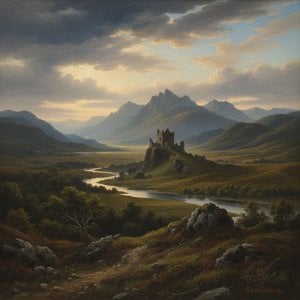
Explore the life & art of Alexander Nasmyth, a pivotal figure in Scottish Romantic landscape painting. Discover his iconic works, including portraits of Robert Burns, and learn about his lasting influence on national identity. Fine art reproductions available.
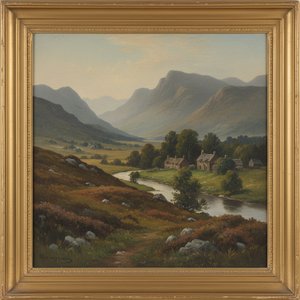
Explore the captivating portraits of Sir John Watson Gordon, a leading Scottish master. Discover his evolution from neoclassical style to atmospheric Tonalism and influence on 19th-century British art. Learn about his iconic sitters & legacy.

Journey through 18th century art! Explore 10 iconic paintings – from Rococo elegance to Neoclassical grandeur. Discover Fragonard, David & more. Find museum-quality reproductions and elevate your home decor on WahooArt.com.

Explore the life & work of Allen Ramsay, pivotal portraitist to George III. Discover his Rococo style, influence on Georgian society, and lasting legacy in British art history. Learn about his key works & patronage.

 Preview
 Send
Send Share
Share
 Details

 Download
 Similars
 X-Ray
X-Ray Diaporama
 Stats
Stats Read More







 Glass option is only available in size under 110 CM


