Buy Hand Made Painting Switch to Digital Image Send
Details Add to favorites Download Similars Diaporama Stats

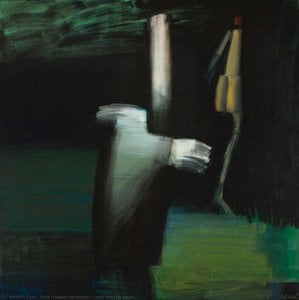
Accusation

Explore 'Accusation' by Ali Talib Al-Saffar – a striking Kuwaiti sculpture delving into identity and cultural resonance through evocative abstract forms.

Discover Ali Talib Al-Saffar (b. 1983), a Kuwaiti sculptor exploring identity, culture & social issues through powerful abstract forms. Explore his art on WahooArt!

Giclée / Art Print

Museum-quality giclée or canvas print with fast production and flexible finish options. ( Buy Hand Made Painting Switch to Digital Image)

Standard
custom
CM
INCH

Pick from our preset sizes that match the artwork's original proportions.

width
height

You may enter your own dimensions to fit a specific frame or space. If your selected size does not match the original image's proportions, we will either crop the artwork or extend the image with a mirrored or solid-fill edge. A digital mockup will be sent for your approval before production begins.
Please note that the on-screen preview does not reflect the actual cropping or extension. Only the mockup will accurately show the final composition.
While custom sizes are available, we recommend selecting a dimension from the predefined list to preserve the original proportions.

Worldwide Delivery () in 2 weeks instead of standard 4/5 weeks. (17 September)

why_choose_icon
Free Worldwide Express Shipping
why_choose_icon
High-Quality Linen Canvas
why_choose_icon
Full Shipping Insurance
why_choose_icon
Customs Tax Refund Guarantee
why_choose_icon
True Color Matching Guarantee
why_choose_icon
100-Day Return Policy (Defects Only)
why_choose_icon
100% Money-Back Guarantee
why_choose_icon
Bulk Discount Offer

Total Price

$ 69

reproduction

Accusation

Giclée / Art Print

Reproduction Size

-

Total Price

$ 69

Quick Facts

  • Notable elements or techniques: Abstract Forms
  • Subject or theme: Identity & Reflection
  • Title: Accusation
  • Location: Private Collection
  • Dimensions: 120 x 120 cm
  • Artist: Ali Talib Al-Saffar
  • Movement: Contemporary Art

Art Quiz

There is only one correct answer for each question.

Question 1:
What is the predominant artistic medium used in ‘Accusation’?
Question 2:
The image description highlights a specific visual element – what is it?
Question 3:
What overarching theme does Ali Talib Al-Saffar’s artistic practice explore?
Question 4:
In what year was ‘Accusation’ created?
Question 5:
The description mentions a 'sense of unease or tension.' What artistic technique contributes to this feeling?

A Silent Accusation: Exploring Ali Talib Al-Saffar’s Sculptural Vision

Ali Talib Al-Saffar's "Accusation" stands as a testament to Kuwaiti artistic expression in the early 2000s, capturing a moment of profound introspection and confronting societal anxieties. This striking monochrome sculpture transcends mere visual representation; it delves into complex themes of identity, isolation, and unspoken burdens—elements that resonate powerfully with contemporary audiences grappling with similar concerns.

The Sculpture's Form and Technique

Crafted from polished bronze, “Accusation” presents two stylized faces positioned within a recessed window frame. The figures are rendered in an abstract geometric style, prioritizing form over detailed depiction. Al-Saffar’s meticulous attention to surface texture—a subtle interplay of matte and glossy finishes—creates a captivating visual experience that invites contemplation. The sculptor skillfully employs negative space to emphasize the contours of the faces, conveying a sense of vulnerability and confinement despite their seemingly impassive expressions. This technique underscores the sculpture's core message: appearances can deceive, concealing deeper emotional realities beneath a veneer of composure.

Historical Context and Influences

Emerging during Kuwait’s turbulent period following the Gulf War, Al-Saffar’s work reflects the anxieties surrounding national trauma and the challenges faced in forging a cohesive cultural identity amidst geopolitical instability. The sculpture's minimalist aesthetic aligns with broader trends in international contemporary art—particularly the influence of European conceptualism—where artists prioritize ideas over traditional artistic conventions. However, “Accusation” distinguishes itself through its deeply rooted connection to Kuwaiti heritage and its exploration of psychological landscapes often overlooked by Western artistic discourse.

Symbolic Resonance: Faces Within a Frame

The window frame serves as more than just an architectural element; it symbolizes the barriers that separate individuals from one another—and perhaps from themselves. The two faces gazing outwards represent humanity's yearning for connection and understanding, yet their enclosed position suggests a sense of entrapment and unanswered questions. The stark monochrome palette amplifies this emotional impact, stripping away distractions to focus solely on the psychological state conveyed by the sculpture’s figures. It speaks to the universal experience of confronting internal struggles—the unspoken accusations we carry within ourselves—and invites viewers to consider their own perspectives on vulnerability and resilience.

Emotional Impact: A Reflection of Inner Turmoil

Ultimately, “Accusation” succeeds in eliciting a visceral response from the observer. Its quiet intensity compels contemplation about themes of isolation, responsibility, and confronting uncomfortable truths. The sculpture’s enduring appeal lies in its ability to tap into fundamental human emotions—fear, uncertainty, and a desire for authenticity—making it a compelling piece for collectors and interior designers seeking artwork that stimulates intellectual curiosity alongside aesthetic pleasure. It's a powerful reminder that art can illuminate the complexities of the human condition with remarkable subtlety and grace.

Artist Biography

A Life Etched in Form: The Sculptural Vision of Ali Talib Al-Saffar

Born in the dynamic city of Kuwait City in 1983, Ali Talib Al-Saffar emerged as a significant voice in contemporary Middle Eastern art. From an early age, a profound inclination towards artistic expression took root, blossoming into a dedicated pursuit of sculpture—a medium through which he would ultimately articulate his complex and compelling vision. Al-Saffar’s journey wasn't simply about mastering technique; it was about finding a language to explore the intricate layers of identity, culture, and the pressing social issues that define our time. His work doesn’t merely depict these themes; it embodies them, inviting viewers into a dialogue with the very essence of human experience.

Themes of Identity and Cultural Resonance

Al-Saffar's artistic exploration is deeply rooted in an investigation of self—both individual and collective. His sculptures serve as poignant reflections on Kuwaiti culture, extending outwards to encompass the broader Middle Eastern context. He doesn’t present a static portrayal of tradition but rather a dynamic interplay between heritage and modernity. The artist masterfully navigates the nuances of cultural identity, acknowledging its complexities and contradictions. This isn't about celebrating an idealized past; it’s about confronting the challenges of preserving cultural memory in a rapidly changing world. His pieces often subtly incorporate motifs and symbols drawn from regional folklore and history, imbuing them with new meaning within a contemporary framework. Blindness 6 (2019), for example, stands as a powerful testament to this approach—a work that transcends literal representation to convey a profound message about perception, vulnerability, and the search for understanding. Beyond identity, Al-Saffar’s art consistently engages with social issues, tackling difficult subjects with sensitivity and depth. He doesn't shy away from confronting uncomfortable truths, instead using his artistry as a catalyst for introspection and dialogue.

Artistic Development and Technical Mastery

While Al-Saffar’s thematic concerns are central to understanding his work, it is the technical brilliance of his sculptures that truly captivates. He demonstrates an exceptional command of form, texture, and material—skills honed through dedicated study and practice. His pieces often exhibit a remarkable level of detail, inviting close examination and revealing hidden layers of meaning. The artist’s approach to sculpture isn't simply additive; it’s transformative. He manipulates materials with a deft hand, coaxing them into shapes that seem to breathe with life. This mastery allows him to convey not only intellectual concepts but also raw emotional power. His exploration extends beyond traditional sculptural forms, incorporating elements of abstraction and experimentation. Works like New Day (2016) demonstrate a willingness to push boundaries, blending textures and shapes in ways that challenge conventional notions of representation. Similarly, Citizen, created in 1977, showcases his ability to create evocative mystery through abstract expressionism and impasto texture.

Influence and Legacy

Ali Talib Al-Saffar’s influence extends far beyond the borders of Kuwait, resonating within the regional and global art discourse. He has become a pivotal figure for a new generation of artists in the Middle East, inspiring them to explore complex themes with courage and conviction. His commitment to artistic integrity and his willingness to challenge conventional norms have earned him widespread recognition and respect. Al-Saffar’s work is not merely aesthetically pleasing; it's intellectually stimulating and emotionally resonant—qualities that ensure its enduring relevance. He has participated in numerous solo and group exhibitions, both within Kuwait and internationally, solidifying his reputation as a visionary artist. His pieces are increasingly sought after by collectors and institutions alike, testament to their artistic merit and cultural significance. The impact of Al-Saffar’s work can also be seen in the growing interest in Middle Eastern art on the global stage—a trend he has undoubtedly helped to foster through his own creative endeavors.

Exploring Further

  • Discover More: Visit WahooArt’s profile on Ali Talib Al-Saffar for an extensive collection of his works and a detailed biography.
  • Cultural Heritage: Explore the Silesian Museum in Poland, a remarkable example of how art can preserve cultural heritage—as highlighted in WahooArt's comprehensive guide.
  • Art Historical Context: Delve into the rich history of the Abbasid period art movement, which laid the foundation for artistic expression in the Middle East, through an insightful article on WahooArt.
Ali Talib Al-Saffar’s profound impact on the art world is undeniable. Through his sculptures, he not only reflects the intricacies of human experience but also paves the way for future generations of artists to explore their own creative visions. His work, showcased in various exhibitions and meticulously documented, serves as a powerful testament to the transformative power of art—a force capable of challenging perceptions, inspiring dialogue, and ultimately enriching our understanding of ourselves and the world around us.
Ali Talib Al-Saffar

Ali Talib Al-Saffar

1983 - , Kuwait

Quick Facts

  • Artistic Movement Or Style: Contemporary sculpture
  • Date Of Birth: 1983
  • Full Name: Ali Talib Al-Saffar
  • Nationality: Kuwaiti
  • Notable Artworks:
    • Blindness 6
    • New Day
    • Citizen
  • Place Of Birth: Kuwait City, Kuwait
Explore artworks organized by themes, styles, and characteristics.