Preview AR preview Switch to Print Buy Hand Made Painting Send
Details Add to favorites Download Similars X-Ray Diaporama Stats

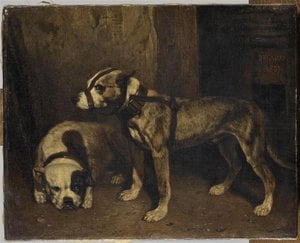
LES SONNEURS

Experience 'Les Sonneurs' by Alexandre Decamps! This dramatic oil painting captures a vibrant ritual scene with bell ringers, showcasing his Romantic style and masterful use of light & shadow.

Explore Alexandre Gabriel Decamps (1803-1860), the pioneer of Orientalism! Discover his vibrant depictions of exotic life, biblical scenes & humorous genre art. Find masterpieces on WahooArt!

Purchase a high-resolution, enhanced digital image, far superior to the online preview.

Each file is meticulously prepared by our in-house specialists using advanced tools and expert manual retouching. We ensure every image has exceptional clarity, precise color accuracy, and fine detail.

The final file is delivered via email within 72 hours, optimized for immediate use in professional, editorial, and print environments. This is the same quality trusted by top-tier design studios, publishers, and galleries.

Digital Image

Download a high-resolution file for personal display, printing, and creative projects. ( Switch to Print Buy Hand Made Painting)

Total Price

$ 24.90

Included in Every Digital Image Order

Expert Digital Delivery, Guaranteed

When you choose WahooArt.com, you're not just getting an image - you're receiving a professionally enhanced digital artwork, crafted with precision and backed by a satisfaction guarantee. Here's everything that comes with your order, automatically:

shipping_icon
Fast Email Delivery

Your high-resolution digital image file will be emailed to you within 72 hours of ordering - ready for immediate use.

canvas_icon
AI-Enhanced Digital File

Your artwork is professionally optimized using advanced AI tools and manual editing, ensuring maximum detail, clarity, and color accuracy.

insurance_icon
Free Lifetime Re-Delivery

Accidentally deleted or lost your file? No worries - we'll resend it to you anytime, free of charge.

tax_icon
No Import Fees - Ever

Enjoy your artwork instantly with zero customs, duties, or delivery fees - digital downloads are always tax-free.

color_icon
Color Accuracy Guarantee

We ensure your digital image reflects the original colors as closely as possible using professional tools and color management.

return_icon
100-Day Satisfaction Guarantee

If you're not satisfied with your digital image, we'll revise it or refund 100% within 100 days - no questions asked.

guarantee_icon
100% Money-Back Guarantee

Not satisfied? Get a full refund within 100 days of receiving your digital file - no questions asked.

discount_icon
Bulk Order Discounts

Buy 3 images, save 10% - Buy 5, save 15% - Buy 10+, save 20%. Great for creative projects, galleries, and agencies.

Quick Facts

  • Influences: Orientalism
  • Notable elements: Chiaroscuro, ropes
  • Title: Les Sonneurs
  • Location: Louvre Museum
  • Artist: Alexandre Decamps
  • Artistic style: Genre painting
  • Medium: Oil on canvas

Art Quiz

There is only one correct answer for each question.

Question 1:
What is the primary subject depicted in ‘Les Sonneurs’?
Question 2:
The painting utilizes what artistic technique to create dramatic lighting and contrast?
Question 3:
Based on the description, what is the overall mood or feeling evoked by ‘Les Sonneurs’?
Question 4:
Which artistic movement does ‘Les Sonneurs’ most closely align with?
Question 5:
The composition of the painting is characterized by:

A Moment of Communal Rhythms: Alexandre Decamps’ “Les Sonneurs”

Alexandre Gabriel Decamps' "Les Sonneurs" (The Bell Ringers), painted circa 1841, is more than a depiction of a local festival; it’s a vibrant tableau brimming with the energy and social fabric of 19th-century France. This oil on canvas captures a scene of intense activity within an interior space – a dimly lit courtyard or perhaps a large hall – dominated by the central drama of men raising and lowering a massive bell suspended from ropes. Decamps, a pivotal figure in the burgeoning field of Orientalism, masterfully blends elements of genre painting with Romantic dynamism, creating an artwork that simultaneously feels familiar and utterly transporting.

The composition immediately draws the eye to the core action: the men engaged in the laborious task of manipulating the bell. Decamps employs a dynamic, almost chaotic arrangement, mirroring the energy of the event itself. The figures are clustered tightly, their bodies intertwined as they work together, suggesting a shared purpose and camaraderie. A doorway on the left offers a tantalizing glimpse into brighter surroundings – a subtle contrast that highlights the central drama and perhaps hints at a wider community beyond the immediate scene. Scattered shoes, bottles, and hats litter the floor, adding to the sense of organized disorder and reinforcing the feeling of an event in full swing.

A Palette of Earth and Light

Decamps’ masterful use of color establishes a distinctly earthy tone, dominated by browns, ochres, and muted greens. These grounded hues are punctuated by strategic highlights – the gleam of metal on the bell, touches of white and red in clothing, and the subtle shimmer of light reflecting off surfaces. The dramatic lighting is crucial to the painting’s impact; it's a classic example of *chiaroscuro*, with strong contrasts between light and shadow that sculpt the figures and create a sense of mystery. A single, unseen source illuminates the central action, casting much of the background into deep darkness – an intentional choice that intensifies the drama and focuses the viewer’s attention on the bell ringers.

Technique and Texture: The Brushstroke as Storyteller

The painting's surface is alive with visible brushstrokes, a testament to Decamps’ loose and expressive technique. These marks aren’t merely decorative; they actively contribute to the sense of movement and energy within the scene. You can almost *feel* the exertion of the men pulling on the ropes, the weight of the bell, and the collective effort involved in this ritualistic activity. The artist skillfully uses texture to differentiate surfaces – the rough, worn appearance of clothing, the unevenness of the stone floor, and the smooth sheen of the bottles all add layers of visual interest and realism.

Symbolism and Emotional Resonance

"Les Sonneurs" transcends a simple depiction of a bell-ringing ceremony. It’s imbued with symbolic weight, evoking feelings of communal energy, tradition, and perhaps even a touch of revelry. The darkness surrounding the action could be interpreted as representing hidden tensions or unspoken narratives within the community – a subtle suggestion that this seemingly joyful event might conceal deeper complexities. Decamps' work aligns perfectly with Romantic ideals, prioritizing emotion and dramatic narrative over strict realism. The painting invites us to contemplate not just *what* is happening, but *why*, prompting questions about the role of ritual, community, and tradition in human life.

A Legacy of Orientalist Vision

Painted by a pioneer of Orientalism, Alexandre Decamps’ “Les Sonneurs” stands as a remarkable example of his unique artistic vision. His bold style, characterized by meticulous observation, dramatic composition, and a captivating narrative quality, challenged academic conventions and established him as a leading figure in 19th-century French art. Reproductions of this powerful artwork offer a window into a bygone era, capturing the spirit of a community united by shared tradition and the resonant sound of its bell.


Artist Biography

A Pioneer of Orientalist Visions: The Life and Art of Alexandre Gabriel Decamps

Alexandre Gabriel Decamps, a name resonating with the vibrant hues of exotic landscapes and the dramatic flair of Romanticism, emerged as a pivotal figure in 19th-century French painting. Born in Paris on March 3, 1803, his artistic journey was one of bold innovation, challenging academic conventions and forging a path toward what would become known as Orientalism. While contemporaries like Delacroix and Ingres also held prominent positions within the French art world, Decamps distinguished himself through an intensely personal style—a blend of meticulous observation, dramatic composition, and a captivating narrative quality that drew viewers into worlds both familiar and utterly foreign. His early recognition as a talented artist foreshadowed a career marked by critical acclaim, culminating in the grand or council medal at the Paris Exhibition of 1855, a testament to his exceptional skill and unique vision. Beyond the canvas, Decamps was a man deeply connected to nature, finding solace and inspiration in the countryside surrounding Paris, where he indulged his passion for animals and field sports—a fondness that would subtly permeate much of his artistic output.

From Scripture to the Sahara: The Evolution of an Artistic Style

Decamps’ artistic development was characterized by a willingness to explore diverse subjects and techniques. Initially drawn to historical and biblical scenes, he quickly distinguished himself by portraying these narratives with an unprecedented level of realism—grounding them in authentic local settings rather than relying on idealized or conventional representations. This commitment to verisimilitude stemmed from his travels to the East, experiences that profoundly impacted his artistic sensibilities. He didn’t merely depict what he saw; he conveyed a feeling for the atmosphere, the light, and the very essence of these distant lands. Joseph Sold by His Brethren, for example, is not simply an illustration of a biblical story but a vivid portrayal of a specific time and place, imbued with emotional depth and psychological insight. This approach extended to his larger historical works like The Defeat of the Cimbri, where he masterfully captured the chaos and brutality of battle, showcasing his ability to handle large-scale compositions with dynamic energy. However, it was his depictions of Oriental life that truly set him apart. He revealed everyday scenes—markets, schools, domestic interiors—with a fidelity that initially puzzled critics accustomed to more romanticized or stereotypical representations.

The Father of Orientalism and His Lasting Influence

Decamps is rightfully considered the founding father of Orientalism in French painting. Before him, depictions of the East were often filtered through a lens of fantasy and exoticism. He presented a different vision—one rooted in direct observation and genuine curiosity. His 1831 Salon exhibition marked a turning point, introducing Parisian audiences to an unvarnished glimpse of life in North Africa and the Middle East. This groundbreaking approach resonated with artists and writers alike, inspiring a wave of Orientalist works that would dominate much of 19th-century art. His style—characterized by bold brushstrokes, striking contrasts of light and shadow, and a palpable sense of atmosphere—became a reference point for generations of painters, photographers, and authors. Maxime du Camp famously dubbed him the “Christopher Columbus of the Orient,” recognizing his pioneering role in opening up this new artistic territory. The Albanian Dancer, with its vibrant colors and energetic composition, exemplifies his ability to capture the spirit of a culture while maintaining a distinctly French aesthetic sensibility. Even satirical works like The Monkey Connoisseurs, a playful jab at the conservative jury of the Académie des Beaux-Arts, demonstrate his willingness to challenge established norms and embrace a more independent artistic vision.

A Tragic End and an Enduring Legacy

Tragically, Decamps’ life was cut short on August 22, 1860, at the age of 57, following a hunting accident near Fontainebleau. His untimely death robbed the art world of a truly innovative talent, but his legacy continues to endure through his captivating paintings and their enduring appeal. Today, masterpieces like Incendie d'un village italien, with its dramatic depiction of conflict and masterful use of impasto, and A Bedouin and a Camel Resting in a Desert, showcasing the textures and tranquility of desert life, are celebrated for their artistic merit and historical significance. His works can be found in prestigious institutions such as the Musée du Louvre in Paris, ensuring that his vision continues to inspire and captivate audiences worldwide. Platforms like WahooArt.com play a vital role in preserving and disseminating his art, offering high-quality reproductions that allow admirers to experience the beauty and power of Decamps’ paintings firsthand. His influence extends beyond the realm of painting, shaping perceptions of the East and leaving an indelible mark on the cultural landscape of 19th-century Europe.

Exploring Decamps' World: Notable Works

  • CHIENS BRIFAUTS: A charming Orientalist scene showcasing dogs in a vibrant setting.
  • LA COUR DE FERME: A captivating 19th-century painting blending French Romanticism with historical detail.
  • L’ÉCOLE TURQUE: A lively depiction of a Turkish school, capturing the energy and atmosphere of daily life.
  • PAYSAGE TURC: A serene landscape exploring realism and romanticism in a French setting.
Alexandre Gabriel Decamps

Alexandre Gabriel Decamps

1803 - 1860 , France

Quick Facts

  • Artistic Movement Or Style: Orientalism, Romanticism
  • Artists Or Movements Influenced By This Artist:
    • Delacroix
    • Théophile Gautier
  • Date Of Birth: March 3, 1803
  • Date Of Death: August 22, 1860
  • Full Name: Alexandre Gabriel Decamps
  • Nationality: French
  • Notable Artworks:
    • The Defeat of the Cimbri
    • Joseph Sold by His Brethren
    • The Monkey Connoisseurs
    • The Albanian Dancer
    • Incendie d'un village italien
    • A Bedouin and a Camel Resting
    • PAYSAGE TURC
  • Place Of Birth: Paris, France