
x


Hand-painted oil on canvas in your size and frame, made to order by our artists. ( Buy Print Buy Image)
Pick from our preset sizes that match the artwork's original proportions.

You may enter your own dimensions to fit a specific frame or space. If your selected size does not match the original image's proportions, we will either crop the artwork or extend the painting with additional hand-painted elements. A digital mockup will be sent for your approval before production begins.
Please note that the on-screen preview does not reflect the actual cropping or extension. Only the mockup will accurately show the final composition.
While custom sizes are available, we recommend selecting a dimension from the predefined list to preserve the original proportions.
Worldwide Delivery () in 3/4 weeks instead of standard 5 weeks. (28 August). No compromise on quality.


Ikebana
Reproduction Size

Alessandro Piangiamore, born in Enna, Sicily, in 1976, is an Italian artist whose work resonates with a quiet power—a poetic exploration of ephemerality, nature’s delicate balance, and the often-overlooked beauty of everyday existence. Growing up in the shadow of Mount Etna instilled within him a profound awareness of both creation and destruction, a duality that would become central to his artistic vision. His early exposure to art wasn't through formal institutions but rather through the pages of borrowed magazines and a cherished landscape painting belonging to his grandmother—a seemingly simple image that sparked an enduring fascination with visual expression.
This initial spark led him to Rome, where he pursued studies at the Academy of Fine Arts. However, Piangiamore’s education extended far beyond the confines of the classroom. He sought inspiration not in grand historical narratives but in the immediate world around him—the textures of urban landscapes, the fleeting moments of natural phenomena, and the subtle rituals of daily life. This grounding in observation would become a defining characteristic of his practice.
Piangiamore’s artistic philosophy centers around what he describes as a “reparatory” function of art—a desire to mend, preserve, and transform the ephemeral. He doesn’t seek to simply *represent* reality but rather to intervene in it, to capture fleeting moments before they vanish entirely. This is beautifully exemplified in his series La cera di Roma, where he collects discarded votive candles from Roman churches and repurposes their wax into layered panels. These works aren’t merely sculptures; they are palimpsests of faith, memory, and time—each layer a testament to countless prayers and silent hopes.
This approach extends to other materials as well. His Ikebana series involves pouring concrete over fresh flower arrangements, creating striking contrasts between the organic fragility of blossoms and the enduring solidity of the cement. The resulting sculptures are both beautiful and unsettling—a meditation on mortality and the passage of time. He doesn’t control the outcome entirely; the unpredictable nature of the process allows for a degree of chance, further emphasizing the themes of impermanence and transformation.
While Piangiamore resists easy categorization, his work resonates with several key artistic currents. The minimalist aesthetic of artists like Donald Judd and Sol LeWitt finds echoes in his clean lines and geometric forms. However, he diverges from the strict objectivity of Minimalism by infusing his sculptures with a deeply personal and poetic sensibility. There’s also a clear connection to Land Art—particularly the work of Robert Smithson—in his engagement with natural materials and processes.
His conceptual development has been marked by a consistent exploration of sensory experience. The Primavera Piangiamore exhibition at the Palais de Tokyo in 2014, for example, involved creating nine new fragrances from perfumes collected from friends and strangers. This project wasn’t about creating pleasant scents but rather about stimulating the imagination through olfactory memory—a subtle yet powerful intervention into the viewer's perception.
Piangiamore’s work has garnered significant international recognition, with exhibitions at prestigious institutions such as the Palais de Tokyo in Paris, Magazzino Gallery in Rome, and numerous other museums and galleries across Europe and North America. His first monograph, published by NERO Editions in 2018, further cemented his position within the contemporary art landscape.
His installations are not simply objects to be admired but rather environments that invite contemplation—spaces where time seems to slow down and the boundaries between art and life become blurred. He has been featured on platforms like Artnet, demonstrating a growing interest in his unique approach to sculpture and installation.
Alessandro Piangiamore’s contribution lies in his ability to find profound meaning in the mundane—to transform ordinary materials into evocative sculptures that speak to universal themes of time, memory, and loss. His ‘reparatory’ aesthetic offers a powerful counterpoint to the relentless pace of contemporary life, reminding us to slow down, observe, and appreciate the fleeting beauty of the world around us.
He doesn't offer grand pronouncements or didactic statements; instead, he creates spaces for quiet contemplation—inviting viewers to engage with his work on a deeply personal level. His sculptures are not merely objects but rather catalysts for introspection, prompting us to question our relationship with nature, time, and the very essence of existence. His continued exploration of these themes ensures his enduring significance within contemporary art.

1976 - , Italy

Explore 10 defining Abstract Expressionism masterpieces by Pollock, Rothko & de Kooning. Discover the stories behind these iconic paintings and find museum-quality art reproductions to elevate your home decor on .
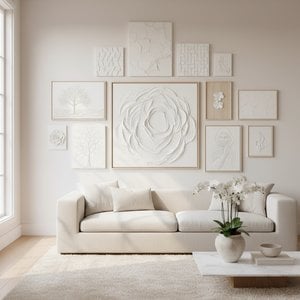
Explore 10 iconic white paintings by Monet, Whistler & Rothko! Discover the stories behind these serene masterpieces and their impact on art history. Find museum-quality reproductions for your home decor at .

Journey through Wassily Kandinsky's 25 most iconic abstract paintings. Explore his revolutionary use of color, form & spiritual expressionism. Find museum-quality Kandinsky reproductions and elevate your home decor with WahooArt.com. Discover all masterpieces on WahooArt.com!
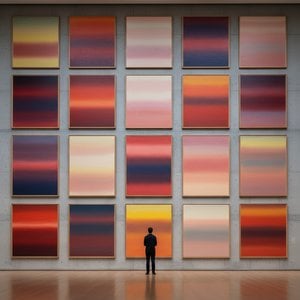
Explore 25 iconic Mark Rothko paintings that define Abstract Expressionism. Discover the stories, colors & emotions behind these masterpieces. Find museum-quality art reproductions and curated decor ideas at WahooArt.com.
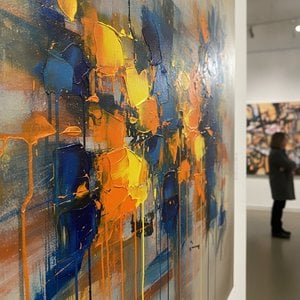
Master the high-impact world of contemporary abstraction. Discover how bold colors, textures, and modern movements like Abstract Expressionism can transform your space with premium, high-energy art curated for the design-conscious professional.


Stay updated with the latest art news, exclusive offers, and decoration ideas.
Tell us about your project and our art experts will provide you with 3 personalized art suggestions.
Let Us Curate 3 Options Just for You - Free!

 Preview
 Send
Send Share
Share
 Details

 Download
 Similars
 X-Ray
X-Ray Diaporama
 Read More




































 Glass option is only available in size under 110 CM


![Abstract Composition [triptych] — Vaclav Vytlacil, Abstract Expressionism](/media/artworks/images-thumb/08/3c/083c0675045645fd42d4e6c6d63f1ced.jpg)


