FREE ART CONSULTATION

x
Buy print Buy printBuy Image Buy Image SendSend
DetailsDetails Add to favorites Add to favorites DownloadDownload SimilarsSimilars X-RayX-Ray DiaporamaDiaporama

Unknow

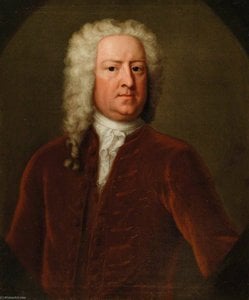
Explore 'Unknow' by Albert Herter (1871-1950), a monumental 18th-century oil painting of formal gathering. Admire its realism, rich details & symbolic elements. #art #herter #portraiture

Discover Albert Herter (1871-1950), an American painter & designer celebrated for his murals like 'Le Départ des Poilus,' elegant interiors, and tapestry designs with Herter Looms. Explore his artistic legacy!

Hand Made Oil Reproduction

Hand-painted oil on canvas in your size and frame, made to order by our artists.

Standard
custom
CM
INCH

Pick from our preset sizes that match the artwork's original proportions.

width
height

You may enter your own dimensions to fit a specific frame or space. If your selected size does not match the original image's proportions, we will either crop the artwork or extend the painting with additional hand-painted elements. A digital mockup will be sent for your approval before production begins.
Please note that the on-screen preview does not reflect the actual cropping or extension. Only the mockup will accurately show the final composition.
While custom sizes are available, we recommend selecting a dimension from the predefined list to preserve the original proportions.

Examples of what can be changed: Replace face with customer photo; Add pet (e.g., replace cat with dog); Include hidden message in background; Change background landscape or elements.
After order, WahooArt.com team will email client for instructions and provide a mockup preview

Worldwide Delivery () in 3/4 weeks instead of standard 5 weeks. (3 July). No compromise on quality.

why_choose_icon
Free Worldwide Express Shipping
why_choose_icon
High-Quality Linen Canvas
why_choose_icon
Full Shipping Insurance
why_choose_icon
Customs Tax Refund Guarantee
why_choose_icon
True Color Matching Guarantee
why_choose_icon
60-Day Return Policy (Defects Only)
why_choose_icon
100% Money-Back Guarantee
why_choose_icon
Bulk Discount Offer

Total Price

-

reproduction

Unknow

Reproduction Medium

Reproduction Size

-

Total Price

-


Artist Biography

A Life Bridging Tradition and Modernity

Albert Herter, born in New York City in 1871, emerged as a significant figure in American art during a period of dynamic transition. His life story is one interwoven with artistic heritage, familial success, and a dedication to diverse creative pursuits—spanning painting, illustration, mural design, and even textile manufacturing. The son of Christian Herter, co-founder of the renowned interior design firm Herter Brothers, Albert was immersed in an environment that valued aesthetic refinement from his earliest years. This upbringing instilled not only an appreciation for beauty but also a practical understanding of design principles that would inform his artistic endeavors throughout his career. He received formal training at the Art Students League in New York, laying a foundation in traditional techniques before venturing to Paris to further hone his skills under the tutelage of Jean-Paul Laurens and Fernand Cormon. This European sojourn proved pivotal, exposing him to classical traditions and shaping his initial artistic style.

From Parisian Salons to American Murals

Herter’s early career blossomed with notable recognition on both sides of the Atlantic. An honorable mention at the prestigious Paris Salon in 1890—for *La Femme de Buddha*—marked a promising start, followed by accolades from the Pennsylvania Academy of the Fine Arts and the American Watercolor Society. These successes established him as a rising talent, capable of capturing both technical skill and emotional resonance within his work. While he excelled in easel painting, Herter quickly diversified his artistic output. He found considerable success as an illustrator, contributing to popular publications like *Ladies' Home Journal* and illustrating several books, demonstrating a versatility that was increasingly valued in the burgeoning commercial art world. However, it was through large-scale mural commissions that Herter truly left his mark on the American landscape. His allegorical depiction of the United States Declaration of Independence for the Denver Auditorium showcased his ability to translate complex narratives into visually compelling forms. This talent led to further prestigious projects adorning the Massachusetts Statehouse, the Wisconsin State Capitol, and the Los Angeles Public Library—monumental works that cemented his reputation as a leading muralist of his time. Perhaps his most poignant and historically significant work is *Le Départ des Poilus, Août 1914* (Departure of the Infantrymen, August 1914), created for Gare de Paris-Est in Paris. This powerful mural, commemorating the outbreak of World War I, poignantly features portraits of his son and wife, transforming a national event into a deeply personal statement.

A Legacy Woven in Art and Enterprise

Beyond his achievements as a painter and muralist, Albert Herter demonstrated an entrepreneurial spirit that reflected his family’s legacy in design. Following the closure of Herter Brothers in 1906, he founded Herter Looms in 1909—a tapestry and textile design-and-manufacturing firm. This venture wasn't merely a business undertaking; it was a continuation of the artistic tradition established by his father, blending creativity with craftsmanship. The firm quickly gained recognition for its high-quality textiles and innovative designs, further solidifying the Herter name as synonymous with refined aesthetics. His versatility extended to interior design as well, contributing to the opulent interiors of theaters like Loew's Warfield Theater in San Francisco and the Martin Beck Theatre in New York City—spaces designed to immerse audiences in worlds of beauty and spectacle.

A Lasting Impression on American Art

Albert Herter’s artistic style represents a fascinating synthesis of academic training, illustrative skill, and decorative sensibilities. While not always aligned with the avant-garde movements that defined early 20th-century art, his work embodies a sophisticated blend of realism and romanticism. His murals are particularly notable for their scale, historical subject matter, and meticulous attention to detail—contributing significantly to the development of public art in America. He died on February 15, 1950, leaving behind a diverse body of work that continues to resonate with its blend of technical mastery and emotional depth. Though perhaps not as widely celebrated today as some of his contemporaries, Albert Herter remains an important figure in American art history—a testament to the enduring power of artistic vision and entrepreneurial spirit. His life serves as a reminder of a time when art was deeply integrated into all aspects of life, from grand public spaces to intimate domestic settings, and when artists were often polymaths, seamlessly navigating multiple creative disciplines. His legacy is woven not only into the canvases he painted and the murals he created but also into the very fabric of American design.
Albert Herter

Albert Herter

1871 - 1950 , United States of America

Quick Facts

  • Artistic Movement Or Style: Academic, Impressionism
  • Artists Who Influenced This Artist:
    • Jean-Paul Laurens
    • Fernand Cormon
  • Date Of Birth: March 2, 1871
  • Date Of Death: February 15, 1950
  • Full Name: Albert Herter
  • Nationality: American
  • Notable Artworks:
    • Le Départ des Poilus
    • Lady In A Kimona
    • Portrait Of Bessie
    • Oeuvre De Albert Herter Ianugure
  • Place Of Birth: New York City, USA
Explore artworks organized by themes, styles, and characteristics.