

 Oil On PanelFlemish Baroque
 1638
1638 41.0 x 37.0 cm
 English Heritage
Museum-quality giclée or canvas print with fast production and flexible finish options. ( Buy Hand Made Painting Switch to Digital Image)





























Pick from our preset sizes that match the artwork's original proportions.

You may enter your own dimensions to fit a specific frame or space. If your selected size does not match the original image's proportions, we will either crop the artwork or extend the image with a mirrored or solid-fill edge. A digital mockup will be sent for your approval before production begins.
Please note that the on-screen preview does not reflect the actual cropping or extension. Only the mockup will accurately show the final composition.
While custom sizes are available, we recommend selecting a dimension from the predefined list to preserve the original proportions.
Worldwide Delivery () in 2 weeks instead of standard 4/5 weeks. (22 September)


The Smokers
Reproduction Size
Adriaen Brouwer's "The Smokers," painted around 1636, isn’t merely a depiction of men enjoying a pipe; it’s a vibrant window into the social fabric and everyday realities of 17th-century Flanders. This remarkable oil on wood panel, now residing within the hallowed halls of the Metropolitan Museum of Art in New York, captures a moment of convivial chaos—a scene brimming with life, humor, and subtle commentary on the era’s values. Brouwer, a master of genre painting, eschewed the idealized portraits favored by many of his contemporaries, instead choosing to portray the lives of ordinary people – peasants, soldiers, tavern patrons – in all their earthy glory.
The scene unfolds within a dimly lit interior, likely a tavern or communal gathering space. Five figures dominate the composition: a central man, presumably Brouwer himself, leans forward, puffing on his pipe with an expression of surprised delight; to his right, another man lies sprawled on the floor, equally absorbed in his smoking pastime. A third man is seated at a table, engaged in a game of cards, while a fourth man enters through a doorway, adding a dynamic element to the tableau. A woman stands by a window, observing the scene with a detached air—a subtle reminder of the domestic sphere and perhaps a hint of social commentary on the roles of men and women at the time. Brouwer’s masterful use of light and shadow creates a palpable sense of depth and atmosphere, drawing the viewer into this intimate slice of life.
Brouwer's technique is characterized by its remarkable realism and attention to detail. He wasn’t interested in romanticizing or idealizing his subjects; instead, he meticulously observed their postures, expressions, and clothing, rendering them with astonishing accuracy. The brushstrokes are loose and expressive, conveying a sense of movement and spontaneity. Notice the subtle variations in skin tones, the wrinkles around the eyes, and the way the smoke curls from the pipes—these details contribute to the painting’s overall sense of authenticity. Brouwer's style is often described as “tronies”—studies of facial expressions that capture fleeting emotions and psychological states. “The Smokers” exemplifies this approach, offering a glimpse into the inner lives of its subjects.
Beyond its immediate visual appeal, "The Smokers" is rich in symbolic meaning. Smoking itself was a relatively new practice in 17th-century Europe, initially associated with the upper classes and considered somewhat decadent. Brouwer’s depiction of men casually enjoying pipes challenges this perception, suggesting that even the common folk embraced this pastime. The scene also subtly critiques social hierarchies—the seated man playing cards, the lying figure on the floor—reflecting a world where status was often determined by wealth and leisure. The woman observing from the window represents the watchful eye of society, reminding us that these moments of revelry were always subject to scrutiny.
"The Smokers" remains a powerful testament to Adriaen Brouwer’s artistic genius and his ability to capture the essence of human experience. It's more than just a painting; it’s a social document, a psychological study, and a celebration of everyday life—a timeless masterpiece that continues to fascinate and inspire viewers centuries after its creation. Reproductions of this iconic work offer a remarkable opportunity to bring this vibrant scene into your home, inviting you to contemplate the complexities of human nature and the enduring appeal of simple pleasures.


1635 - 1638 , Belgium
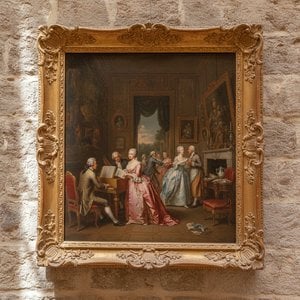
Explore the profound beauty of genre painting. From Dutch Golden Age masters to global traditions, discover how artists capture the essence of everyday life through masterful realism and timeless storytelling.

 Preview
 Send
Send Share
Share
 Details
 Guide
Guide

 Download
 Similars
 X-Ray
X-Ray Diaporama
 Stats
Stats Read More







 Glass option is only available in size under 110 CM


