Emile Claus, 1849 – 1924

Emile Claus: The 49 Most Famous Paintings

Sunset over Waterloo Bridge (1916) is the most famous painting by Emile Claus. The Old Gardener and Waterloo Bridge in the Sun (1916) are the next two works the world knows best. From the 49 works of Emile Claus in our catalogue, here are the 49 that collectors and museum visitors look at most, with the year, the museum and the story of each.

Ranked by our popularity score, which combines the searches, visits and orders for each work. Updated October 2026. Every masterpiece on this page can be ordered as a museum-quality, hand-painted oil reproduction or a fine art print, at the size you choose.

Portrait of Emile Claus
Emile Claus · 1849 – 1924
Born · died
1849 – 1924, Sint-Eloois-Vijve
Movement
Impressionism
Works in our catalogue
49
Most famous
Sunset over Waterloo Bridge (1916)
Most works at
Museum of Fine Arts Ghent (MSK)

Top 10: Emile Claus's best-known paintings

Sunset over Waterloo Bridge (1916) by Emile Claus
1

Sunset over Waterloo Bridge

1916 · Acrylic On Canvas

In "Sunset over Waterloo Bridge" by Emile Claus, the structure of the bridge spans the entire width of the scene. Its stone arches emerge on both sides, anchoring the composition against the movement of the water. Near the left edge, a single boat floats upon the river, a quiet presence amidst the flow. The artist captures the essence of London during the sunset, using the light to define the meeting…

Hand-painted oil reproduction from $181 29 × 35 cm
The Old Gardener by Emile Claus
2

The Old Gardener

Oil On Canvas

In his 1885 masterpiece, "The Old Gardener," Emil Claus offers a profound meditation on the quiet dignity of rural existence. This Belgian Realist work transcends a simple depiction of labor, evolving into a luminous study of light and the passage of time. Through a meticulous application of oil on canvas, Claus employs thin glazes of pigment to create a textural richness that allows light to penetrate the surface, imbuing the…

Hand-painted oil reproduction from $181 26 × 39 cm
Waterloo Bridge in the Sun (1916) by Emile Claus
3

Waterloo Bridge in the Sun

1916 · Oil On Canvas

Waterloo Bridge in the Sun is an oil on canvas painting by Emile Claus. Created in 1916, this work captures an urban landscape centered on the Waterloo Bridge and the surrounding London skyline. The scene reflects a specific moment in the city, focusing on the architectural presence of the bridge as it spans the river under a bright, cloudy sky.

Hand-painted oil reproduction from $181 35 × 28 cm

The rest of the Emile Claus ranking, 11 to 49

Skaters (1891) by Emile Claus
#34

Skaters

1891 · Museum voor Schone Kunsten

Emile Claus's "Skaters," painted in 1891, is more than just a depiction of winter activity; it’s a masterful study in light, atmosphere, and the quiet beauty of everyday…

Commission a hand-painted copy from $181 →
The Gate (1899) by Emile Claus
#35

The Gate

1899

Emile Claus’s “The Gate” is more than just a depiction of a white house with a red roof; it's an immersive experience of serene beauty, meticulously crafted in…

Bring it home from $181 →
Picking blossoms by Emile Claus

Emile Claus (1849-1924) stands as the undisputed champion of Belgian Impressionism, an artist whose canvases radiate with a luminosity that continues to captivate audiences today. Born in Sint-Eloois-Vijve,…

Order a reproduction from $181 →

The subjects Emile Claus painted most

The four subjects that return most often among these masterpieces, with the finest example of each.

Where to see Emile Claus's paintings

The 8 museums that hold the most of the paintings on this page.

Museum City Works by Emile Claus Paintings from this list
Museum of Fine Arts Ghent (MSK), GhentMuseum of Fine Arts Ghent (MSK) Ghent 12 Portrait of the Artist Marie Moreels, Girls in the field, Portrait of Anna de Weert
Royal Museums of Fine Arts of Belgium, BrusselsRoyal Museums of Fine Arts of Belgium Brussels 6 Portrait of Jenny Montigny, Cows crossing the Lys River, Flax harvesting
Royal Museum of Fine Arts Antwerp, AntwerpRoyal Museum of Fine Arts Antwerp Antwerp 4 Flaxweeding in Flanders, Winter, De markt voor de schouwburg in Antwerpen
Groeningemuseum, BruggeGroeningemuseum Brugge 1 The river Lys at Astene
Art Gallery of South Australia, AdelaideArt Gallery of South Australia Adelaide 1 Ampelio, old fisherman of Bordighera
Fin-de-Siècle Museum, BrusselsFin-de-Siècle Museum Brussels 1 Trees along the Lys
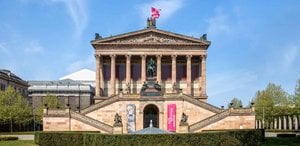
Alte Nationalgalerie, BerlinAlte Nationalgalerie Berlin 1 February Morning
Palais des Beaux-Arts de Lille, LillePalais des Beaux-Arts de Lille Lille 1 The Orchard in Spring

Emile Claus through the decades: one masterpiece for each

  1. 1880s
  2. 1890s
  3. 1900s
  4. 1910s
    Sunset over Waterloo Bridge (1916) by Emile Claus
    Rank 1 / 49

    Sunset over Waterloo Bridge

    Age 61 – 70

    In "Sunset over Waterloo Bridge" by Emile Claus, the structure of the bridge spans the entire width of the scene. Its stone arches emerge on both sides, anchoring…

Emile Claus's paintings: frequently asked questions

What is the most famous Emile Claus painting?Show the answer

Sunset over Waterloo Bridge (1916). Next come The Old Gardener and Waterloo Bridge in the Sun (1916).

At what age did Emile Claus paint Sunset over Waterloo Bridge?Show the answer

67 years old: Sunset over Waterloo Bridge dates from 1916 and Emile Claus was born in 1849.

Which are the 10 most famous Emile Claus paintings?Show the answer

Sunset over Waterloo Bridge, The Old Gardener, Waterloo Bridge in the Sun, Portrait of the Artist Marie Moreels, The river Lys at Astene, Girls in the field, Flaxweeding in Flanders, Ampelio, old fisherman of Bordighera, Blonde Girl and Portrait of Jenny Montigny. The ranking above gives the year and the museum of each.

How many paintings by Emile Claus are there?Show the answer

Our catalogue lists 49 works by Emile Claus, dated from 1880 to 1918.

Where can I see the most famous Emile Claus paintings?Show the answer

Most of them are in Museum of Fine Arts Ghent (MSK) (Ghent), Royal Museums of Fine Arts of Belgium (Brussels) and Royal Museum of Fine Arts Antwerp (Antwerp). The table above lists the museums one by one.

In which period did Emile Claus paint the best-known works?Show the answer

In 1890s: 14 of the 49 works on this page date from then, among them Girls in the field.

What is the earliest famous Emile Claus painting, and the latest?Show the answer

The earliest on this page is Portrait of the Artist Marie Moreels (1880), the latest Morning Reflection on the Thames in London (1918).

What subjects did Emile Claus paint?Show the answer

Landscape (5), Sky (3) and Flowers (3), among the 49 works on this page.

What did Emile Claus paint on, and with what?Show the answer

Acrylic On Canvas: 7 of the 49 works on this page.

Which movement does Emile Claus's art belong to?Show the answer

Impressionism, as the paintings on this page show.

What Emile Claus paintings does the Museum of Fine Arts Ghent (MSK) hold?Show the answer

Portrait of the Artist Marie Moreels, Girls in the field and Portrait of Anna de Weert are among the 12 works on this page held by the Museum of Fine Arts Ghent (MSK), Ghent.

Where can I buy a Emile Claus reproduction?Show the answer

Yes. Every painting on this page can be ordered as a museum-quality, hand-painted oil reproduction or a fine art print, in the size you choose, from the painting's own page.

Emile Claus: biography

Emile Claus: The Painter of Light and the Lys

Born in Sint-Eloois-Vijve, a small village nestled along the banks of the River Lys in West Flanders, Belgium, on September 27th, 1849, Emile Claus’s life was inextricably linked to the landscape that would become the very essence of his art. The twelfth child in a large family—his father, Alexander, a grocer and publican, and his mother, Célestine Verbauwhede, a woman of Brabant skipper lineage—Claus’s early years were marked by a practical upbringing, far removed from the world of artistic pursuits. However, even as a young boy, he demonstrated an undeniable passion for drawing, spending Sundays embarking on a three-kilometer journey to Waregem to attend lessons at the local academy. This nascent talent, nurtured with dedication, ultimately led him to break free from his family’s expectations and pursue his artistic calling.

Initially discouraged by his father's reservations about a career in art, Claus found an unexpected champion in the renowned composer Peter Benoit, a neighbor and acquaintance of the family. Benoit, recognizing the young man’s potential, skillfully persuaded Alexander to allow Emile to study at the Antwerp Academy of Fine Arts. This pivotal decision marked the beginning of Claus’s formal artistic training, where he honed his skills under the tutelage of landscape painters Jacob Jacobs and Nicaise De Keyser. It was during this period that he began to develop a distinctive style—a luminous, impressionistic approach deeply rooted in the beauty of the Flemish countryside.

Early Influences and Artistic Evolution

Claus’s early works were characterized by a realistic depiction of rural life, mirroring the daily routines of the Flemish peasantry. However, his artistic trajectory took a dramatic turn following his exposure to the Impressionist movement in Paris. Inspired by the vibrant colors and fleeting effects of light championed by Claude Monet, Claus began to experiment with new techniques, gradually shifting away from strict realism towards a more subjective and atmospheric style. This transition was further solidified through his association with other prominent intellectuals and artists of the time, including sculptor Auguste Rodin, writer Émile Zola, and Belgian novelists Cyriel Buysse, Emile Verhaeren, Pol de Mont, and Maurice Maeterlinck.

The move to *Zonneschijn* (“Sunshine”), a charming cottage near Deinze in 1883, proved to be a crucial turning point. The tranquil setting, with its expansive views of the River Lys, provided Claus with an ideal environment for developing his signature style—luminism. Luminism, as it evolved under Claus’s influence, was characterized by an intense focus on capturing the ephemeral qualities of light and atmosphere, often employing broken brushstrokes and a vibrant palette to evoke a sense of warmth and radiance. This approach distinguished Belgian luminism from its French counterpart, emphasizing the unique beauty of the Flemish landscape.

The Luminist Style and Key Works

Claus’s artistic vision culminated in a series of iconic paintings that continue to captivate viewers today. *The Picnic* (1887), depicting a family enjoying a leisurely afternoon by the river, exemplifies his ability to capture both the idyllic beauty of the scene and the subtle nuances of light and color. Similarly, *The Beet Harvest* (1890) showcases his masterful use of broken brushstrokes and vibrant hues to convey the energy and drama of rural labor. His work *The Ice Birds* (1891), a poignant depiction of children playing on a frozen landscape, reveals a sensitivity to both the beauty and melancholy of winter.

Perhaps one of Claus’s most celebrated works is *Cows Crossing the Lys* (1899). Bathed in golden light and shimmering reflections, this painting embodies the essence of luminism—a celebration of the natural world rendered with exquisite detail and emotional depth. The painting's donation to the Museum of Deinze and the Lys Region, on the condition a museum would be built to house it, speaks volumes about its significance within the local community.

Legacy and Historical Significance

Emile Claus’s impact on Belgian art extends far beyond his individual achievements. He played a pivotal role in establishing luminism as a distinct artistic movement, fostering a vibrant community of artists who shared his passion for capturing the beauty of the Flemish landscape. His influence can be seen in the works of subsequent generations of Belgian painters, and his legacy continues to inspire artists today.

The First World War forced Claus into exile in London, where he continued to paint, producing a series of evocative studies of the River Thames under varying weather conditions. Returning to Astene after the war, he remained there until his death on June 14th, 1924, leaving behind a rich and enduring artistic legacy. Emile Claus’s paintings are not merely representations of landscapes; they are windows into a world of light, color, and emotion—a testament to the power of art to capture the beauty and essence of life.