Vorschau anzeigen In AR ansehen Handgemalte Reproduktion bestellen Zum digitalen Bild wechseln Versenden
Details anzeigen Leitfaden Zu Favoriten hinzufügen Herunterladen Ähnliche Objekte Röntgenaufnahme Diashow Fragen & Antworten Präsentation herunterladen Statistiken

La toilette, ca Private

Abmessungen
120.0 x 118.0 cm

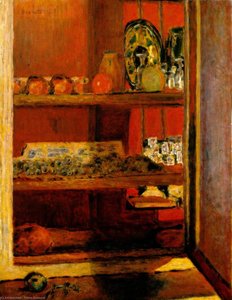
Vivid domestic intimacy in Bonnard's 1932 'La toilette'; explore the warm light and quiet moments of this masterwork reproduction.

Entdecken Sie Pierre Bonnard (1867-1947), den französischen Postimpressionisten! Seine intimen Häuslichkeitsszenen & lebendigen Farben machen ihn einzigartig. Erfahren Sie mehr über sein Werk!

Giclée / Kunstdruck

Giclée- oder Leinwanddruck in Museumsqualität mit schneller Produktion und flexiblen Veredelungsoptionen. ( Handgemalte Reproduktion bestellen Zum digitalen Bild wechseln)

Corner sample of the P118B picture frame: formgepresstes Polystyrol, 5 cm wide and 3 cm thick
P118B €10
Corner sample of the P118H picture frame: formgepresstes Polystyrol, 5 cm wide and 3 cm thick
P118H €10
Corner sample of the P118W picture frame: formgepresstes Polystyrol, 5 cm wide and 3 cm thick
P118W €10
Corner sample of the P438Z picture frame: formgepresstes Polystyrol, 5.5 cm wide and 3.5 cm thick
P438Z €10
Corner sample of the P508JH picture frame: formgepresstes Polystyrol, 7 cm wide and 3.5 cm thick
P508JH €12
Corner sample of the P508YH picture frame: formgepresstes Polystyrol, 7 cm wide and 3.5 cm thick
P508YH €12
Corner sample of the P805H picture frame: formgepresstes Polystyrol, 5 cm wide and 3.5 cm thick
P805H €10
Corner sample of the P805Z picture frame: formgepresstes Polystyrol, 5 cm wide and 3.5 cm thick
P805Z €10
Corner sample of the P919BZ picture frame: formgepresstes Polystyrol, 7 cm wide and 3.5 cm thick
P919BZ €10
Corner sample of the P919G picture frame: formgepresstes Polystyrol, 7 cm wide and 3.5 cm thick
P919G €10
Corner sample of the P919XJ picture frame: formgepresstes Polystyrol, 7 cm wide and 3.5 cm thick
P919XJ €10
Corner sample of the P959ZH picture frame: formgepresstes Polystyrol, 5 cm wide and 3 cm thick
P959ZH €10
Corner sample of the P968JZ picture frame: formgepresstes Polystyrol, 6 cm wide and 4 cm thick
P968JZ €12
Corner sample of the W106C picture frame: Massivholz, 5 cm wide and 3 cm thick
W106C €8
Corner sample of the W218G picture frame: Massivholz, 5 cm wide and 3 cm thick
W218G €10
Corner sample of the W218JH picture frame: Massivholz, 5 cm wide and 3 cm thick
W218JH €8
Corner sample of the W218Y picture frame: Massivholz, 5 cm wide and 3 cm thick
W218Y €10
Corner sample of the W307PJ picture frame: Massivholz, 6 cm wide and 3 cm thick
W307PJ €10
Corner sample of the W316G picture frame: Massivholz, 6 cm wide and 3 cm thick
W316G €10
Corner sample of the W316PJ picture frame: Massivholz, 6 cm wide and 3 cm thick
W316PJ €8
Corner sample of the W316Y picture frame: Massivholz, 6 cm wide and 3 cm thick
W316Y €10
Corner sample of the W398PJ picture frame: Massivholz, 5 cm wide and 3 cm thick
W398PJ €8
Corner sample of the W4111J picture frame: Massivholz, 6.5 cm wide and 3.5 cm thick
W4111J €10
Corner sample of the W500HY picture frame: Massivholz, 7 cm wide and 5 cm thick
W500HY €15
Corner sample of the W500JH picture frame: Massivholz, 7 cm wide and 5 cm thick
W500JH €15
Corner sample of the W692G picture frame: Massivholz, 8 cm wide and 4 cm thick
W692G €12
Corner sample of the W849H picture frame: Massivholz, 5 cm wide and 3 cm thick
W849H €8
Corner sample of the W940BG picture frame: Massivholz, 7.5 cm wide and 4.5 cm thick
W940BG €15
Corner sample of the W953PJ picture frame: Massivholz, 6 cm wide and 3.5 cm thick
W953PJ €8

Standardformat
individuell anpassbar
CM
INCH

Wählen Sie aus unseren vordefinierten Formaten, die den ursprünglichen Proportionen des Kunstwerks entsprechen.

Breite
Höhe

Geben Sie die benötigte Breite und Höhe an, damit der Druck perfekt in Ihren Rahmen oder an Ihre Wand passt. Ein Druck kann nur beschnitten, aber niemals größer als das Originalbild angefertigt werden; daher verliert ein Format mit anderen Proportionen einen Teil des Bildes. Wir senden Ihnen ein digitales Mockup zur Freigabe, bevor wir den Druck ausführen. Das auf dieser Seite gezeigte Bild zeigt nicht den tatsächlichen Beschnitt – dies ist nur im Mockup ersichtlich.

Weltweiter Versand () innerhalb von 2 Wochen statt der üblichen 4/5 Wochen. (8 November)

Kostenloser weltweiter Expressversand
Hochwertige Leinenleinwand
Umfassender Versicherungsschutz beim Versand
Zollgebühren-Rückerstattungsgarantie
Garantie für exakte Farbtreue
100 Tage Rückgaberecht (nur bei Mängeln)
100% Geld-zurück-Garantie
Mengenrabatt verfügbar

Gesamtpreis

€ 62

La toilette, ca Private

Giclée / Kunstdruck

Format der Reproduktion

-

Endpreis

€ 62

A Glimpse into Intimate Domesticity

Pierre Bonnard’s La toilette, ca Private transports us into a moment suspended in time—a private ritual unfolding within the soft embrace of a sunlit bedroom. The scene is less a mere depiction and more an immersion into memory itself. We find ourselves observing a woman near a window, her lower form anchoring the composition while the surrounding elements whisper tales of domestic life. Bonnard masterfully captures the interplay between the figure and her immediate environment; the bed rests quietly to the left, suggesting repose, while in the background, a dining table holds its scattered artifacts—bottles catching the light, a waiting bowl, and a cup hinting at recent company or anticipated solitude.

The Poetry of Light and Color

Technically, Bonnard remains a master colorist. His palette here is saturated yet luminous, characteristic of his later work where everyday objects become vehicles for pure chromatic experience. The light itself seems to possess weight, filtering through the room to illuminate textures—the sheen on the scattered bottles, the soft drape of fabric, and the gentle fur of the dog curled near the right edge. This inclusion of the sleeping companion adds an essential layer of warmth, grounding the otherwise ethereal quality of the scene. It is in these seemingly incidental details—the arrangement of objects, the languid posture of the pet—that Bonnard’s genius shines through.

Historical Echoes and Emotional Resonance

Painted in 1932, this work exists at a fascinating crossroads for the artist. While the echoes of his Nabis period inform the intimacy and decorative quality of the scene, the painting possesses a mature sense of quietude. It speaks to an era grappling with changing domestic roles and the private emotional landscape beneath polite society’s veneer. The overall feeling is one of luxurious introspection; it is the moment before dressing, the pause between activities, when the self confronts its own reflection amidst familiar comforts. For the collector or designer, this piece offers not just decoration, but a palpable atmosphere—a sophisticated sense of lived-in elegance.

Bringing Bonnard’s Light Home

To reproduce such a nuanced work requires an understanding that goes beyond mere pigment matching; it demands capturing the feeling. A high-quality reproduction allows one to integrate this vibrant, intimate corner of French modernism into your own space. Imagine the soft glow of Bonnard’s light washing over your walls, transforming a simple room into a sanctuary steeped in artistic contemplation. It is an invitation to slow down, to notice the beauty in the mundane—the curve of a vase, the shadow cast by a window frame, or the quiet companionship of a beloved pet.

Fragen & Antworten

Welche Stimmung erzeugen die Farben von "La toilette, ca Private" von Pierre Bonnard?

In "La toilette, ca Private" begleiten Erdig-Farbtöne ein Reflektierend Gefühl.

Welche Farbe sticht in "La toilette, ca Private" am meisten hervor?

Die dominante Farbe von "La toilette, ca Private" von Pierre Bonnard ist Espresso (#452e25).

Welche Maße hat "La toilette, ca Private" von Pierre Bonnard im Original?

Das Originalwerk "La toilette, ca Private" hat die Maße 120 x 118 cm. Die Originalmaße dienen als hilfreiche Orientierungshilfe bei der Wahl der Reproduktionsgröße.


Künstlerbiografie

Frühe Jahre und Karriere

Pierre Bonnard wurde am 3. Oktober 1867 in Fontenay-aux-Roses, im Département Hauts-de-Seine, geboren. Er entstammte einer wohlhabenden Familie; sein Vater war ein hoher Beamter im französischen Kriegsministerium. Bonnard zeigte früh künstlerisches Talent und besuchte zunächst das Lycée Louis-le-Grand und später das Lycée Charlemagne in Vanves. Obwohl er von seinem Vater dazu gedrängt wurde, eine Karriere im Staatsdienst anzutreten, entschied sich Bonnard für die Kunst. Er studierte Jura, um seinen Vater zufriedenzustellen, begann aber gleichzeitig mit dem Studium an der Académie Julian und der École des Beaux-Arts, wo er Freundschaften mit anderen Künstlern wie Édouard Vuillard schloss.

Die Nabi-Bewegung und Postimpressionismus

Um 1891 lernte Bonnard Toulouse-Lautrec kennen und begann, seine Werke auf Ausstellungen zu zeigen. Er engagierte sich auch in der Zeitschrift *La Revue Blanche*, für die er Frontispizien entwarf. Bonnard war ein Gründungsmitglied der Nabi-Bewegung (*Les Nabis*), einer Gruppe von Künstlern, die sich gegen den Impressionismus wandten und nach neuen Ausdrucksformen suchten. Die frühen Werke Bonnards zeigen den Einfluss japanischer Holzschnitte und Paul Gauguins. Er entwickelte einen eigenen Stil, der durch eine Vereinfachung der Formen und eine Verwendung flacher Farbflächen gekennzeichnet ist.

Intimität und häusliche Szenen

Bonnard bevorzugte es, aus dem Gedächtnis zu malen und nutzte Skizzen als Referenzmaterial. Dies verlieh seinen Bildern eine traumartige Qualität. Er widmete sich vor allem intimen häuslichen Szenen, oft mit seiner Frau Marthe de Meligny als Modell. Diese Darstellung des Alltäglichen und Intimen brachte ihm den Beinamen "Intimisten" ein. Bonnard konzentrierte sich auf die Wiedergabe von Lichtstimmungen und Farbkombinationen, wobei er die Perspektive oft vernachlässigte.

Spätere Jahre und künstlerische Entwicklung

In den 1910er Jahren zog Bonnard nach Vernonnet in der Normandie, wo er das Haus "La Roulotte" kaufte. Hier schuf er zahlreiche Gemälde, inspiriert von der Landschaft und dem Garten. Er pflegte eine enge Freundschaft zu Claude Monet, der ebenfalls in Giverny lebte. Bonnards Farbpalette wurde zunehmend intensiver und leuchtender. Nach Monets Tod zog Bonnard nach Le Cannet an der Côte d'Azur, wo er bis zu seinem Tod am 23. Januar 1947 lebte. Er vollendete sein letztes Gemälde, *Die Mandeltraube in Blüte*, nur wenige Tage vor seinem Ableben.

Bedeutung und Vermächtnis

Pierre Bonnard gilt als einer der bedeutendsten französischen Maler des frühen 20. Jahrhunderts. Sein Werk zeichnet sich durch eine einzigartige Sensibilität für Farbe und Licht aus. Er trug maßgeblich zur Entwicklung des Postimpressionismus bei und beeinflusste nachfolgende Künstlergenerationen. Bonnards Gemälde sind heute in zahlreichen renommierten Museen weltweit zu sehen, darunter das Musée Marmottan Monet in Paris und das Art Institute of Chicago.
Pierre Bonnard

Pierre Bonnard

1867 - 1947 , Frankreich

Kurzinfos

  • Beeinflusste Künstler/Bewegungen: ['Intimismus']
  • Bemerkenswerte Werke:
    • Frau in kariertem Kleid (1890)
    • Die Mandeltraube in Blüte
  • Einflussreiche Künstler:
    • Paul Gauguin
    • Hokusai
  • Geburtsdatum: 03. Oktober 1867
  • Geburtsort: Fontenay-aux-Roses, Frankreich
  • Künstlerische Bewegung: Postimpressionismus, Nabi
  • Nationalität: Französisch
  • Sterbedatum: 23. Januar 1947
  • Vollständiger Name: Pierre Bonnard
Entdecken Sie Kunstwerke, die nach Themen, Stilen und Merkmalen sortiert sind.