In echtem Maßstab anzeigen In AR an der Wand sehen Zum Druck wechseln Zum digitalen Bild wechseln Versenden als Grußkarte
Details anzeigen Leitfaden öffnen Zu Favoriten hinzufügen Herunterladen Ähnliche Objekte Röntgenaufnahme Diashow Besucherstatistiken

Before Dinner

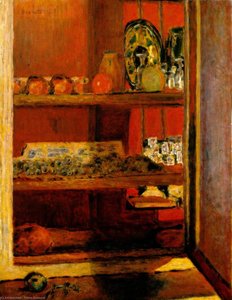
Experience Pierre Bonnard’s ‘Before Dinner,’ a captivating 1924 painting of a family enjoying a quiet meal in a warmly lit domestic setting, showcasing the artist's signature style and color palette. Discover this beautiful artwork and bring its charm into your home.

Entdecken Sie Pierre Bonnard (1867-1947), den französischen Postimpressionisten! Seine intimen Häuslichkeitsszenen & lebendigen Farben machen ihn einzigartig. Erfahren Sie mehr über sein Werk!

Handgefertigte Ölreproduktion

Handgemaltes Ölgemälde auf Leinwand in Ihrer Wunschgröße und mit Rahmen, auf Bestellung von unseren Künstlern angefertigt. ( Zum Druck wechseln Zum digitalen Bild wechseln)

Corner sample of the P118B picture frame: formgepresstes Polystyrol, 5 cm wide and 3 cm thick
P118B 10
Corner sample of the P118H picture frame: formgepresstes Polystyrol, 5 cm wide and 3 cm thick
P118H 10
Corner sample of the P118W picture frame: formgepresstes Polystyrol, 5 cm wide and 3 cm thick
P118W 10
Corner sample of the P438Z picture frame: formgepresstes Polystyrol, 5.5 cm wide and 3.5 cm thick
P438Z 10
Corner sample of the P508JH picture frame: formgepresstes Polystyrol, 7 cm wide and 3.5 cm thick
P508JH 12
Corner sample of the P508YH picture frame: formgepresstes Polystyrol, 7 cm wide and 3.5 cm thick
P508YH 12
Corner sample of the P805H picture frame: formgepresstes Polystyrol, 5 cm wide and 3.5 cm thick
P805H 10
Corner sample of the P805Z picture frame: formgepresstes Polystyrol, 5 cm wide and 3.5 cm thick
P805Z 10
Corner sample of the P919BZ picture frame: formgepresstes Polystyrol, 7 cm wide and 3.5 cm thick
P919BZ 10
Corner sample of the P919G picture frame: formgepresstes Polystyrol, 7 cm wide and 3.5 cm thick
P919G 10
Corner sample of the P919XJ picture frame: formgepresstes Polystyrol, 7 cm wide and 3.5 cm thick
P919XJ 10
Corner sample of the P959ZH picture frame: formgepresstes Polystyrol, 5 cm wide and 3 cm thick
P959ZH 10
Corner sample of the P968JZ picture frame: formgepresstes Polystyrol, 6 cm wide and 4 cm thick
P968JZ 12
Corner sample of the W106C picture frame: Massivholz, 5 cm wide and 3 cm thick
W106C 8
Corner sample of the W218G picture frame: Massivholz, 5 cm wide and 3 cm thick
W218G 10
Corner sample of the W218JH picture frame: Massivholz, 5 cm wide and 3 cm thick
W218JH 8
Corner sample of the W218Y picture frame: Massivholz, 5 cm wide and 3 cm thick
W218Y 10
Corner sample of the W307PJ picture frame: Massivholz, 6 cm wide and 3 cm thick
W307PJ 10
Corner sample of the W316G picture frame: Massivholz, 6 cm wide and 3 cm thick
W316G 10
Corner sample of the W316PJ picture frame: Massivholz, 6 cm wide and 3 cm thick
W316PJ 8
Corner sample of the W316Y picture frame: Massivholz, 6 cm wide and 3 cm thick
W316Y 10
Corner sample of the W398PJ picture frame: Massivholz, 5 cm wide and 3 cm thick
W398PJ 8
Corner sample of the W4111J picture frame: Massivholz, 6.5 cm wide and 3.5 cm thick
W4111J 10
Corner sample of the W500HY picture frame: Massivholz, 7 cm wide and 5 cm thick
W500HY 15
Corner sample of the W500JH picture frame: Massivholz, 7 cm wide and 5 cm thick
W500JH 15
Corner sample of the W692G picture frame: Massivholz, 8 cm wide and 4 cm thick
W692G 12
Corner sample of the W849H picture frame: Massivholz, 5 cm wide and 3 cm thick
W849H 8
Corner sample of the W940BG picture frame: Massivholz, 7.5 cm wide and 4.5 cm thick
W940BG 15
Corner sample of the W953PJ picture frame: Massivholz, 6 cm wide and 3.5 cm thick
W953PJ 8

Standardformat
individuell anpassbar
CM
INCH

Wählen Sie aus unseren vordefinierten Formaten, die den ursprünglichen Proportionen des Kunstwerks entsprechen.

Breite
Höhe

Geben Sie die Breite und die Höhe an, die Sie für Ihren Rahmen oder Ihre Wand benötigen. Da dieses Werk handgemalt ist, kann der Künstler bei einer anderen Form etwas mehr um das Bild herum malen oder etwas abschneiden – Sie entscheiden. Wir senden Ihnen ein digitales Mockup zur Freigabe, bevor mit dem Malen begonnen wird. Das auf dieser Seite gezeigte Bild stellt nicht das tatsächliche Ergebnis dar – dies tut nur das Mockup.

Beispiele für Anpassungsmöglichkeiten: Gesicht durch Kundenfoto ersetzen; Haustier hinzufügen (z. B. Katze durch Hund ersetzen); eine versteckte Nachricht im Hintergrund einfügen; Hintergrundlandschaft oder -elemente ändern.
Nach der Bestellung wird das WahooArt.com-Team dem Kunden Anweisungen per E-Mail zusenden und eine Mockup-Vorschau bereitstellen.

Weltweiter Versand () in nur 3 bis 4 Wochen statt der üblichen 5 Wochen. (16 Oktober). Keine Kompromisse bei der Qualität.

Kostenloser weltweiter Expressversand
Hochwertige Leinenleinwand
Vollständiger Versicherungsschutz beim Versand
Zollgebühren-Rückerstattungsgarantie
Garantie für exakte Farbtreue
100-tägiges Rückgaberecht (nur bei Mängeln)
100% Geld-zurück-Garantie
Angebot für Mengenrabatt

Gesamtpreis

€ 237

Before Dinner

Reproduktionsmedium

Format der Reproduktion

-

Gesamtpreis

€ 237

Kurzübersicht

  • Artist: Pierre Bonnard
  • Dimensions: 90 x 106 cm
  • Artistic style: Post-Impressionism
  • Movement: Nabis
  • Notable elements: Family dinner scene

A Moment of Domestic Tranquility: Pierre Bonnard’s “Before Dinner”

Pierre Bonnard's "Before Dinner," painted in 1924, offers a poignant glimpse into the quiet intimacy of everyday life – a scene rendered with the masterly precision and luminous color palette that defined his mature style. Measuring 90 x 106 cm, this work captures a family gathered around a dining table, not as a grand spectacle but as a tender tableau of shared moments. The composition immediately draws the eye to the two figures seated at the table, their postures suggesting a comfortable familiarity, perhaps lost in conversation or simply enjoying the anticipation of the meal to come. Bonnard’s ability to distill complex emotion into simple gestures is evident in the woman on the right, her gaze downward hinting at a private thought or observation – a subtle detail that elevates the scene beyond mere representation.

The Nabis Influence and Bonnard's Palette

Painted during a period of relative stability after World War I, “Before Dinner” reflects Bonnard’s continued engagement with the principles of the Nabis group, of which he was a founding member. The Nabis, meaning "the prophets," sought to use color as the primary means of expression, rejecting academic realism in favor of subjective perception. This is powerfully evident in Bonnard's masterful manipulation of light and shadow, creating an atmosphere that is both warm and subtly melancholic. Notice the interplay of ochres, blues, and greens – colors he frequently employed to evoke a sense of nostalgia and domestic comfort. His technique involved layering thin glazes of paint, building up depth and luminosity with remarkable skill. The brushstrokes are visible yet controlled, contributing to the painting’s tactile quality and reinforcing its impressionistic character.

Symbolism of Still Life and Family

Beyond its immediate depiction of a family meal, “Before Dinner” is rich in symbolic resonance. The carefully arranged table setting – the wine glasses, cutlery, and bottles – transcends mere practicality; it becomes a still life imbued with emotional significance. These objects are not simply props but contribute to the overall mood and narrative. The presence of multiple items suggests abundance and warmth, while the slightly disordered arrangement hints at the natural chaos of family life. Bonnard’s focus on domestic subjects was a deliberate choice, reflecting his deep empathy for the lives of ordinary people and his desire to capture the beauty he found in everyday moments. This work speaks to the core values of the time – family, comfort, and simple pleasures.

A Legacy of Light and Emotion

"Before Dinner" stands as a testament to Pierre Bonnard’s enduring legacy as one of France's most beloved Impressionist painters. Its quiet beauty, coupled with its technical brilliance, continues to resonate with viewers today. This hand-painted reproduction offers an exceptional opportunity to experience the full impact of Bonnard’s artistic vision – a chance to bring a touch of his luminous world into your own home or office. The meticulous detail and vibrant colors faithfully recreate the original painting's emotional depth, making it a truly captivating addition to any art collection.

Fragen & Antworten

Was stellt "Before Dinner" von Pierre Bonnard dar und welche Stimmung vermittelt es?

"Before Dinner" von Pierre Bonnard stellt family dinner, dining table, pierre bonnard, french art, domestic scene, wine glass, color palette in einer Nostalgic Stimmung dar. Motiv und Atmosphäre beschreiben gemeinsam das Werk.

Welche Technik und welche Größe hat das Original von "Before Dinner" von Pierre Bonnard?

Das Originalwerk "Before Dinner" von Pierre Bonnard ist ein Acrylic On Canvas mit den Maßen 90 x 106 cm. Technik und Größe beziehen sich auf das Originalobjekt.

In welchem Raum des Zuhauses lässt sich eine Reproduktion von "Before Dinner" gut platzieren?

"Before Dinner" von Pierre Bonnard wird für ein Dining Room empfohlen. Dieser Vorschlag basiert auf dem Motiv, den Farben und der Stimmung des Werkes.


Biografie des Künstlers

Frühe Jahre und Karriere

Pierre Bonnard wurde am 3. Oktober 1867 in Fontenay-aux-Roses, im Département Hauts-de-Seine, geboren. Er entstammte einer wohlhabenden Familie; sein Vater war ein hoher Beamter im französischen Kriegsministerium. Bonnard zeigte früh künstlerisches Talent und besuchte zunächst das Lycée Louis-le-Grand und später das Lycée Charlemagne in Vanves. Obwohl er von seinem Vater dazu gedrängt wurde, eine Karriere im Staatsdienst anzutreten, entschied sich Bonnard für die Kunst. Er studierte Jura, um seinen Vater zufriedenzustellen, begann aber gleichzeitig mit dem Studium an der Académie Julian und der École des Beaux-Arts, wo er Freundschaften mit anderen Künstlern wie Édouard Vuillard schloss.

Die Nabi-Bewegung und Postimpressionismus

Um 1891 lernte Bonnard Toulouse-Lautrec kennen und begann, seine Werke auf Ausstellungen zu zeigen. Er engagierte sich auch in der Zeitschrift *La Revue Blanche*, für die er Frontispizien entwarf. Bonnard war ein Gründungsmitglied der Nabi-Bewegung (*Les Nabis*), einer Gruppe von Künstlern, die sich gegen den Impressionismus wandten und nach neuen Ausdrucksformen suchten. Die frühen Werke Bonnards zeigen den Einfluss japanischer Holzschnitte und Paul Gauguins. Er entwickelte einen eigenen Stil, der durch eine Vereinfachung der Formen und eine Verwendung flacher Farbflächen gekennzeichnet ist.

Intimität und häusliche Szenen

Bonnard bevorzugte es, aus dem Gedächtnis zu malen und nutzte Skizzen als Referenzmaterial. Dies verlieh seinen Bildern eine traumartige Qualität. Er widmete sich vor allem intimen häuslichen Szenen, oft mit seiner Frau Marthe de Meligny als Modell. Diese Darstellung des Alltäglichen und Intimen brachte ihm den Beinamen "Intimisten" ein. Bonnard konzentrierte sich auf die Wiedergabe von Lichtstimmungen und Farbkombinationen, wobei er die Perspektive oft vernachlässigte.

Spätere Jahre und künstlerische Entwicklung

In den 1910er Jahren zog Bonnard nach Vernonnet in der Normandie, wo er das Haus "La Roulotte" kaufte. Hier schuf er zahlreiche Gemälde, inspiriert von der Landschaft und dem Garten. Er pflegte eine enge Freundschaft zu Claude Monet, der ebenfalls in Giverny lebte. Bonnards Farbpalette wurde zunehmend intensiver und leuchtender. Nach Monets Tod zog Bonnard nach Le Cannet an der Côte d'Azur, wo er bis zu seinem Tod am 23. Januar 1947 lebte. Er vollendete sein letztes Gemälde, *Die Mandeltraube in Blüte*, nur wenige Tage vor seinem Ableben.

Bedeutung und Vermächtnis

Pierre Bonnard gilt als einer der bedeutendsten französischen Maler des frühen 20. Jahrhunderts. Sein Werk zeichnet sich durch eine einzigartige Sensibilität für Farbe und Licht aus. Er trug maßgeblich zur Entwicklung des Postimpressionismus bei und beeinflusste nachfolgende Künstlergenerationen. Bonnards Gemälde sind heute in zahlreichen renommierten Museen weltweit zu sehen, darunter das Musée Marmottan Monet in Paris und das Art Institute of Chicago.
Pierre Bonnard

Pierre Bonnard

1867 - 1947 , Frankreich

Eckdaten zum Künstler

  • Beeinflusste Künstler/Bewegungen: ['Intimismus']
  • Bemerkenswerte Werke:
    • Frau in kariertem Kleid (1890)
    • Die Mandeltraube in Blüte
  • Einflussreiche Künstler:
    • Paul Gauguin
    • Hokusai
  • Geburtsdatum: 03. Oktober 1867
  • Geburtsort: Fontenay-aux-Roses, Frankreich
  • Künstlerische Bewegung: Postimpressionismus, Nabi
  • Nationalität: Französisch
  • Sterbedatum: 23. Januar 1947
  • Vollständiger Name: Pierre Bonnard
Entdecken Sie Kunstwerke, die nach Themen, Stilen und Merkmalen sortiert sind.