Early Life and Athletic Foundation
Claudia Zehrt, also known professionally as Claudia Hoffmann, emerged from the quiet town of Nauen, Germany, on December 10, 1982. While her name now resonates within the art world for vibrant abstract expressionism, her initial path was forged on the track and field. Zehrt distinguished herself as a dedicated sprinter, specializing in the demanding 400-meter race. Representing SC Potsdam under the guidance of coach Frank Möller, she honed her physical prowess and competitive spirit, achieving a personal best time of 51.65 seconds in June 2010 at Regensburg. This dedication to athletic discipline—the rigorous training, the pursuit of peak performance, the mental fortitude required to overcome obstacles—would later prove surprisingly formative for her artistic journey.
From Track to Canvas: A Creative Metamorphosis
The transition from the world of competitive athletics to the realm of abstract painting might seem unconventional, yet it was a natural evolution for Zehrt. While details surrounding the precise moment of this shift remain somewhat private, it’s clear that her artistic exploration wasn't an abandonment of discipline but rather a redirection of it. The same focus and determination she applied to shaving fractions of seconds off her race times were now channeled into mastering color, form, and texture. This period marked a profound creative metamorphosis, where the physicality of sport gave way to the expressive freedom of painting.
Exploring Nature and Identity Through Abstraction
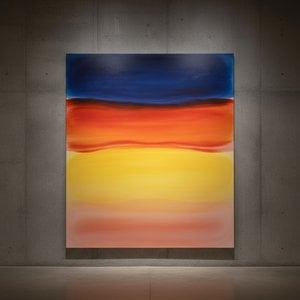
Zehrt’s art is immediately striking for its bold use of color and dynamic compositions. Her work falls firmly within the tradition of abstract expressionism, yet it possesses a unique voice—a captivating blend of energy and introspection. Central to her artistic vision are themes of nature and identity. She doesn't depict landscapes in a representational manner; instead, she evokes their essence through swirling patterns, layered hues, and gestural brushstrokes. The canvases become emotional terrains, reflecting the interplay between inner experience and the external world. Her paintings often suggest organic forms—flowing water, blossoming flora, shifting light—but always remain firmly rooted in abstraction.
Influences and Artistic Development
While Zehrt’s style is distinctly her own, it's evident that she draws inspiration from key figures within the abstract expressionist movement. The influence of Mark Rothko is palpable in her exploration of color field painting—the use of large expanses of saturated color to create a sense of atmosphere and emotional resonance. The spontaneous energy of Paul Jenkins’ work also resonates in her dynamic compositions, particularly her fluid acrylic techniques. However, Zehrt doesn't simply emulate these masters; she builds upon their legacy, infusing it with her own personal sensibility and experiences. Her artistic development has been characterized by a willingness to experiment, pushing the boundaries of color and form to create increasingly complex and evocative works.
Recognition and Historical Significance
Although relatively new to the art scene, Claudia Zehrt is rapidly gaining recognition for her compelling abstract paintings. Her work has garnered attention from collectors and critics alike, establishing her as a rising star in contemporary art. While it’s early to definitively assess her long-term historical significance, her unique approach—combining athletic discipline with expressive abstraction—offers a fresh perspective within the genre. Zehrt's ability to convey profound emotional depth through color and form suggests a lasting contribution to the ongoing dialogue of abstract expressionism. Her paintings are not merely visual experiences; they are invitations to contemplate the complexities of nature, identity, and the human condition.