Introduction
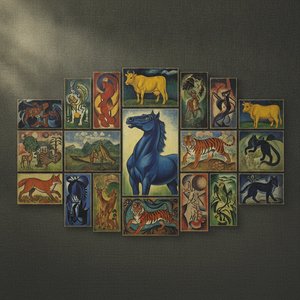
To step into the world of German Expressionism is to abandon the comfort of reality and embrace the raw, unvarnished pulse of the human psyche. It is an invitation to look beyond the surface of things—to move past the mere imitation of light and form and instead confront the shadows, the anxieties, and the profound spiritual yearnings that define our existence. As we wander through this curated selection, imagine yourself walking through a gallery where the walls themselves seem to vibrate with emotion, and every brushstroke serves as a visceral cry from the soul.
Emerging in the early 20th century amidst the turbulent landscape of a transforming Europe, German Expressionism was far more than an aesthetic choice; it was a cultural rebellion. Born from the tension of rapid industrialization and the profound psychological shifts leading into and through the Great War, movements such as Die Brücke and Der Blaue Reiter sought to reject the superficiality of Impressionism. Instead, these artists turned inward, utilizing distorted figures, jarringly non-naturalistic colors, and aggressive, jagged lines to capture the essence of a world in flux. They did not seek to paint what they saw with their eyes, but what they felt within their very marrow.
Today, these masterpieces remain hauntingly relevant. In an era often characterized by digital detachment and fragmented identities, the profound emotional honesty of the Expressionists resonates with a renewed intensity. Their ability to translate internal chaos into tangible, visual poetry offers us a mirror in which to view our own complexities. The works we are about to explore are not merely historical artifacts; they are living, breathing dialogues between the artist and the viewer, transcending time to touch upon the universal truths of fear, ecstasy, and resilience.
In the following pages, we shall guide you through a definitive journey across ten seminal works. Each painting on this list represents a pivotal moment in art history—a masterpiece that redefined the boundaries of expression and left an indelible mark on the canvas of modern civilization. Prepare to encounter colors that burn with intensity and compositions that challenge your perception, as we unveil the ten masterpieces that truly defined the spirit of German Expressionism.
The Large Blue Horses - Franz Marc
 The Large Blue Horses - Franz Marc
In The Large Blue Horses by Franz Marc, the profound, celestial shade of deep blue immediately envelops the viewer, establishing a mood of transcendent spirituality and quiet strength. As a cornerstone of the German Expressionism movement, this 1911 masterpiece transcends mere representation; it is a symphony of symbolic color. Marc’s mastery lies in his ability to use a vibrant, primary palette—juxtaposing masculine blues against energetic reds and verdant greens—to evoke the raw, emotional essence of nature rather than its literal form.
For the discerning collector or interior designer, this work offers unparalleled versatility in curating a sophisticated atmosphere. The painting’s rhythmic, organic shapes and bold impasto textures can serve as a commanding focal point in a modern dining room, where its warm, earthy undertones harmonize with contemporary lighting. Alternatively, placing a high-quality oil reproduction in a living space introduces a sense of movement and intellectual depth, allowing the spiritual vitality of Der Blaue Reiter to breathe life into your architectural surroundings.
The Iron Bridge (View of Frankfurt) - Max Beckmann
 The Iron Bridge (View of Frankfurt) - Max Beckmann
To stand before a canvas from the post-war era is to witness the fractured psyche of a continent attempting to rebuild itself. In 1922, Max Beckmann captured this profound tension in The Iron Bridge (View of Frankfurt) , a work that serves as a cornerstone of the German Expressionism movement. This masterpiece does not merely depict an industrial landscape; it vibrates with the chaotic, pulsating energy of a city in transition.
Beckmann employs a masterful impasto technique, where thick, gestural brushstrokes and heavy textures create a sense of physical weight and urgency. The composition is anchored by the grand, geometric silhouette of the suspension bridge, its sharp diagonals cutting through a palette of saturated earth tones, industrial grays, and sudden bursts of crimson. Through flattened perspectives and distorted forms, Beckmann transforms a bustling port—complete with steaming ships and smoke-belching chimneys—into a symbolic arena of progress and existential anxiety. This painting remains an essential inclusion in our selection of the top 10 masterpieces, offering a timeless, visceral power that continues to command attention and transform the atmosphere of any sophisticated interior.
Grazing Horses IV (also known as The Red Horses) - Franz Marc
 Grazing Horses IV (also known as The Red Horses) - Franz Marc
In Grazing Horses IV (also known as The Red Horses) , Franz Marc achieves a breathtaking mastery of light that transcends mere representation, positioning this work as a cornerstone of the German Expressionism movement. Rather than traditional chiaroscuro, Marc utilizes a radiant, internal glow; the light seems to emanate from the horses themselves, as if their vibrant crimson coats are infused with a spiritual, primordial energy. This luminous technique, where warm yellows and oranges collide with deep blues, creates a rhythmic pulse of light that captivated early 20th-century critics and solidified Marc's legacy within Der Blaue Reiter .
The interplay of light and shadow across the undulating landscape does more than define form; it evokes an emotional resonance of raw, untamed freedom. When brought into a contemporary interior, a high-quality oil reproduction of this masterpiece introduces a profound sense of movement and prestige. The visible, textured brushstrokes and the dramatic, glowing highlights offer a sophisticated depth that transforms a modern wall into a window to the soul of nature, providing an unparalleled focal point for the discerning collector.
Horse in a Landscape - Franz Marc
 Horse in a Landscape - Franz Marc
In Horse in a Landscape , Franz Marc transcends mere representation through a masterful command of luminous color that functions as his primary light source. Rather than relying on traditional chiaroscuro, Marc utilizes a radiant, internal glow—where vibrant yellows and deep blues collide to illuminate the equine form from within. This departure from academic realism was revolutionary; by replacing external shadows with symbolic, saturated hues, he captured the spiritual essence of the animal, securing this work's prestigious place among the top 10 masterpieces that defined the German Expressionism art movement .
The interplay between the sun-drenched meadow and the cool, atmospheric sky creates a rhythmic vitality that feels both primal and profound. When choosing a hand-painted oil reproduction of this masterpiece, the visible brushstrokes and rich impasto texture allow this light to breathe on your walls. The depth of the pigments ensures that the painting’s energetic spirit transforms a contemporary space, adding a layer of sophisticated, soulful luxury that only an authentic, textured tribute to Marc’s vision can provide.
Tiger - Franz Marc
 Tiger - Franz Marc
Imagine stepping into a silent, primordial world where the air vibrates with a hidden spiritual energy. In Tiger , Franz Marc invites us into this sanctuary, presenting a moment of profound stillness that transcends mere representation. The tiger, rendered in a striking, luminous yellow, rests with its head bowed amidst a rugged landscape of deep greens and earthy textures. This is not a study of anatomy, but an exploration of the soul; Marc utilizes the bold, flattened forms and emotive color palettes characteristic of the German Expressionism movement to strip away the superficiality of the modern world.
The thick, tactile application of pigment creates a surface that feels alive, echoing the artist's belief in the purity of the animal spirit. As a cornerstone of the top masterpieces of Expressionism , this work offers more than visual beauty—it provides a meditative anchor. In a contemporary home, the serene yet powerful presence of such a piece can transform a room into a space of reflection, bringing the harmonious, primal strength of Marc’s vision to your everyday environment.
Forms at Play - Franz Marc
 Forms at Play - Franz Marc
Imagine standing before a rhythmic explosion of light, where the boundaries between the physical world and the spiritual realm begin to dissolve. In Forms at Play , Franz Marc invites us into a visceral dance of color, capturing the very heartbeat of German Expressionism. Painted in 1914, amidst the gathering shadows of global conflict, this masterpiece serves as a profound sanctuary of movement and vitality.
Marc moves beyond mere representation, drawing inspiration from the geometric fragmentation of Delaunay to distill nature into its purest, most emotive essence. The composition spirals outward, transitioning from crystalline structures into amorphous, energetic forms. A commanding palette of deep reds, luminous blues, and sun-drenched yellows anchors the work, creating a spiritual dialogue that bypasses the intellect to speak directly to the soul.
This work earns its place among the top 10 masterpieces for its ability to transform anxiety into abstraction. It reminds us that even in turbulent times, art can find harmony within chaos. Bringing such a dynamic energy into a modern interior does more than decorate a wall; it invites a sense of profound cosmic rhythm and contemplative peace into our daily lives.
Animal Legend - Franz Marc
 Animal Legend - Franz Marc
In the profound depths of Animal Legend , Franz Marc invites us to transcend the visible world and enter a realm of pure, spiritual essence. As one of the most significant works within the top 10 masterpieces that defined the German Expressionism art movement , this 1912 creation captures much more than a mere gathering of creatures; it is a window into a state of grace. Through Marc’s eyes, we witness deer, rabbits, and birds inhabiting a landscape that feels both intimate and infinite, stripped of human anxiety to reveal a primal purity.
The visual language of this work is defined by its uncompromising honesty . Utilizing heavy impasto and flattened planes, Marc prioritizes the movement of the spirit over anatomical accuracy. In contemporary curated spaces, the painting’s monochromatic intensity and textured surfaces resonate deeply with modern minimalist aesthetics. It serves as a powerful cultural talking point, offering a sense of contemplative stillness that remains strikingly relevant in our fast-paced, digital age.
untitled (3212) - Franz Marc
 untitled (3212) - Franz Marc
In the pantheon of German Expressionism, untitled (3212) by Franz Marc stands as a profound symphony of color and spirit. This masterpiece does not merely decorate a wall; it liberates the viewer from the mundane, inviting them into a rhythmic dance of avian forms and saturated hues. Marc, a pioneer of the Der Blaue Reiter movement, eschews academic realism in favor of a visceral, emotional truth. Through thick, tactile impasto brushstrokes and flattened planes of vibrant color, he captures the pulsating energy of the natural world.
The composition centers on a striking bird, enveloped in a swirling community of life that suggests a cosmic, interconnected harmony. For the discerning collector, this work is an act of transformation—turning a private residence into a gallery of the soul. To surround oneself with such genius is to embrace the spiritual resonance of the era, finding peace within Marc’s search for primal, elemental beauty. It is not just art; it is a window into the eternal.
The Dream - Franz Marc
 The Dream - Franz Marc
What story does the vibrant, symbolic landscape in The Dream by Franz Marc tell? Painted in 1912, this masterpiece emerges from the heart of the German Expressionism movement, a period defined by a radical departure from objective reality toward profound spiritual truth. As a co-founder of Der Blaue Reiter , Marc utilized a revolutionary visual vocabulary to capture the soul rather than the surface. The composition invites us into a sanctuary of harmony, where a man and woman lie intimately upon the earth, surrounded by powerful horses and loyal dogs rendered in bold, emotive strokes.
The palette—a striking dance of celestial blues and enlightened yellows—creates an atmosphere of quiet prestige and cosmic connection. For the discerning collector, integrating such a work into a modern interior offers more than mere decoration; it provides a curated escape into a realm of primordial peace. Through thick, textured impasto and flattened perspectives, Marc transforms a dreamscape into a tangible experience of tranquility, making this one of the top 10 masterpieces that defined the German Expressionism art movement .
A Picture from Jussuff's Peaceable Times - Franz Marc
 A Picture from Jussuff's Peaceable Times - Franz Marc
To encounter A Picture from Jussuff's Peaceable Times by Franz Marc is to step through a portal into a realm where the boundaries between the physical world and the spiritual soul dissolve. Created in 1913, this exquisite watercolor serves as a profound meditation on harmony, capturing a moment of primordial peace far removed from industrial chaos. Its inclusion in our selection of the Top 10 Masterpieces That Defined the German Expressionism Art Movement is essential; Marc redefined beauty by using color as a language of the soul, imbuing his animals and landscapes with a rhythmic, spiritual vitality.
The composition—featuring a central tree with a poignant, heart-shaped hollow surrounded by deer, birds, and gentle creatures—offers a masterclass in symbolic depth. At WahooArt.com, we believe such transformative works should not be confined to museum archives. Whether you are an interior designer curating a serene hospitality space or a collector seeking a personal sanctuary, this piece brings a sense of quiet wonder and sophisticated light to any room. It is more than decoration; it is a living testament to the interconnectedness of all life, turning your walls into a profound artistic statement.
Conclusion
As the light fades on our journey through the raw, emotive landscapes of German Expressionism, we are left with more than just a memory of distorted forms and jarring colors; we carry with us the profound resonance of the human spirit in its most vulnerable state. These masterpieces were never intended to be mere static relics of a bygone era; they were born from a visceral need to scream, to weep, and to find beauty within the chaos of modern existence. To encounter them is to witness a dialogue between the artist's inner turmoil and the external world, a conversation that remains as urgent and vital today as it was in the early twentieth century.
There is a unique transcendence in bringing such powerful narratives into one’s own sanctuary. When you invite these works into your home, they cease to be mere historical artifacts and instead become living presences—textures of thick, impasto brushstrokes and deep, soulful tones that breathe life into a room. They serve as daily reminders of our shared capacity for creativity, resilience, and grace, transforming a simple wall into a window onto the profound depths of human emotion. Whether through the haunting shadows of a portrait or the vibrant, rhythmic energy of an urban landscape, these paintings offer a quiet, enduring companionship that challenges us to see the world with renewed intensity.
We invite you to continue this exploration and find the piece that speaks directly to your soul. We invite you to wander through our full collection , where the legacy of the masters awaits to be reimagined within your own space, turning your surroundings into a curated gallery of timeless human connection.