Se i rummet Se i AR Skift til printversion Skift til digitalt billede Send
Detaljer Studieguide til kunstværker Tilføj til favoritter Download Lignende værker Røntgenundersøgelse Se diasshow Statistik

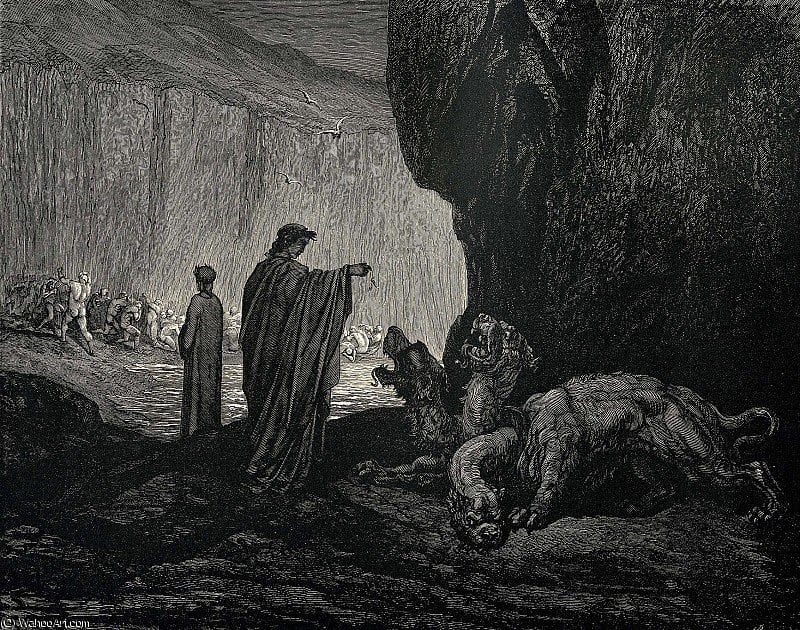
Then my guide his palms expanding on the ground thence filled with earth

A chilling black-and-white engraving by Paul Gustave Doré captures the terrifying descent into Dante's Inferno through masterful Romantic shadows, inviting you to explore this haunting masterpiece of 19th-century art.

Udforsk Gustave Dores dramatiske træsnit og illustrationer! En mester i romantikken, kendt for bibelske scener, Dantes Inferno og litterære mesterværker. Opdag hans indflydelsesrige kunst!

Håndlavet oliereproduktion

Håndmalet olie på lærred i din valgte størrelse og ramme, udført efter bestilling af vores kunstnere. ( Skift til printversion Skift til digitalt billede)

Corner sample of the P118B picture frame: støbt polystyren, 5 cm wide and 3 cm thick
P118B Dkr10
Corner sample of the P118H picture frame: støbt polystyren, 5 cm wide and 3 cm thick
P118H Dkr10
Corner sample of the P118W picture frame: støbt polystyren, 5 cm wide and 3 cm thick
P118W Dkr10
Corner sample of the P438Z picture frame: støbt polystyren, 5.5 cm wide and 3.5 cm thick
P438Z Dkr10
Corner sample of the P508JH picture frame: støbt polystyren, 7 cm wide and 3.5 cm thick
P508JH Dkr12
Corner sample of the P508YH picture frame: støbt polystyren, 7 cm wide and 3.5 cm thick
P508YH Dkr12
Corner sample of the P805H picture frame: støbt polystyren, 5 cm wide and 3.5 cm thick
P805H Dkr10
Corner sample of the P805Z picture frame: støbt polystyren, 5 cm wide and 3.5 cm thick
P805Z Dkr10
Corner sample of the P919BZ picture frame: støbt polystyren, 7 cm wide and 3.5 cm thick
P919BZ Dkr10
Corner sample of the P919G picture frame: støbt polystyren, 7 cm wide and 3.5 cm thick
P919G Dkr10
Corner sample of the P919XJ picture frame: støbt polystyren, 7 cm wide and 3.5 cm thick
P919XJ Dkr10
Corner sample of the P959ZH picture frame: støbt polystyren, 5 cm wide and 3 cm thick
P959ZH Dkr10
Corner sample of the P968JZ picture frame: støbt polystyren, 6 cm wide and 4 cm thick
P968JZ Dkr12
Corner sample of the W106C picture frame: massivt træ, 5 cm wide and 3 cm thick
W106C Dkr8
Corner sample of the W218G picture frame: massivt træ, 5 cm wide and 3 cm thick
W218G Dkr10
Corner sample of the W218JH picture frame: massivt træ, 5 cm wide and 3 cm thick
W218JH Dkr8
Corner sample of the W218Y picture frame: massivt træ, 5 cm wide and 3 cm thick
W218Y Dkr10
Corner sample of the W307PJ picture frame: massivt træ, 6 cm wide and 3 cm thick
W307PJ Dkr10
Corner sample of the W316G picture frame: massivt træ, 6 cm wide and 3 cm thick
W316G Dkr10
Corner sample of the W316PJ picture frame: massivt træ, 6 cm wide and 3 cm thick
W316PJ Dkr8
Corner sample of the W316Y picture frame: massivt træ, 6 cm wide and 3 cm thick
W316Y Dkr10
Corner sample of the W398PJ picture frame: massivt træ, 5 cm wide and 3 cm thick
W398PJ Dkr8
Corner sample of the W4111J picture frame: massivt træ, 6.5 cm wide and 3.5 cm thick
W4111J Dkr10
Corner sample of the W500HY picture frame: massivt træ, 7 cm wide and 5 cm thick
W500HY Dkr15
Corner sample of the W500JH picture frame: massivt træ, 7 cm wide and 5 cm thick
W500JH Dkr15
Corner sample of the W692G picture frame: massivt træ, 8 cm wide and 4 cm thick
W692G Dkr12
Corner sample of the W849H picture frame: massivt træ, 5 cm wide and 3 cm thick
W849H Dkr8
Corner sample of the W940BG picture frame: massivt træ, 7.5 cm wide and 4.5 cm thick
W940BG Dkr15
Corner sample of the W953PJ picture frame: massivt træ, 6 cm wide and 3.5 cm thick
W953PJ Dkr8

Standardstørrelse
speciallavet
CM
INCH

Vælg mellem vores forudindstillede størrelser, der matcher kunstværkets originale proportioner.

bredde
højde

Indtast den bredde og højde, du har brug for, så det passer til din ramme eller din væg. Da dette er håndmalet, kan kunstneren ved en anden form på størrelsen male lidt mere rundt om billedet eller skære lidt væk — det er op til dig. Vi sender dig et digitalt mockup til godkendelse, før maleriet påbegyndes. Billedet, der vises på denne side, viser ikke det endelige resultat — det er kun mockuppet, der gør.

Eksempler på tilpasningsmuligheder: Udskift ansigt med kundens eget foto; Tilføj kæledyr (f.eks. udskift kat med hund); Inkluder en skjult besked i baggrunden; Ændr baggrundslandskab eller elementer.
Efter bestilling vil WahooArt.com team sende en e-mail til kunden for at indhente instruktioner og fremsende et udkast til gennemgang.

Levering i hele verden () på 3-4 uger i stedet for de standard 5 uger. (24 oktober). Ingen kompromiser med kvaliteten.

Gratis ekspresforsendelse til hele verden
Lærred af linned i høj kvalitet
Komplet transportforsikring
Garanti for refusion af told og importafgifter
Garanti for autentisk farvegengivelse
100 dages returret ved fabrikationsfejl
100% fuld returret
Mængderabat ved flere køb

Samlet pris

Dkr 2440

Then my guide his palms expanding on the ground thence filled with earth

Reproduktionsmateriale

Reproduktionsstørrelse

-

Samlet pris

Dkr 2440

Kort om værket

  • Artist: Paul Gustave Doré
  • Title: Then my guide his palms expanding on the ground thence filled with earth
  • Notable elements or techniques: Detailed hatching & crosshatching; Linear perspective
  • Movement: Romanticism
  • Artistic style: Realistic

Kunstquiz

Der er kun ét korrekt svar på hvert spørgsmål.

Spørgsmål 1:
What artistic technique is primarily employed in this engraving?
Spørgsmål 2:
The artwork depicts a scene from which literary work?
Spørgsmål 3:
What is the dominant tonal quality of the engraving’s image?
Spørgsmål 4:
How does Doré utilize compositional elements to draw the viewer's eye downwards?
Spørgsmål 5:
What stylistic characteristic best describes Doré’s approach to artistic representation?

A Descent into the Abyss: The Chiaroscuro of Terror

In the hauntingly beautiful realm of Paul Gustave Doré’s “Then my guide his palms expanding on the ground thence filled with earth,” we are not merely observers of a scene, but witnesses to a profound spiritual descent. This masterful engraving, inspired by the harrowing verses of Dante Alighieri's Inferno, serves as a visceral window into the ninth circle of Hell. Doré does not simply illustrate text; he breathes life into the psychological landscape of damnation. The artwork captures a moment of chilling theological weight, where the boundaries between the physical world and the metaphysical abyss dissolve into a sea of ink and shadow. As the viewer’s eye is drawn into the yawning chasm, one feels the palpable weight of Dante's journey—a movement from the light of the known world into the suffocating darkness of the eternal.

The composition is a masterclass in dramatic tension, utilizing strong diagonal lines to guide the gaze downward, mirroring the literal and metaphorical descent of the protagonists. A massive, rugged rocky formation anchors the right side of the frame, providing a sense of monumental scale that makes the figures within appear small and vulnerable against the infinite void. Through the meticulous use of chiaroscuro, Doré creates an atmosphere where light does not illuminate so much as it struggles to exist against an encroaching, velvety darkness. This interplay of light and shadow is central to the piece's emotional resonance, evoking feelings of isolation, dread, and the sublime terror that characterizes the Romantic era.

The Artistry of the Line: Technique and Texture

To behold a Doré engraving is to appreciate the pinnacle of 19-century printmaking virtuosity. The artwork is built upon an intricate web of fine lines, where every hatch and cross-hatch serves a specific narrative purpose. There is no reliance on color to convey emotion; instead, the artist utilizes a monochromatic palette of varying grays to sculpt form out of nothingness. The texture of the jagged, desolate landscape is rendered with such precision that one can almost feel the cold, abrasive surface of the stones and the dampness of the subterranean air. This technical mastery allows for a profound sense of materiality, making the fantastical elements of the underworld feel disturbingly tangible.

The technique of engraving—cutting fine lines into a metal plate—allows for a level of detail that is unparalleled in much of the era's broader painting styles. In this specific work, Doré uses these delicate incisions to create atmospheric perspective, where distant figures and terrain become blurred and ghostly, lost in the haze of the underworld. For the collector or interior designer, this level of detail offers an incredible depth of visual interest. When viewed as a high-quality reproduction, the sharpness of the linework remains intact, providing a sophisticated focal point that commands attention through its complexity rather than through overt brightness.

Symbolism and the Eternal Legacy

Beyond its technical brilliance, the piece is steeped in profound symbolism. The central figure’s gesture—palms expanding to grasp at the earth—is a powerful metaphor for the insatiable hunger of sin and the desperate, futile attempts to find substance within the void. It captures the essence of Lucifer’s role as a fallen entity, trapped in a cycle of consumption and destruction. This thematic depth ensures that the artwork remains much more than a mere illustration; it is a philosophical meditation on ambition, consequence, and the human condition. The presence of the guide suggests the necessity of wisdom and light even in the deepest reaches of despair.

For those looking to curate a space with intellectual and emotional gravity, this work offers an unparalleled opportunity. It is a piece that invites contemplation and serves as a conversation starter regarding history, literature, and the darker corners of the human imagination. Whether placed in a private library, a sophisticated study, or a contemporary gallery setting, Doré’s vision brings a sense of timelessness and dramatic elegance. Owning a reproduction of such a seminal work allows one to possess a fragment of the Romantic movement's soul—a piece that celebrates the beauty found even within the most terrifying shadows.

Spørgsmål & svar

Hvorfor er ophavsretsstatus for "Then my guide his palms expanding on the ground thence filled with earth" som den er?

"Then my guide his palms expanding on the ground thence filled with earth" af Gustav Doré er i det offentlige domæne – ophavsretten er udløbet. Ophavsrettens varighed løber fra kunstnerens død, som fandt sted i 1883.

Hvilken stemning bringer "Then my guide his palms expanding on the ground thence filled with earth" af Gustav Doré til et interiør?

Med sin Dramatic stemning foreslås "Then my guide his palms expanding on the ground thence filled with earth" til et Living Room.

Hvilken følelse formidler "Then my guide his palms expanding on the ground thence filled with earth" af Gustav Doré?

Den emotionelle stemning, der er registreret for "Then my guide his palms expanding on the ground thence filled with earth" af Gustav Doré, er Dramatic. Den opsummerer den følelse, som værket udtrykker.


Om kunstneren

Paul Gustave Doré: En Mester i Skygge og Lys

Paul Gustave Louis Christophe Doré, kendt verden over som Gustave Doré, var en kunstnerisk virtuos der med mesterfulde illustrationer, malerier og skulpturer stræbte efter at fange både det dramatiske og det sublime. Han blev født i Strasbourg, Frankrig, den 6. januar 1832, under en tid præget af store sociale og kunstneriske forandringer – en æra hvor romantikken stadig havde sin indflydelse, men samtidig var ved at blive overskygget af nye strømninger indenfor realisme og symbolik. Selv i ung alder viste Doré et talent der gik ud over det sædvanlige; ikke blot i tegning – som han begyndte i en meget tidlig alder – men også i en personlighed der antydede den dramatiske flair, der skulle definere hans kunst. Historier fortæller om legesygheder der demonstrerede en modenhed langt ud over hans år, hvilket var et forvarsel til de komplekse og ofte melankolske temaer, der ville gennemsyre hans værker. Han begyndte sin professionelle karriere utroligt tidligt, blot 15 år gammel, som karikaturtegner for den franske satiriske avis *Le Journal pour rire*, hvor han finpudsede sine observationsevner og kompositionsfærdigheder i det pulserende liv i det parisienne satiremiljø.

Fra Karikatur til Litterære Titaner: Stigingen af en Illustratør

Dorés tidlige bestillinger lagde grunden til hans fremtidige berømmelse. Værker som *Les Travaux d'Hercule* (1847), *Trois artistes incompris et mécontents* (1851) og *Les Dés-agréments d'un voyage d'agrément* (1851) viste en spirende talent for dynamisk komposition og en mesterlig brug af lys og skygge, selv i disse relativt beskedne begyndelser. Han var dybt påvirket af illustrationerne fra J.J. Grandville, hvis fantastiske billeder og satiriske kant resonerede med Dorés egen udviklende stil. Dog var det gennem sine samarbejder med litterære giganter, at Doré virkelig nåede til storhed – i 1853 modtog han en bestilling om at illustrere Lord Byrons værker, hvilket åbnede døre for yderligere prestigefyldte projekter. Den monumentale opgave med at illustrere Bibelen fulgte, et projekt der cementerede hans ry og bragte hans kunst foran et enormt internationalt publikum. Hans illustrationer til Cervantes’ *Don Quixote* i 1860'erne var særligt indflydelsesrige, og formåede at genfortolke karaktererne og fortællingen med en dramatisk intensitet der fangede læsernes fantasi. Han illustrerede ikke blot disse historier; han omskabte dem, ved at forstærke dem med en dramatisk flair, der afspejlede den følelsesmæssige dybde i hans kunst. Hans samarbejde med Blanchard Jerrold på *London: A Pilgrimage* (1872) var et særligt rørende værk, der skildrede de barske realiteter i det victorianske Londons fattigdom og udløste debat om sociale forhold.

En Mester i Teknikken: Wood Engraving og Romantisk Vision

Dorés kunstneriske dygtighed lå ikke kun i hans fantasifulde vision, men også i hans tekniske mesterskab, især i træsnit. Han besad en ekstraordinær evne til at skabe utroligt detaljerede og dramatiske billeder gennem denne teknik, hvilket muliggjorde masseproduktion og udbredelse af hans kunst. Hans kompositioner er karakteriseret ved deres dynamik, stærke kontraster mellem lys og skygge – en teknik kendt som *chiaroscuro* – og en følelse af storhed der ofte vækker en følelse af ærefrygt eller endda rædsel. Han benyttede sig ofte af et stort team af blokskærer for at oversætte sine designs til træsnit, hvilket muliggjorde den nødvendige effektivitet til at imødekomme udgivernes og læseres krav. Hans stil er solidt rodfæstet i romantikken, der fremhæver følelser, fantasi og det sublime – en fascination af naturens overvældende magt og menneskelige tilstand. Han illustrerede ikke blot scener; han fortolkede dem gennem et filter af forøgede følelser og dramatisk flair. Denne tilgang, selvom den blev fejret af mange, fik også kritik fra nogle samtidige, der fandt hans kunst overdrevent teatralsk eller manglende subtilitet.

Arv og Vedvarende Indflydelse

Gustave Doré modtog æren at blive gjort en Chevalier de la Légion d'honneur af det franske regering i 1861, et bevis på hans voksende anerkendelse inden for kunstneriske kredse. Men hans sande arv strækker sig langt ud over priser og titler. Hans illustrationer havde en dybtgående indflydelse på visuel kultur, og har inspireret kunstnere og læsere i generationer. Vincent van Gogh var blot én af dem, der blev dybt inspireret af Dorés arbejde, især hans skildringer af lidelse og vanskeligheder, genkendte i dem en fælles følsomhed over for menneskehedens lidelser. Trods kritikken under hans levetid er hans kunst nu fejret for sit kunstneriske værd og historiske betydning. Hans illustrationer fortsætter med at forme vores forståelse af klassisk litteratur og det victorianske samfund, og tilbyder en kraftfuld visuel fortolkning af tidløse historier og vedvarende temaer. *Hans kunst er et vidnesbyrd om illustrationernes magt til ikke blot at forestille sig, men også at fortolke og transformere verden omkring os.*

Bemærkelsesværdige Værker

  • Flower Sellers of London (1875): En rørende skildring af det victorianske fattigdom og modstandskraft, der viser familiære bånd i mødet med vanskeligheder.
  • The Christian Martyrs: Et dramatisk mesterværk, der skildrer troen og forfølgelsen med stor følelse.
  • Illustrationer til Dante’s Inferno: Måske hans mest ikoniske værk, disse træsnit bragte Dantes helvede til live med en hidtil uset intensitet.
  • Illustrationer til Milton’s Paradise Lost: Dorés fortolkning af denne episke digt er kendt for sin storhed og dramatiske flair.
  • The Wandering Jew (1856): Et populært værk, men det indeholder antisemitiske undertoner, der afspejler tiden.
Gustav Doré

Gustav Doré

1832 - 1883 , Frankrig

Hurtige fakta

  • Artistic Movement Or Style: Romantik
  • Artists Or Movements Influenced By This Artist: ['Van Gogh']
  • Artists Who Influenced This Artist: ['Grandville']
  • Date Of Birth: 6. januar 1832
  • Date Of Death: 23. januar 1883
  • Full Name: Paul Gustave Doré
  • Nationality: Fransk
  • Notable Artworks:
    • Don Quixote
    • Ravnen
    • London
  • Place Of Birth: Strasbourg, Frankrig
Udforsk kunstværker organiseret efter temaer, stilarter og karakteristika.