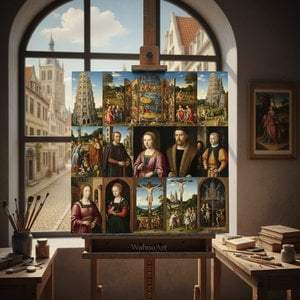
Albrecht Dürer: En Renæssancens Mester
Albrecht Dürer, et navn der er synonymt med den tyske renæssance, opstod fra den pulserende håndværbsby Nürnberg i 1471. Hans far, Albrecht Dürer den Ældre, var en succesfuld guldsmed, der havde immigreret fra Ungarn og medbragt en linje af håndværksfærdigheder. Det var i dette miljø – duften af metal og præcisionens omhyggelige arbejde – at unge Albrecht’s kunstneriske tilbøjelser først fik fodfæste. Selvom hans far forestillede sig en lignende vej for ham, ansatte han ham oprindeligt i familiens handel, men det blev hurtigt tydeligt, at Albrecht besad en exceptionel talent for tegning. Ved blot 13-års alderen overgik han til Michael Wolgemut’s værksted, Nürnberg’s førende kunstner på det tidspunkt. Dette var ikke blot en teknisk uddannelse; det var en indvielse i en verden af illuminerede manuskripter, malede paneler og – vigtigst af alt – den voksende kunst af træsnit. Wolgemut’s værksted’s enorme produktion, herunder de omfattende illustrationer til *Nuremberg Chronicle*, gav Dürer et uvurderligt fundament i design, komposition og mekanikken bag billeddannelse. Et bemærkelsesværdigt sølvtægning fra 1484, skabt da han kun var knap 13 år gammel, står som overbevisende bevis på hans præcocious talent – et vidnesbyrd om en spirende kunstnerisk identitet, der allerede begyndte at tage form.
Den Italienske Indflydelse og Kunstnerisk Modning
Dürer’s ambition udvidede sig langt ud over Nürnberg’s grænser. Drevet af en uudholdelig nysgerrighed og et ønske om at mestre kunsten at male, iværksatte han sin første rejse til Italien i 1494. Dette var ikke blot en sightseeingtur; det var en pilgrimsfærd til hjertet af renæssancen. Han stødte på mesteresker fra Raphael, Giovanni Bellini og Leonardo da Vinci – kunstnere, der omskrev mulighederne for form, perspektiv og menneskelig udtryksevne. Denne eksponering havde en dybtgående indvirkning. Dürer absorberede de klassiske motiver, harmoniske kompositioner og den subtile *sfumato*-teknik, der kendetegnede italiensk kunst, men forlod sin nordlige europæiske sans for præcision og symbolsk dybde. En anden rejse til Italien mellem 1505 og 1507 forstærkede disse indflydelser yderligere, hvilket tillod ham at studere de gamle romerske ruiner og finpudse sin forståelse af anatomi og proportioner. Denne syntese af nordlig præcision og italiensk elegance blev Dürer’s unikke kunstneriske stilens kendetegn.
Mestring af Medierne: Maleri, Gravering og Træsnit
Dürer var en mester i flere medier, hver især tilbyder ham forskellige kreative veje. Hans malerier, omend færre i antal end hans tryk, demonstrerer en bemærkelsesværdig kommando over oliemaleri og en evne til at indfange både fysisk lighed og psykologisk dybde. Værker som *Feast of the Rose Garlands* afslører en livlig palet påvirket af venetiansk farvebrug. Men det var i trykkunsten – især gravering og træsnit – at Dürer virkelig revolutionerede kunstnerisk praksis. Han hævede disse teknikker fra blot reproduktive metoder til uafhængige kunstformer, der kunne formidle komplekse fortællinger og dybe følelser. *Apocalypse*-serien (1498), en samling af fjorten træsnit, der illustrerer Profeten Johannes’ Bog, viste hans mesterskab i denne medium trods dets iboende begrænsninger. Senere graverier som *Melencolia I* (1514) og *Saint Jerome in His Study* (1514) er vidnesbyrd om hans upåtrotelige færdigheder – intrikate kompositioner fyldt med symbolsk betydning og udført med betagende præcision. Han portrætterede ikke blot virkeligheden; han indgydede den med lag af intellektuel og åndelig betydning.
En Teoretiker og Innovator: Dürers Eftermæle
Dürer var ikke blot en kunstner; han var en teoretiker, en innovatør, der søgte at forstå de underliggende principper, der styrer kunstnerisk skabelse. Han mente, at matematikken lå til grund for kunsten, og dedikerede sig til at etablere en videnskabelig tilgang til repræsentation. Hans afhandlinger om geometri, proportioner og menneskekroppens anatomi – især *Four Books on Human Proportions* (1528) – var banebrydende for deres tid, demonstrerende hans engagement i streng observation og rationel analyse. Disse skrifter var ikke blot akademiske øvelser; de havde til hensigt at hæve kunstnerens status fra blot håndværkere til intellektuelle praktikanter. Dürer’s eftermæle strækker sig langt ud over hans individuelle værker. Han brolagde mellem nordeuropæiske traditioner og italienske renæssanceidealer, introducerede klassiske motiver i nordisk kunst, mens han bevarede dets distinkte karakter. Hans teoretiske bidrag hjalp til at etablere en ny ramme for kunstnerisk praksis, der inspirerede generationer af kunstnere med hans tekniske dygtighed, innovative ånd og dybe vision.
Han står i dag som en af de vigtigste figurer i vestlig kunsthistorie.
Indflydelser og Varig Indvirkning
- Michael Wolgemut: Dürer’s indledende mentor, der leverede grundlæggende færdigheder inden for tegning, maleri og træsnit.
- Leonardo da Vinci: Inspirerede Dürers udforskning af anatomi, perspektiv og *sfumato* – den subtile blanding af nuancer.
- Raphael: Påvirkede Dürer’s harmoniske kompositioner og idealiserede former.
- Giovanni Bellini: Bidrog til Dürer’s forståelse af farver og venetianske malerteknikker.
Dürer’s indflydelse resonerer gennem århundredernes kunsthistorie. Hans præcise realisme, hans innovative brug af trykkunst og hans teoretiske skrifter inspirerer stadig kunstnere og forskere i dag.



 Se i rummet
 Bestil håndmalet reproduktion
 Send
Send Del
Del
 Detaljer
 Studieguide til kunstværker

 Download
 Lignende værker
 Røntgenundersøgelse
 Se diasshow
 Statistik
 Læs mere






































 Glasmulighed er kun tilgængelig i størrelser under 110 cm