The Dance of Ink and Spirit
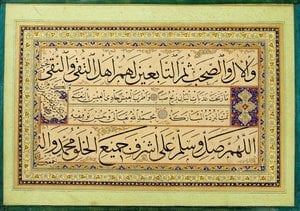
In the delicate interplay of ink and parchment, Karalama (calligraphy exercise) offers a profound window into the soul of Ottoman mastery. This exquisite piece, dating back to the year 1500, is far more than a mere practice sheet; it is a rhythmic meditation captured in motion. The artwork features the fluid, sweeping curves of Arabic script, where each stroke carries the weight of intention and the grace of a dancer. As the eye wanders across the yellowish, aged surface, one feels the passage of centuries, as if peering through a veil into the very heart of the 16th-century workshop. The cursive script possesses an organic complexity, creating a sense of depth that draws the viewer into a labyrinth of linguistic beauty and spiritual devotion.
The technique employed by the legendary Ahmed Karahisari reveals a sophisticated command over the medium. Beyond the primary calligraphic flow, the composition is punctuated by ethereal decorative elements that elevate the work from exercise to ornament. Tiny, shimmering gold dots are scattered across the page like celestial dust, catching the light and providing a rhythmic counterpoint to the dark ink. Small, delicate circles are interspersed throughout, adding structural visual interest and guiding the viewer's gaze through the intricate web of characters. This meticulous application of gold and ink demonstrates a mastery of balance, where the spontaneity of a "sketch" meets the precision of high art.
A Legacy Written in Gold
To understand this work is to understand the era of the Sun of Calligraphy himself. Ahmed Karahisari, a titan of the Ottoman Golden Age, lived during the transformative reign of Sultan Suleyman the Magnificent. His life was deeply rooted in Sufi scholarship, and this spiritual foundation is palpable in every loop and ligature of his writing. The piece embodies the revitalization of the Thuluth and Naskh scripts, showcasing a style that sought to harmonize the mathematical precision of Islamic geometry with the emotional fluidity of divine praise. For the collector or the lover of history, this artwork serves as a tangible connection to the intellectual and artistic zenith of the Ottoman Empire.
For those looking to integrate such profound beauty into a contemporary space, Karalama offers an unparalleled emotional impact. Its warm, antique palette makes it a versatile centerpiece for sophisticated interior design, providing a sense of timelessness and quiet contemplation. Whether placed in a sunlit library or a modern gallery setting, the piece radiates an aura of wisdom and tranquility. Owning a high-quality reproduction of this masterpiece is not merely about acquiring decor; it is about inviting the rhythmic, golden legacy of Karahisari into one's personal sanctuary, ensuring that the echoes of 1500 continue to resonate in the modern world.



 Se i rummet
 Skift til printversion
 Send
Send Del
Del
 Detaljer
 Guide
Guide

 Download
 Lignende værker
 Røntgenundersøgelse
 Se diasshow
 Statistik


 Læs mere






































 Glasmulighed er kun tilgængelig i størrelser under 110 cm