
 Oil On PanelWallArtEarly Netherlandish Renaissance
 1460Renaissance
 53.0 x 44.0 cm
 国立美术高等学院
由我们的艺术家按需定制,为您提供您所选尺寸及画框的布面手工油画。 ( 切换至版画销售渠道 切换至数字图像销售渠道)





























您可以从与原作比例一致的预设尺寸中进行选择。

请输入您需要的宽度和高度,以适配您的画框或墙面。由于作品为手工绘制,若选择不同比例的尺寸,艺术家可能会在画面边缘多画一些或稍作裁剪 —— 由您决定。在开始绘画之前,我们会为您发送一份数字效果图供您确认。本页面上展示的图片并非最终实物 —— 只有效果图才能反映真实结果。
Sforza Triptych
复刻品尺寸
To stand before the Sforza Triptych is to step through a portal into the profound spiritual landscape of the Northern Renaissance. Completed around 1460, this extraordinary altarpiece by the Flemish Master Rogier van der Weyden (or his highly skilled workshop) serves as much more than a religious relic; it is a masterclass in the intersection of human emotion and divine grace. The work was commissioned for Alessandro Sforza, a prominent member of the Milanese dynasty, and it carries within its three hinged panels a narrative of devotion that remains as palpable today as it was in the fifteenth century. As light dances across the meticulously rendered surfaces, the viewer is invited into a sacred space where the boundaries between the earthly and the celestial begin to blur.
The composition of the triptych is famously irregular, yet this very asymmetry lends the piece an organic, breathing quality that draws the eye in a rhythmic dance across the panels. In the central scene, the weight of the Crucifixion anchors the soul, with Christ’s sacrifice presented with a raw, poignant realism. Surrounding him, the figures are not merely static icons but vessels of grief and reverence. The technique employed—oil paint on wood panels—allows for an unprecedented luminosity. Through the delicate application of glazes, Van der Weyden achieved a depth of color that seems to glow from within, capturing the subtle sheen of fine fabrics, the cold hardness of armor, and the soft, translucent quality of human skin with breathtaking precision.
Every brushstroke in the Sforza Triptych serves a higher purpose, weaving a complex tapestry of symbolism that rewards the contemplative observer. The artist’s background as a goldsmith is evident in the microscopic attention to texture; one can almost feel the heavy weight of the velvet drapery and the intricate metallic glints of period attire. This dedication to detail was not merely for aesthetic pleasure but was deeply rooted in the devotio moderna movement, which encouraged believers to find the divine in the minute details of the physical world. The presence of saints such as St. Bavo, St. Francis, St. Catherine, and St. Barbara on the wings provides a celestial court that flanks the central mystery, creating a sense of a continuous, eternal liturgy.
For the modern collector or interior designer, this piece offers a profound sense of historical gravity and intellectual depth. The triptych does not simply decorate a space; it commands it. Its ability to evoke a mood of quiet contemplation makes it an ideal centerpiece for environments that value heritage, stillness, and sophistication. Whether viewed as a window into the pious heart of the 15th century or as a triumph of Early Netherlandish technical mastery, the Sforza Triptych remains an enduring symbol of how art can bridge the gap between the temporal and the eternal.
罗杰·范德·魏登 的《Sforza Triptych》 的创作媒介为 Oil On Panel,创作于 1460 年。
罗杰·范德·魏登 的《Sforza Triptych》 在艺术史上的分类属于 Early Netherlandish Renaissance 运动,创作于 Renaissance 时期。
您可以在作品的下载数字图像页面下载罗杰·范德·魏登 的《Sforza Triptych》,作为高分辨率数字图像下载。

1400 - 1464 , 比利时
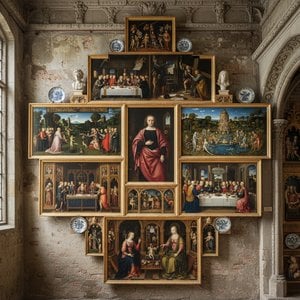
Journey into the Early Netherlandish Renaissance! Explore 10 iconic paintings by Jan van Eyck, Rogier van der Weyden & more. Discover stunning detail, symbolism, and oil painting techniques. Find museum-quality art reproductions for your home at WahooArt.com.
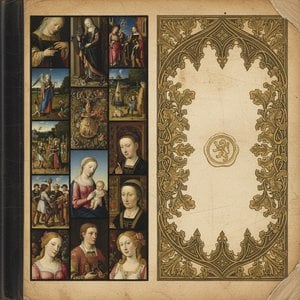
Journey into the world of Early Netherlandish painting! Explore 10 masterpieces by Jan van Eyck, Rogier van der Weyden & more. Discover stunning detail, symbolism & Renaissance art for your home decor. Find museum-quality reproductions on WahooArt.com

Explore the revolutionary art of Hugo van der Goes – a master of Early Netherlandish painting renowned for his dramatic realism, psychological depth & profound influence on Renaissance artists. Discover his iconic works and lasting legacy.

Explore the revolutionary art of Rogier van der Weyden, a pivotal figure of the Early Netherlandish Renaissance. Discover his emotional realism, innovative compositions, and lasting impact on painting history.

探索伦勃朗25幅杰作,领略荷兰黄金时代光影大师的艺术传奇!从《夜巡》到自画像,深入了解巴洛克艺术、历史绘画与人物肖像背后的故事。WahooArt.com提供高清艺术复制品及家居装饰灵感。立即探索完整系列!


 实景预览
实景预览
 分享
分享 分享
分享
 详情
详情 指南
指南

 下载作品
下载作品
 相似作品
相似作品 X射线
X射线 幻灯片播放
幻灯片播放 Q&A
Q&A 统计数据
统计数据 展开全文
展开全文









 玻璃选项仅适用于110厘米以下的尺寸。


