
 Japanese Traditional
 801
801 92.0cm x 30.0cm
由我们的艺术家按需定制,为您提供您所选尺寸及画框的布面手工油画。 ( Switch to Print Switch to Digital Image)
从与原作比例一致的预设尺寸中进行选择。

您可以输入自定义尺寸,以适配特定的画框或空间。如果所选尺寸与原图比例不符,我们将通过裁剪作品或添加手绘元素来扩展画面。数字样稿将在制作开始前发送给您确认。
请注意,屏幕预览无法准确反映实际的裁剪或扩展效果,只有样稿才能真实呈现最终的构图。
虽然我们提供定制尺寸服务,但为了保留原作比例,建议您从预设列表中选择尺寸。

Untitled (D2X9SR)
复制品尺寸

In the twilight of the Edo period, a singular figure emerged whose artistry bridged the gap between the visual and the literary, weaving together the delicate threads of ukiyo-e printmaking with the profound depths of Japanese poetry. Kubo Shunman (c. 1757 – 1820) was far more than a mere illustrator; he was a master of emotional resonance, a man whose brush captured not just the physical world, but the very breath of the era's cultural spirit. Born with the surname Kubo or Kubota and given the name Yasubei, his early life was marked by the hardship of being orphaned, a circumstance that perhaps deepened the sensitivity and contemplative melancholy often found in his later works.
Shunman’s artistic journey began under the tutelage of Katori Nahiko, a scholar and painter whose influence instilled in the young apprentice the foundational principles of Nanga painting. From Nahiko, Shunman learned to observe nature with a meticulous, reverent eye, finding harmony between the human spirit and the natural landscape. This early training in the serene, scholarly traditions of Chinese-inspired landscapes provided a sophisticated counterpoint to his later mastery of the more urban, vibrant ukiyo-e style. As his talent matured, he sought further refinement under the renowned Kitao Shigemasa, a titan of the ukiyo-e world. This apprenticeship allowed Shunman to adopt the graceful, elongated figures and elegant poses characteristic of the Kiyonaga school, blending classical landscape sensibilities with the fashionable beauty of contemporary Edo life.
The true brilliance of Shunman lay in his ability to inhabit multiple creative identities simultaneously. He was a polymath of the pleasure-seeking world, moving seamlessly between the roles of painter, gesaku novelist, and poet. Under various literary pseudonyms—such as Nandaka Shiran for his prose and Hitofushi Chitsue for his kyōka poetry—he contributed to the vibrant intellectual life of his time. His participation in prestigious poetry circles like Bakuro-ren and Rokujuen ensured that his visual art was always deeply informed by a rhythmic, lyrical sensibility. To look upon a Shunman print is to read a poem; every line of a kimono or curve of a willow branch carries the weight of a whispered verse.
During the Tenmei and Kansei eras, Shunman became a leading figure in the beni-girai, or "red-hating," aesthetic movement. This stylistic trend deliberately eschewed the garish, vibrant reds that had dominated earlier prints, opting instead for a more sophisticated palette of blues, greens, and subtle earth tones. Shunman embraced this restraint with unparalleled skill, using understated compositions to evoke profound moods. His works often featured:
Shunman’s prolific output left an indelible mark on the history of Japanese art. As one of the most productive painters within the Kitao school, his influence stretched across genres, from intricate book illustrations to grander paintings and even votive plaques. He often utilized art names like Shōsadō or Sashōdō, which incorporated characters meaning "left," a subtle nod to his left-handedness that added a touch of personal character to his professional identity. His ability to navigate the complex social strata of Edo—from the scholarly elite to the vibrant urban masses—allowed him to create art that was both intellectually stimulating and widely accessible.
Today, the works of Kubo Shunman are celebrated not just for their technical perfection, but for their role in defining the aesthetic elegance of late 18th-century Japan. He remains a testament to the power of interdisciplinary mastery, reminding us that the highest form of art occurs when the eye, the hand, and the poetic heart act in perfect unison. His legacy lives on in every delicate shade of blue and every carefully placed brushstroke that continues to evoke the ephemeral beauty of a world long passed.

1757 - 1820

Explore the profound beauty of Japanese landscape painting. From Hokusai's iconic vistas to Zen-inspired compositions, discover the spiritual depth and historical mastery of Ukiyo-e art in this expert cultural retrospective.

Explore the ephemeral beauty of Japanese Ukiyo-e art. From the dynamic warriors of Kuniyoshi to serene landscapes, discover the profound history, masterful techniques, and global influence of these iconic woodblock prints in our deep cultural retrospective.
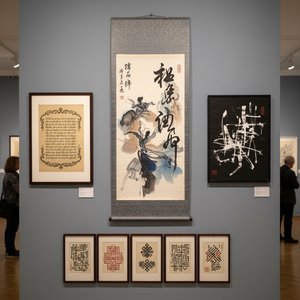
Explore the profound beauty of calligraphy art. From the fluid running script of Chinese masters to historical ink masterpieces, discover how the elegance of line transforms spaces with timeless grace and scholarly sophistication.

Explore the profound beauty of Japanese Ukiyo-e art. Discover the legacy of Hokusai and the Utagawa school through an expert exploration of Edo-period aesthetics, seasonal motifs, and the enduring global influence of Japan's 'Floating World' on fine art history.

Embark on a cultural journey through Japan's Edo Period. Discover the profound beauty of Ukiyo-e masters like Kuniyoshi and Toshinobu, exploring the vibrant legacy of Kabuki and Sumo through an art-history lens for the true classic art enthusiast.


 效果预览
效果预览
 分享
分享 分享
分享
 详情
详情

 下载
下载
 相似作品
相似作品 X射线
X射线 幻灯片播放
幻灯片播放 Stats
Stats 展开详情
展开详情






































 玻璃选项仅适用于110厘米以下的尺寸。


