
 Acrylic On PaperSynthetic Cubism
 1913
1913 130.0 x 96.0 cm
 普拉多博物馆
由我们的艺术家按需定制,为您提供您所选尺寸及画框的布面手工油画。 ( 切换至版画销售渠道 切换至数字图像销售渠道)





























从与原作比例一致的预设尺寸中进行选择。

您可以输入自定义尺寸,以适配特定的画框或空间。如果所选尺寸与原图比例不符,我们将通过裁剪作品或添加手绘元素来扩展画面。数字样稿将在制作开始前发送给您确认。
请注意,屏幕预览无法准确反映实际的裁剪或扩展效果,只有样稿才能真实呈现最终的构图。
虽然我们提供定制尺寸服务,但为了保留原作比例,建议您从预设列表中选择尺寸。

The Smoker
复制品尺寸
Juan Gris’s “The Smoker,” painted in 1913, isn't merely a depiction of a man enjoying a cigarette; it’s a meticulously constructed meditation on perception, fragmentation, and the burgeoning anxieties of early 20th-century modernity. Created during his pivotal period as a pioneer of Synthetic Cubism alongside Pablo Picasso, this work embodies the movement’s radical departure from traditional representation, offering instead a fractured, multi-faceted view of its subject – a Spanish painter and sculptor named Juan Gris himself.
The painting immediately draws the eye with its dynamic composition. A man, identified through preparatory sketches as Frank Haviland, an American patron of the arts, is presented in a series of interlocking planes and geometric shapes. He’s captured mid-action, puffing on a cigarette, yet his form is simultaneously broken down into its constituent parts – a sharp nose, a tilted head, a fragmented shirt collar – all arranged within a vibrant, almost chaotic, space. This deliberate fragmentation reflects the Cubist principle of depicting objects from multiple viewpoints at once, challenging the viewer’s ability to grasp a single, unified image. The use of *papier collé*, or collage elements—newspaper clippings and other fragments—further enhances this sense of deconstruction, layering textures and visual information onto the canvas.
Gris masterfully employs a carefully calibrated palette of greens, blues, reds, and oranges to create a visually arresting effect. These bold colors aren’t simply decorative; they contribute significantly to the painting's dynamism and sense of movement. Notice how the smoke itself is rendered in swirling bands of color, adding another layer of complexity to the composition. The technique is equally sophisticated: Gris utilizes short, broken brushstrokes—a hallmark of Synthetic Cubism—to build up the forms and create a palpable sense of depth. The interplay between hard-edged geometric shapes and softer, more organic elements generates a fascinating tension within the painting.
“The Smoker” was created during a period of intense artistic experimentation and intellectual ferment in Paris. The rise of Cubism—and its subsequent iterations like Synthetic Cubism—represented a fundamental shift away from traditional representational art, reflecting a broader cultural questioning of established norms and values. Gris’s work stands as a crucial bridge between the analytical rigor of early Cubism (exemplified by Picasso and Braque) and the more expressive, collage-based approach that would characterize the movement's later stages. It was painted during a period when Gris was deeply engaged with his circle of artistic friends—Picasso, Matisse, Apollinaire—and exploring new ways to represent reality through abstraction.
Beyond its formal innovations, “The Smoker” is rich in symbolic meaning. The act of smoking itself can be interpreted as a metaphor for contemplation, introspection, or even the anxieties associated with modern life. The fragmented figure suggests a sense of alienation and detachment—a feeling that resonates powerfully within the context of an increasingly complex and rapidly changing world. The inclusion of Haviland’s attire – a bow tie and top hat – adds a touch of social commentary, hinting at the formality and conventions of the era while simultaneously undermining them through the painting's fractured perspective. Ultimately, “The Smoker” is not simply a portrait; it’s a poignant exploration of human experience in the face of modernity.
This captivating artwork is now housed at the Thyssen-Bornemisza Museum in Madrid, Spain, offering art enthusiasts a chance to witness firsthand this seminal piece of modern art. Reproductions are available through WahooArt.com and other reputable sources, allowing you to bring this iconic image into your own space.

1887 - 1927

Embark on a journey through the revolutionary world of Cubism. Discover how masters like Picasso redefined perspective through Analytical and Synthetic techniques in this expert-led guide for art enthusiasts and collectors.

Explore the profound evolution of Cubism through an expert analysis of Pablo Picasso's revolutionary works. From Analytical to Synthetic Cubism, discover the techniques that redefined modern art and learn how to curate these iconic masterpieces for your private collection.

Unveil the radical revolution of Cubism. Explore how masters like Picasso and Braque redefined modern art through fragmented forms and geometric abstraction, offering profound insights for discerning collectors of fine art history and masterpieces.
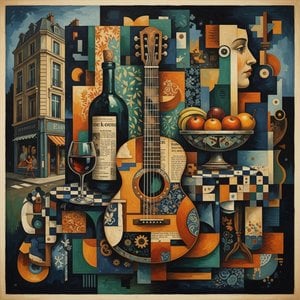
Master the vibrant world of Synthetic Cubism with our expert guide. Explore the revolutionary techniques of Picasso and Braque, from collage to color, and discover how this movement redefined modern art for collectors and connoisseurs alike.

Master the complexities of Cubism with our expert guide for collectors. Explore the revolutionary forms of Picasso, distinguish between Analytical and Synthetic styles, and learn to integrate these profound geometric aesthetics into your private art collection.


 效果预览
效果预览
 分享
分享 分享
分享
 详情
详情

 下载
下载
 相似作品
相似作品 X射线
X射线 幻灯片播放
幻灯片播放 统计数据
统计数据 展开详情
展开详情









 玻璃选项仅适用于110厘米以下的尺寸。


