
由我们的艺术家按需定制,为您提供您所选尺寸及画框的布面手工油画。 ( 切换至版画销售渠道 切换至数字图像销售渠道)





























您可以从与原作比例一致的预设尺寸中进行选择。

您可以输入自定义尺寸,以适配特定的画框或空间。如果所选尺寸与原图比例不符,我们将通过裁剪作品或添加手绘元素来扩展画面。数字样稿将在制作开始前发送给您确认。
请注意,屏幕预览无法准确反映实际的裁剪或扩展效果,只有样稿才能真实呈现最终的构图。
虽然我们提供定制尺寸服务,但为了保留原作比例,建议您从预设列表中选择尺寸。

The Checkerboard
复刻品尺寸说明
Juan Gris’s “The Checkerboard,” painted in 1915, isn’t merely a depiction of a familiar domestic scene; it’s a radical declaration of artistic intent. Created during the nascent years of Synthetic Cubism, this work embodies the movement's core tenets – a deliberate dismantling of traditional perspective and representation to reveal an underlying geometric structure. The painting’s power lies not in its subject matter—a checkerboard adorned with everyday objects like a bottle, a cup, a knife, and scissors—but in Gris’s masterful manipulation of form and color to evoke a sense of fragmented space and heightened visual complexity.
Juan Gris (1887-1927), born José Victoriano González-Pérez in Madrid, Spain, was a pivotal figure in the development of Cubism. His early life, marked by studies in engineering before embracing art, reflects a mind accustomed to analytical thinking – a quality that profoundly shaped his artistic approach. Gris’s connection to Pablo Picasso and Georges Braque cemented his place at the forefront of this revolutionary movement. He wasn't simply copying what others were doing; he was developing a distinct visual language characterized by its precise geometric forms and bold color combinations.
Gris’s work is deeply rooted in the intellectual currents of the time, reflecting a fascination with modern technology and urban life. The inclusion of objects like the bottle and knife suggests a concern with industrialization and the changing role of man within society. His dedication to Cubism earned him recognition as one of the movement's most distinctive artists, alongside Picasso and Braque.
The checkerboard motif itself carries significant symbolic weight. Historically, it has represented order, logic, and control – concepts that are deliberately disrupted within Gris’s composition. The juxtaposition of these ordered squares with seemingly random objects creates a tension between structure and chaos, reflecting the anxieties and uncertainties of the early 20th century. The specific arrangement of the bottle, cup, knife, and scissors adds to this complexity, inviting viewers to contemplate their individual meanings and their collective relationship within the overall design.
Beyond its immediate visual impact, “The Checkerboard” invites us to consider the nature of perception itself. Gris challenges our traditional ways of seeing, forcing us to confront a world where objects are no longer presented in a fixed or unified manner.
"The Checkerboard" stands as a testament to Juan Gris’s artistic genius and his pivotal role in shaping the course of modern art. Its influence can be seen in countless subsequent works, and its enduring appeal lies in its ability to provoke thought and inspire wonder. A hand-painted reproduction offers an unparalleled opportunity to experience this iconic masterpiece firsthand, bringing its fractured beauty into your home or studio.

1887 - 1927

Unveil the radical revolution of Cubism. Explore how masters like Picasso and Braque redefined modern art through fragmented forms and geometric abstraction, offering profound insights for discerning collectors of fine art history and masterpieces.
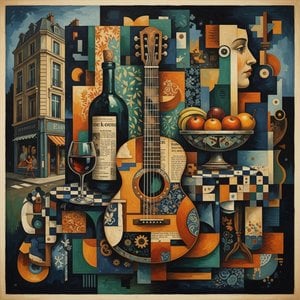
Master the vibrant world of Synthetic Cubism with our expert guide. Explore the revolutionary techniques of Picasso and Braque, from collage to color, and discover how this movement redefined modern art for collectors and connoisseurs alike.

Explore the profound impact of Cubism on modern art. Our expert guide delves into the revolutionary techniques of Picasso and Braque, offering collectors deep insights into deconstructing form, perspective, and the enduring legacy of the Cubist movement.

Embark on a journey through the revolutionary world of Cubism. Discover how masters like Picasso redefined perspective through Analytical and Synthetic techniques in this expert-led guide for art enthusiasts and collectors.


 实景预览
实景预览
 发送
发送 分享
分享
 详情
详情 指南
指南

 下载图片
下载图片
 相似作品
相似作品 X射线
X射线 幻灯片播放
幻灯片播放 统计数据
统计数据


 阅读全文
阅读全文









 玻璃选项仅适用于110厘米以下的尺寸。


