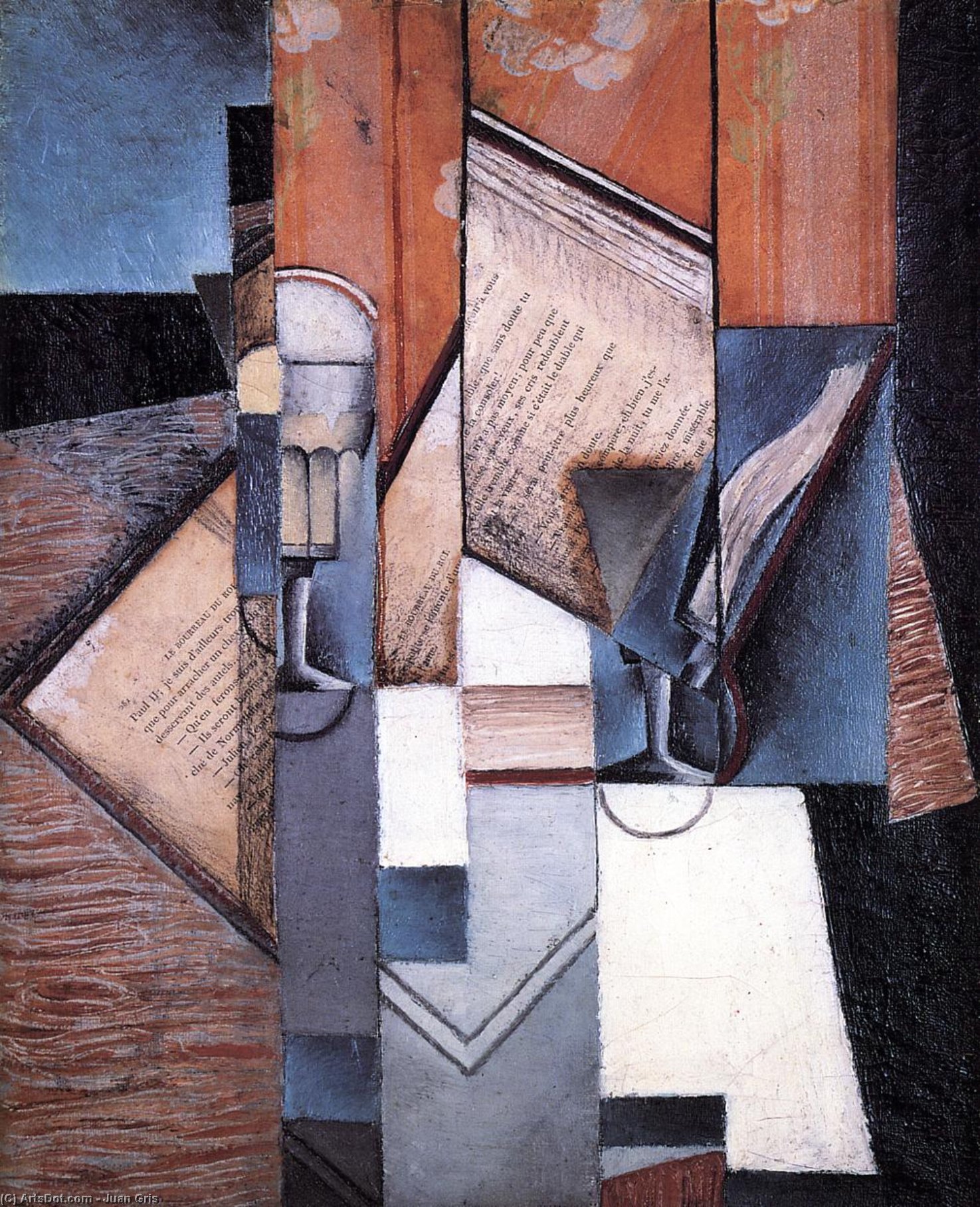
Juan Gris was a Spanish artist known for his contributions to the
Cubism movement, and his painting
The Book is a prime example of
Synthetic Cubism. Created in 1913, this artwork showcases Gris's unique style, which emphasized geometric shapes and fragmented forms. The painting measures 41 x 33 cm and is currently housed at the
Musée d'Art Moderne de la Ville de Paris in France.
Composition and Style
The composition of
The Book features a still life scene with a book as the central element, surrounded by other objects such as lamps and a vase. The painting is characterized by overlapping planes and fragmented forms, which are typical of Synthetic Cubism. Gris's use of muted colors, including browns, grays, and creams, adds to the overall sense of harmony and balance in the composition. To learn more about
Juan Gris and his style, visit https://WahooArt.com/@/Juan-Gris.
Synthetic Cubism was a phase of Cubism that emphasized the use of simplified shapes and bright colors. This style is evident in
The Book, where Gris breaks down objects into geometric forms and reassembles them in a new and innovative way. For more information on Synthetic Cubism, see /art/list/?Filter=A@D3CQR7-Analytical-Cubism.
Key Features and Influences
Some key features of
The Book include:
- The use of typography within the painting, which adds an element of reality and contemporary relevance.
- The incorporation of newspaper clippings, which serves as an example of the collage effect often seen in Synthetic Cubism.
- The emphasis on geometric shapes and fragmented forms, which is characteristic of Gris's unique style.
Gris's work was influenced by other notable artists, including
Pablo Picasso and
Georges Braque. To explore more artworks by these artists, visit /en/art/show/art-8xycsf-en/
Overall,
The Book is a significant work in the history of Cubism, showcasing Gris's innovative style and contribution to the movement. For more information on Cubism and its key figures, see https://en.wikipedia.org/wiki/Cubism.



 效果预览
效果预览
 购买印刷品
购买印刷品 分享
分享 分享
分享
 详情
详情

 下载
下载
 相似作品
相似作品 X射线
X射线 幻灯片播放
幻灯片播放


 展开详情
展开详情






































 玻璃选项仅适用于110厘米以下的尺寸。