
 Oil On CanvasWallArtSynthetic Cubism
 1914
1914 81.0 x 60.0 cm
 卡尔斯鲁厄州立美术馆
博物馆级艺术微喷或帆布版画,制作高效,并提供多种饰面选择。 ( 购买手绘画作 切换至数字图像销售渠道)





























从与原作比例一致的预设尺寸中进行选择。

您可以输入自定义尺寸,以适配特定的画框或空间。如果您选择的尺寸与原图比例不符,我们将对作品进行裁剪,或通过镜像填充/纯色填充边缘的方式来扩展图像。在开始制作之前,我们会向您发送一份数字效果图供您确认。
请注意,屏幕上的预览并不能反映实际的裁剪或扩展效果。只有效果图才能准确展示最终的构图。
虽然我们提供定制尺寸,但为了保持原图比例,我们建议您从预设列表中选择尺寸。

Still Life with Grapes
复制品尺寸
Juan Gris's "Still Life with Grapes," painted in 1914, isn’t merely a depiction of fruit and bottles; it’s a meticulously constructed exploration of form, space, and the burgeoning possibilities of early 20th-century art. Born José Victoriano González-Pérez in Madrid, Gris embarked on an artistic journey that would ultimately position him as a pivotal figure within Cubism, alongside Picasso and Braque. This particular work exemplifies his unique approach – a synthesis of analytical and synthetic elements, resulting in a dynamic composition brimming with intellectual rigor and visual delight.
The painting immediately captivates with its fractured geometry. The bottles, rendered in sharp angles and overlapping planes, aren’t presented as solid objects but rather as fragmented volumes, simultaneously present and absent. This is characteristic of Gris's embrace of Cubism, a movement he helped define alongside his colleagues. Unlike the purely analytical approach of Picasso and Braque, which sought to deconstruct objects into their basic geometric components, Gris introduced elements of “synthetic” Cubism – incorporating collage-like elements like newspaper fragments and textured surfaces directly onto the canvas. The subtle hints of these materials, barely perceptible beneath the paint, add a layer of tactile complexity to the scene.
Gris’s color palette is remarkably restrained yet profoundly effective. He primarily employs muted blues, greens, ochres, and browns – colors that evoke the atmosphere of a late afternoon indoors. However, these somber tones are punctuated by flashes of vibrant red and yellow within the grapes themselves, drawing the eye and injecting a vital energy into the composition. This careful orchestration of color isn’t simply decorative; it serves to heighten the sense of spatial depth and create a subtle tension between solidity and transparency.
The artist's meticulous attention to detail is evident in every brushstroke. The grapes, rendered with an almost photographic precision, appear plump and luscious, while the bottles are depicted with a cool detachment that belies their importance within the overall arrangement. This combination of realism and abstraction reflects Gris’s desire to capture not just the appearance of objects but also their underlying structure and essence.
"Still Life with Grapes" was created during a period of immense artistic ferment – the early years of the 20th century, a time when traditional artistic conventions were being challenged and redefined. Cubism, born out of the collaboration between Picasso, Braque, and Gris, represented a radical departure from the representational art that had dominated Western painting for centuries. It sought to depict objects from multiple viewpoints simultaneously, challenging the viewer’s perception of reality and paving the way for abstract art.
Painted in 1914, just as Europe was teetering on the brink of World War I, the work carries a subtle undercurrent of anxiety. The fragmented forms and muted colors evoke a sense of instability and uncertainty – mirroring the turbulent times in which it was created. However, amidst this tension, there’s also a remarkable sense of order and control, reflecting Gris's belief that art could provide a means of understanding and navigating the complexities of modern life.
While seemingly straightforward, “Still Life with Grapes” is rich in symbolic potential. The grapes themselves have long been associated with abundance, fertility, and even mortality – their fleeting beauty serving as a reminder of the transience of life. The bottles, often symbols of luxury and indulgence, could represent the excesses of bourgeois society or the ephemeral pleasures of modern life. The arrangement itself—a carefully constructed tableau—suggests a meditation on form, space, and the relationship between the artist and his subject.
Gris’s “Still Life with Grapes” is more than just a pretty picture; it's a profound statement about the nature of perception, the challenges of modernism, and the enduring power of art to both reflect and shape our understanding of the world. It remains a captivating work that continues to inspire and intrigue viewers today.

1887 - 1927

Explore the profound evolution of Cubism through an expert analysis of Pablo Picasso's revolutionary works. From Analytical to Synthetic Cubism, discover the techniques that redefined modern art and learn how to curate these iconic masterpieces for your private collection.
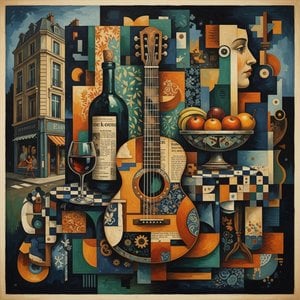
Master the vibrant world of Synthetic Cubism with our expert guide. Explore the revolutionary techniques of Picasso and Braque, from collage to color, and discover how this movement redefined modern art for collectors and connoisseurs alike.

Unveil the radical revolution of Cubism. Explore how masters like Picasso and Braque redefined modern art through fragmented forms and geometric abstraction, offering profound insights for discerning collectors of fine art history and masterpieces.

Embark on a journey through the revolutionary world of Cubism. Discover how masters like Picasso redefined perspective through Analytical and Synthetic techniques in this expert-led guide for art enthusiasts and collectors.


 效果预览
效果预览
 分享
分享 分享
分享
 详情
详情

 下载
下载
 相似作品
相似作品 X射线
X射线 幻灯片播放
幻灯片播放 统计数据
统计数据 展开详情
展开详情









 玻璃选项仅适用于110厘米以下的尺寸。


