
 Oil On CanvasWallArtCubism
 1913Modern
 60.0 x 73.0 cm
博物馆级艺术微喷或帆布版画,制作高效,并提供多种饰面选择。 ( 购买手绘画作 切换至数字图像销售渠道)





























从与原作比例一致的预设尺寸中进行选择。

您可以输入自定义尺寸,以适配特定的画框或空间。如果您选择的尺寸与原图比例不符,我们将对作品进行裁剪,或通过镜像填充/纯色填充边缘的方式来扩展图像。在开始制作之前,我们会向您发送一份数字效果图供您确认。
请注意,屏幕上的预览并不能反映实际的裁剪或扩展效果。只有效果图才能准确展示最终的构图。
虽然我们提供定制尺寸,但为了保持原图比例,我们建议您从预设列表中选择尺寸。

Guitar on the Table
复制品尺寸
In the pantheon of early twentieth-century modernism, few names resonate with as much analytical precision and poetic grace as Juan Gris. His masterpiece, Guitar on the Table, created in 1913, serves as a breathtaking window into the heart of Synthetic Cubism. This oil on canvas work is not merely a depiction of an instrument; it is a profound exploration of how reality can be dismantled and reconstructed through the lens of geometric abstraction. As one contemplates this piece, the eye is immediately drawn to the central motif—a guitar that appears both solid and ephemeral, its form broken into a rhythmic dance of overlapping planes and intersecting lines. The painting captures a moment where the physical world dissolves into a sophisticated arrangement of shapes, inviting the viewer to participate in the intellectual reconstruction of the subject.
The technical mastery displayed in this work lies in Gris's ability to balance complexity with a restrained, almost meditative palette. Eschewing the chaotic fragmentation seen in earlier Analytic Cubism, Gris employs a harmonious blend of blues, browns, and whites, punctuated by subtle greens and intricate speckled patterns. These textures do more than provide visual interest; they create a tactile depth that mimics the grain of wood or the weave of fabric. The background, adorned with decorative motifs reminiscent of fine wallpaper or draped cloth, provides a soft counterpoint to the structural rigidity of the guitar. This interplay between the organic and the geometric, the flat and the dimensional, is what gives the composition its enduring vitality.
To possess or display a reproduction of Guitar on the Table is to bring a piece of art history into the contemporary living space. Created during the height of the Parisian avant-garde movement, this work stands as a testament to the era when artists like Picasso and Braque were redefining the very boundaries of sight. The painting carries with it the intellectual weight of the Museo Thyssen-Bornemisza, where such treasures are preserved, yet its aesthetic appeal is remarkably versatile for modern interior design. For the discerning collector or interior designer, this piece offers a sophisticated focal point that complements both minimalist contemporary settings and richly textured, classical environments.
Beyond its formal qualities, the painting evokes a sense of quiet introspection. The presence of secondary guitars and the subtle, abstracted figures in the periphery suggest a larger, bustling social scene—perhaps a Parisian café or a private studio—yet all is distilled into a singular, focused harmony. This creates an emotional impact of calm stability amidst complexity. Whether placed in a sunlit gallery or a moody, dimly lit study, Guitar on the Table acts as a conversation starter, prompting reflections on the nature of perception and the enduring beauty of structured abstraction. It is an investment in a legacy of innovation, offering a timeless elegance that transcends the decades.

1887 - 1927
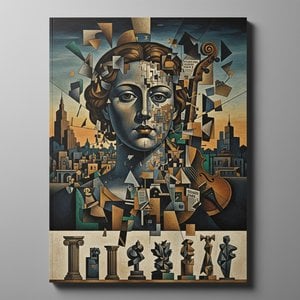
Master the complexities of Cubism with our expert guide. Explore the revolutionary fragmentation of Picasso and Braque, from Analytic to Synthetic styles, and learn how to evaluate these profound modernist masterpieces for your private collection.
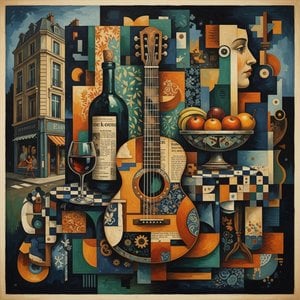
Master the vibrant world of Synthetic Cubism with our expert guide. Explore the revolutionary techniques of Picasso and Braque, from collage to color, and discover how this movement redefined modern art for collectors and connoisseurs alike.

Master the complexities of Cubism with our expert guide for collectors. Explore the revolutionary forms of Picasso, distinguish between Analytical and Synthetic styles, and learn to integrate these profound geometric aesthetics into your private art collection.

Unveil the radical revolution of Cubism. Explore how masters like Picasso and Braque redefined modern art through fragmented forms and geometric abstraction, offering profound insights for discerning collectors of fine art history and masterpieces.

Embark on a journey through the revolutionary world of Cubism. Discover how masters like Picasso redefined perspective through Analytical and Synthetic techniques in this expert-led guide for art enthusiasts and collectors.


 效果预览
效果预览
 分享
分享 分享
分享
 详情
详情

 下载
下载
 相似作品
相似作品 X射线
X射线 幻灯片播放
幻灯片播放 统计数据
统计数据 展开详情
展开详情









 玻璃选项仅适用于110厘米以下的尺寸。


