博物馆级艺术微喷或帆布版画,制作高效,并提供多种饰面选择。 ( 订购纯手工绘制画作 切换至数字图像销售渠道)
您可以从与原作比例一致的预设尺寸中进行选择。

请输入您所需的宽度和高度,以适配您的画框或墙面。由于印刷品只能进行裁剪,无法超出原图尺寸,因此若比例不一致,画面的一部分将会被裁切。在正式印刷之前,我们会为您发送一份数字效果图供您确认。本页面显示的图片并非最终裁剪后的效果——只有效果图才能展示真实的裁剪情况。
The Stampede
复刻品尺寸
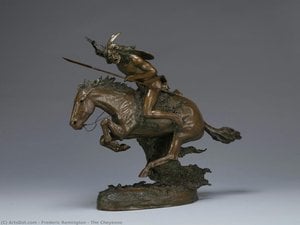
Frederic Remington’s “The Stampede” isn't merely a depiction of cowboys and cattle; it’s a visceral embodiment of the American frontier, a moment frozen in time that captures both the raw power of nature and the indomitable spirit of those who wrestled with it. Completed in 1910, this bronze sculpture stands as a testament to Remington’s profound understanding of his subject – not just cowboys and horses, but the very essence of the vanishing West he so passionately chronicled. The piece resonates deeply, evoking feelings of exhilaration, danger, and an undeniable connection to a bygone era.
Remington, born in Canton, New York, wasn’t destined for the dusty trails he immortalized. His lineage was rooted in Eastern industry – his father a Civil War colonel and newspaper editor, connected through distant cousins to the Remington Arms dynasty. Yet, an early fascination with military themes, coupled with a restless spirit and a keen eye for storytelling, propelled him westward. “The Stampede” exemplifies this journey; it’s a deliberate departure from the idealized romanticism of earlier Western art, presenting instead a brutally honest portrayal of the chaos and energy inherent in cattle drives. The sculpture's creation coincided with a period of rapid change in the West – the decline of open range ranching, the rise of railroads, and the encroachment of civilization – making it a poignant reflection on a way of life rapidly disappearing.
Remington’s masterful use of bronze is central to the sculpture's impact. The material itself—dark, earthy, and subtly textured—provides an ideal foundation for capturing movement and conveying weight. He skillfully employed *lost-wax casting*, a technique that allowed him to achieve incredible detail in the musculature of both animals and men. Notice the tautness of the horses’ muscles as they surge forward, the powerful stance of the bull dominating the center, and the determined expressions on the cowboys' faces. The subtle variations in shading – from deep shadows highlighting the contours of the bodies to brighter areas catching the light – create a remarkable sense of depth and volume, drawing the viewer into the heart of the action.
The composition is deliberately dynamic, utilizing a strong diagonal flow that leads the eye through the scene. The overlapping figures, the intertwined limbs, and the sheer number of animals contribute to a feeling of overwhelming movement. Remington’s attention to anatomical accuracy is remarkable; he wasn't simply depicting cowboys riding horses; he was rendering the complex mechanics of animal locomotion with astonishing precision. Even the base of the sculpture—a simple geometric form—provides a grounding element, anchoring the frenetic energy above.
“The Stampede” is rich in symbolic meaning. The stampede itself represents not just a literal event but also the relentless drive of progress – the westward expansion that fundamentally reshaped America. The cowboys, though undeniably skilled and courageous, are presented as participants in a process larger than themselves, caught within the currents of history. The bull, a symbol of both power and danger, embodies the untamed wilderness that defined the West. The sculpture subtly acknowledges the precariousness of this existence – the potential for chaos and destruction lurking beneath the surface of apparent control.
Furthermore, the piece speaks to the romantic ideal of the cowboy—a figure often idealized in popular culture. Remington’s depiction is far more complex, portraying a life of hardship, danger, and constant struggle. The sculpture isn't celebrating heroism; it’s documenting a reality, capturing the grit and determination required to survive on the frontier. The weathered faces of the cowboys, their clothing worn and dusty, hint at years spent battling the elements and confronting the unknown.
“The Stampede” remains one of Frederic Remington’s most iconic works, a powerful testament to his artistic vision and his profound understanding of the American West. Its enduring appeal lies not only in its technical brilliance but also in its ability to evoke a strong emotional response – a sense of awe, excitement, and perhaps even a touch of melancholy for a way of life that is now largely lost. Reproductions capture much of this power, offering a tangible connection to this pivotal moment in American history and a lasting tribute to the artist who so brilliantly documented it.
弗雷德里克·雷明顿 的《The Stampede》 推荐陈列于 Living Room。此建议是基于作品的主题、色彩与意境而定。
弗雷德里克·雷明顿 的《The Stampede》 的亮度记录为 brilliant,亮度值为 Luminous。
凭借其Landscape的形态,建议将《The Stampede》复制品用于装饰Living Room。

1861 - 1909 , 美国

Discover the enduring elegance of bronze sculpture. From ancient Roman strength to Art Deco sophistication, explore our expert guide on collecting, casting techniques, and integrating timeless metal masterpieces into your fine art collection.

Discover the enduring allure of bronze sculpture. From the intricate lost-wax process to Neoclassical masterpieces, our expert guide offers connoisseurs deep insights into evaluating patina, historical significance, and integrating metal fine art into sophisticated collections.

Discover the enduring allure of bronze sculptures at WahooArt.com. From classical lost-wax casting to modern metal masterpieces, explore museum-quality artworks designed to elevate luxury interiors. Expert curation, authenticity guaranteed, and worldwide shipping for discerning collectors.


 分享
分享 分享
分享
 详情
详情 指南
指南

 下载作品
下载作品
 相似作品
相似作品 幻灯片播放
幻灯片播放 Q&A
Q&A 统计数据
统计数据


 展开全文
展开全文






































 玻璃选项仅适用于110厘米以下的尺寸。