购买高分辨率增强版数字图像,其品质远超在线预览。
每一份文件都由我们的内部专家使用先进工具与专业的后期润色技术精心打造。我们确保每一张图像都具备卓越的清晰度、精准的色彩还原度以及细腻的细节表现。
最终文件将在 72 小时内通过电子邮件交付,并针对专业、编辑及印刷用途进行了优化。其品质与顶级设计工作室、出版社和画廊所信赖的标准完全一致。
选择 WahooArt.com,您获得的不仅仅是一张图像——您收到的是经过专业级增强、精雕细琢的数字艺术作品,并享有满意保证。以下是您的订单中自动包含的所有内容:

您的高分辨率数字图像文件将在下单后 72 小时内通过电子邮件发送给您 —— 即可立即使用。

您的艺术品经过专业优化,结合先进的 AI 技术与人工修饰,确保呈现极致的细节、清晰度与色彩准确度。

不小心删除了文件或找不到了?没关系——我们将随时为您免费重发。

即刻拥有您的艺术作品,无需支付任何关税、税费或运费——数字下载始终免税。

我们通过专业工具与色彩管理技术,确保您的数字图像尽可能真实地还原原作色彩。

如果您对所购数字图像不满意,我们将在100天内为您进行修改或提供100%的全额退款——无需任何理由。

不满意?在收到数字文件后的100天内,您可以申请全额退款——无需任何理由。

购买 3 张图片可享 10% 折扣 - 购买 5 张可享 15% 折扣 - 购买 10+ 张可享 20% 折扣。非常适合创意项目、画廊和机构使用。
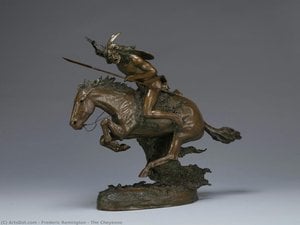
Frederic Remington’s “The Stampede” isn't merely a depiction of cowboys and cattle; it’s a visceral embodiment of the American frontier, a moment frozen in time that captures both the raw power of nature and the indomitable spirit of those who wrestled with it. Completed in 1910, this bronze sculpture stands as a testament to Remington’s profound understanding of his subject – not just cowboys and horses, but the very essence of the vanishing West he so passionately chronicled. The piece resonates deeply, evoking feelings of exhilaration, danger, and an undeniable connection to a bygone era.
Remington, born in Canton, New York, wasn’t destined for the dusty trails he immortalized. His lineage was rooted in Eastern industry – his father a Civil War colonel and newspaper editor, connected through distant cousins to the Remington Arms dynasty. Yet, an early fascination with military themes, coupled with a restless spirit and a keen eye for storytelling, propelled him westward. “The Stampede” exemplifies this journey; it’s a deliberate departure from the idealized romanticism of earlier Western art, presenting instead a brutally honest portrayal of the chaos and energy inherent in cattle drives. The sculpture's creation coincided with a period of rapid change in the West – the decline of open range ranching, the rise of railroads, and the encroachment of civilization – making it a poignant reflection on a way of life rapidly disappearing.
Remington’s masterful use of bronze is central to the sculpture's impact. The material itself—dark, earthy, and subtly textured—provides an ideal foundation for capturing movement and conveying weight. He skillfully employed *lost-wax casting*, a technique that allowed him to achieve incredible detail in the musculature of both animals and men. Notice the tautness of the horses’ muscles as they surge forward, the powerful stance of the bull dominating the center, and the determined expressions on the cowboys' faces. The subtle variations in shading – from deep shadows highlighting the contours of the bodies to brighter areas catching the light – create a remarkable sense of depth and volume, drawing the viewer into the heart of the action.
The composition is deliberately dynamic, utilizing a strong diagonal flow that leads the eye through the scene. The overlapping figures, the intertwined limbs, and the sheer number of animals contribute to a feeling of overwhelming movement. Remington’s attention to anatomical accuracy is remarkable; he wasn't simply depicting cowboys riding horses; he was rendering the complex mechanics of animal locomotion with astonishing precision. Even the base of the sculpture—a simple geometric form—provides a grounding element, anchoring the frenetic energy above.
“The Stampede” is rich in symbolic meaning. The stampede itself represents not just a literal event but also the relentless drive of progress – the westward expansion that fundamentally reshaped America. The cowboys, though undeniably skilled and courageous, are presented as participants in a process larger than themselves, caught within the currents of history. The bull, a symbol of both power and danger, embodies the untamed wilderness that defined the West. The sculpture subtly acknowledges the precariousness of this existence – the potential for chaos and destruction lurking beneath the surface of apparent control.
Furthermore, the piece speaks to the romantic ideal of the cowboy—a figure often idealized in popular culture. Remington’s depiction is far more complex, portraying a life of hardship, danger, and constant struggle. The sculpture isn't celebrating heroism; it’s documenting a reality, capturing the grit and determination required to survive on the frontier. The weathered faces of the cowboys, their clothing worn and dusty, hint at years spent battling the elements and confronting the unknown.
“The Stampede” remains one of Frederic Remington’s most iconic works, a powerful testament to his artistic vision and his profound understanding of the American West. Its enduring appeal lies not only in its technical brilliance but also in its ability to evoke a strong emotional response – a sense of awe, excitement, and perhaps even a touch of melancholy for a way of life that is now largely lost. Reproductions capture much of this power, offering a tangible connection to this pivotal moment in American history and a lasting tribute to the artist who so brilliantly documented it.

1861 - 1909 , 美国


 购买印刷品
购买印刷品 分享
分享 分享
分享
 详情
详情

 下载
下载
 相似作品
相似作品 幻灯片播放
幻灯片播放


 展开详情
展开详情