
由我们的艺术家按需定制,为您提供您所选尺寸及画框的布面手工油画。 ( 切换至版画销售渠道 切换至数字图像销售渠道)





























您可以从与原作比例一致的预设尺寸中进行选择。

请输入您需要的宽度和高度,以适配您的画框或墙面。由于作品为手工绘制,若您选择不同的尺寸比例,艺术家可能会在画面边缘多画一些或稍作裁剪 —— 由您决定。在开始绘画之前,我们会为您发送一份数字效果图供您确认。本页面上展示的图片并非最终实物 —— 只有效果图才能反映真实结果。
The crossing
复刻品尺寸说明
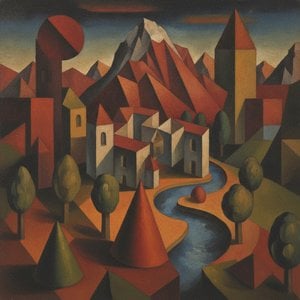
In the vibrant landscape of early twentieth-century modernism, few works capture the rhythmic pulse of progress as evocatively as Fernand Léger’s "The Crossing." Painted between 1923 and 1924, this masterpiece serves as a profound visual manifesto, standing at the intersection of rural tradition and the relentless march of the machine age. Rather than retreating into the ethereal realms of pure abstraction, Léger utilizes the foundational principles of Cubism to anchor his subject in a tangible, albeit transformed, reality. The canvas presents a scene inspired by the landscapes of Normandy, yet it is a landscape viewed through the lens of a new era—one where the organic curves of nature are being reshaped by the sharp, decisive edges of industrial geometry.
The composition is anchored by a striking red structure that commands the viewer's attention, acting as a monumental centerpiece that symbolizes the burgeoning architectural and industrial edifices of the time. Through a masterful use of triangles, squares, and circles, Léger constructs a world that feels both solid and dynamic. This deliberate simplification of form does not strip the scene of its soul; instead, it distiguishes the strength and structural integrity of modernity. For the discerning collector or interior designer, this piece offers a sophisticated balance of bold color and structured form, making it an ideal focal point for spaces that celebrate contemporary elegance and architectural strength.
Léger’s technical execution in "The Crossing" is nothing short of visceral. Moving away from the delicate, blended transitions favored by the Impressionists, Léger employs a bold, almost muscular application of oil paint. The texture of the canvas often feels palpable, with thick layers of pigment creating a surface that possesses its own physical presence. This heavy-handed approach mirrors the very subject matter he depicts—the weight of steel, the solidity of stone, and the unyielding nature of industrial progress. His palette is strategically deployed to create emotional resonance; the interplay between primary reds, deep blues, and vibrant yellows creates a high-contrast environment that vibrates with energy.
Beyond the mere depiction of objects, the painting captures a sense of movement and tension. The inclusion of subtle human figures amidst the geometric landscape introduces a poignant narrative element, reminding us of the human experience within this rapidly changing world. There is a fascinating duality at play: the permanence of the industrial structures contrasted with the fleeting presence of life. This tension makes "The Crossing" more than just a decorative object; it is an intellectual journey. For those seeking to adorn a home or gallery with art that provokes thought and conversation, this work provides a timeless connection to the era when the world first learned to dance to the rhythm of the machine.
Whether viewed as a historical document of the post-war era or as a stunning example of Cubist innovation, "The Crossing" remains an essential piece for any serious collection. It invites the viewer to find beauty in the mechanical, grace in the geometric, and a profound sense of wonder in the structured evolution of our modern world.
您可以在作品的幻灯片播放页面上观看“The crossing”的幻灯片展示。
与“The crossing”相似的作品已列在艺术品的 相似作品 页面中。
关于《The crossing》的创作者 费尔南·莱热,其记录在案的其他名称包括 费尔南·德·莱热, 若泽·费尔南·亨利·莱热 (全名)。

1881 - 1955 , 法国
Explore the profound evolution of Cubist landscapes. Discover how masters like Braque and Picasso redefined perspective through geometric mastery, transforming nature into an intellectual mosaic of form and light for the discerning modern art collector.


 实景预览
实景预览
 发送
发送 分享
分享
 详情
详情 指南
指南

 下载图片
下载图片
 相似作品
相似作品 X射线
X射线 幻灯片播放
幻灯片播放 统计数据
统计数据

 阅读全文
阅读全文









 玻璃选项仅适用于110厘米以下的尺寸。


