
由我们的艺术家按需定制,为您提供您所选尺寸及画框的布面手工油画。 ( 切换至版画销售渠道 切换至数字图像销售渠道)





























您可以从与原作比例一致的预设尺寸中进行选择。

您可以输入自定义尺寸,以适配特定的画框或空间。如果所选尺寸与原图比例不符,我们将通过裁剪作品或添加手绘元素来扩展画面。数字样稿将在制作开始前发送给您确认。
请注意,屏幕预览无法准确反映实际的裁剪或扩展效果,只有样稿才能真实呈现最终的构图。
虽然我们提供定制尺寸服务,但为了保留原作比例,建议您从预设列表中选择尺寸。

Raploch, Stirling
复刻品尺寸说明
David Gauld's "Raploch, Stirling," painted in 1931, is more than just a depiction of a Scottish village; it’s a poignant meditation on rural life, the relationship between humanity and nature, and the enduring spirit of a community nestled within a dramatic landscape. This oil-on-canvas masterpiece, now meticulously reproduced for discerning collectors, transports the viewer to a tranquil corner of Perthshire, capturing not just the visual beauty but also a profound sense of place and time.
The scene unfolds with remarkable detail – a cluster of modest dwellings, rendered in earthy ochres and browns that seamlessly blend into the surrounding terrain. These humble homes, punctuated by glimpses of barns and workshops, speak to a life rooted in agriculture and craftsmanship. Beyond them stretches a rolling expanse of verdant fields, dotted with grazing livestock—cows, sheep, and horses—that contribute to the painting’s overall feeling of pastoral serenity. Dominating the background is the imposing silhouette of Stirling Castle, its ancient stones rising majestically against the backdrop of a rugged mountain range. The light, diffused and soft, suggests either early morning or late afternoon, casting long shadows that add depth and drama to the composition.
David Gauld’s artistic journey is inextricably linked to the vibrant art scene of Glasgow during the late 19th century. As a member of the Glasgow Boys, a group of young artists who challenged the established academic style, Gauld embraced a more expressive and emotionally charged approach to painting. His early work was heavily influenced by Japanese prints – particularly their bold compositions, flattened perspectives, and emphasis on decorative elements – a trend he skillfully integrated into his own distinctive style. However, beneath this Eastern influence lies a strong resonance with the Pre-Raphaelite Brotherhood, evident in Gauld’s meticulous attention to detail, his romanticized portrayal of rural life, and his use of rich, saturated colors.
The Pre-Raphaelites, who rejected the conventions of academic art, sought inspiration from medieval and Renaissance sources, often depicting scenes from mythology, literature, and folklore. Gauld’s “Raploch” shares this fascination with storytelling and symbolism, inviting viewers to contemplate the lives and experiences of those who inhabit this remote corner of Scotland. The inclusion of animals, for instance, is not merely decorative; they represent a deep connection between humanity and the natural world – a theme central to both Japanese and Pre-Raphaelite art.
Gauld’s technical skill is immediately apparent in the painting's remarkable level of detail. He employs a meticulous layering technique, building up the image through numerous thin glazes of oil paint, creating a luminous surface that captures the subtle nuances of light and shadow. The artist’s brushwork is both precise and expressive, conveying a sense of texture and movement – from the rough bark of the trees to the flowing robes of the figures. Notice particularly the way he renders the textures of the sheep's wool or the weathered stone of Stirling Castle.
The composition itself is carefully balanced, drawing the eye through a series of converging lines that lead the viewer’s gaze from the foreground dwellings towards the distant mountains. The strategic placement of elements – the castle, the livestock, and the village – creates a harmonious whole, reflecting the interconnectedness of human life and the natural environment. The use of atmospheric perspective—the subtle blurring of details in the distance—further enhances the sense of depth and scale.
"Raploch, Stirling" is not simply a picturesque landscape; it’s imbued with symbolic meaning. The village represents resilience, community, and a connection to the land – values that have long been central to Scottish identity. The imposing presence of Stirling Castle serves as a reminder of Scotland's rich history and its enduring spirit. The painting evokes a sense of nostalgia for a simpler time, a longing for the tranquility of rural life, and a deep appreciation for the beauty of the natural world.
Reproduced with meticulous attention to detail, this artwork offers a captivating glimpse into a bygone era. It’s an ideal addition to any collection, bringing a touch of Highland charm and timeless elegance to your home or office. Whether you are an art enthusiast, a collector seeking investment pieces, or simply someone who appreciates the beauty of Scottish landscape painting, “Raploch, Stirling” is sure to captivate and inspire.

在十九世纪后期苏格兰那充满活力且变幻莫测的艺术版图中,很少有艺术家能像大卫·高尔德(David Gauld)那样,如此优雅地捕捉到传统与现代交汇的瞬间。1865年出生于格拉斯哥,高尔德不仅以画家身份崭露头角,更是一位开拓者,成功地在平面设计细腻的复杂美感与彩色玻璃窗那宏伟的庄重感之间架起了一座桥梁。他的艺术历程是一场深刻的美学演变,深深植根于格拉斯哥男孩(Glasgow Boys)运动的艺术激荡之中;这一群体致力于打破当时僵化的学院派教条,转而追求更加自然主义、情感化且具有实验性的创作路径。
高尔德早期的创作冲动源于他对细节近乎苛求的敏锐观察力,这种特质在他担任石版画家成名之前的磨练中得以淬炼。1882年进入格拉斯向艺术学院(Glasgow School of Art)时,他随身携带了对东方美学日益增长的痴迷。这一时期,他与日本浮世绘进行了深度的精神对话,其扁平化的透视视角和大胆且富有书法感的线条,从此便永久地萦绕在他的构图之中。通过为《格拉斯哥每周公民报》(The Glasgow Weekly Citizen)创作那些动人心魄的钢笔水墨画,他获得了早期的公众认可;这些作品展现了他对线条精湛的掌控力,以及一种富有节奏感、有机律动的感官体验,预示着地平线上即将到来的新艺术运动(Art Nouveau)革命。
随着高尔德艺术生涯的推进,他的媒介从纸张细腻的表面扩展到了彩色玻璃那晶莹剔透、光影流转的领域。这种转变使他能够以同辈艺术家难以企及的方式,去探索光与色的相互作用。在1891年至1894年间于柯库布里(Kirkcudbright)度过的时光里,高尔德为Guthrie and Wells承接了重要的委托项目,创作出的窗棂作品远不止是建筑上的装饰品。这些作品宛如光之织锦,新艺术风格那有机且流动的形态,与拉斐尔前派(Pre-Raphaelite)传统中深邃而富有象征意义的精神深度在此完美邂逅。
他在玻璃工艺上的技艺,其核心在于对色彩如何与自然光照相互作用的深刻理解。通过对纹理和颜料的精妙操控,他能够营造出一种既空灵飘渺又脚踏实地的氛围感。这种对媒介的驾驭能力反映了他更宏大的艺术哲学:即艺术不应仅仅是世界的再现,更应当去转化其所处的空间。无论是运用油彩、水墨还是玻璃,高尔德始终试图透过一种风格化的优雅视角,去捕捉对象的本质——无论是肖像画中那份静谧的尊严,亦或是苏格兰风景中那份粗犷的美感。
大卫·高尔德的人生轨迹交织着合作的辉煌与孤独的磨砺。他与格拉斯哥画派其他杰出人物(如William Stewart Shirreffs和Harrington Mann)的交往,使他处于苏格兰艺术史变革时期的核心地位。即便随着职业关系的变迁以及他在格拉斯哥、柯库布里与北伯威克之间的辗转迁移,他对创新的执着始终如一。他成为了连接十九世纪对自然主义的痴迷与二十世纪对装饰性现代主义拥抱之间的一环,发挥着至关重要的纽带作用。
时至今日,高尔德仍被视为一位拥有卓越多才与远见卓识的艺术家。他能够将多元的影响力融会贯通——从日本木版画的精准度到拉斐尔前派的浪漫主义——这使他为格拉斯哥风格(Glasgow Style)贡献了独特的艺术声音。他的遗产在那些永恒美丽的玻璃作品和充满力量感的绘画中得以延续,至今仍在与人们对匠心精神、光影之美以及苏格兰创新精神的赞赏产生着深刻共鸣。

1865 - 1936 , 英国
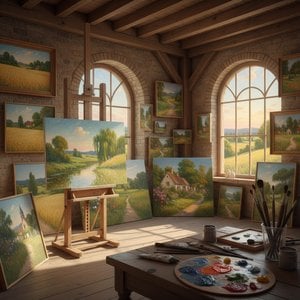
Discover the profound tranquility of rural art through an expert exploration of Impressionist landscapes. From pastoral scenes to textured oil masterpieces, learn how timeless nature-inspired artworks bring enduring elegance and serenity to sophisticated collectors.


 实景预览
实景预览
 发送
发送 分享
分享
 详情
详情 指南
指南

 下载图片
下载图片
 相似作品
相似作品 X射线
X射线 幻灯片播放
幻灯片播放 统计数据
统计数据


 阅读全文
阅读全文









 玻璃选项仅适用于110厘米以下的尺寸。


