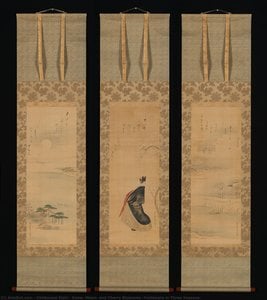
Ukiyo-e masters, in order
The most famous Ukiyo-e художник is Кацушіка Хокусай (1760–1849), known for Вели хвилі Канагава та Фудзи, Гори в ясний день (Червоний Фудзи). Next come Утаґава Хірошіґе, Кітаґава Утамаро, Цукіока Йосітосі та Торії Кійонага. This ranking of the 39 most famous Ukiyo-e художники runs from Хісікава Моронобу (born 1618) to Goyō Hashiguchi (born 1880), across 2 countries.
How this list is ranked. Artists whose works our catalogue files under Ukiyo-e, in the order of our fame ranking of artists. Artists without a Wikidata identifier born after 1955 are left out until verified. The Wikipedia figure next to each name is the number of our 32 languages in which Wikipedia has an article on the artist.
The essentials
Ranked, with their masterpieces
2of 39
Японський Born in Едо *Ukiyo-e* Wikipedia in 30/32 languages

His life unfolded during a period of relative peace and prosperity under the Tokugawa shogunate, yet also one marked by increasing social change and eventual westernization – forces that would ultimately contribute to the decline of ukiyo-e even as they amplified Hiroshige’s enduring legacy. Artists like Monet, Degas, and Van Gogh were deeply inspired by his prints, incorporating elements of his style—particularly his use of color and atmospheric perspective—into their own paintings.
4of 39
Японець Born in Едо Укійо-е Wikipedia in 15/32 languages
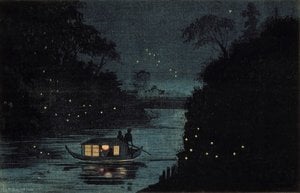
Musha Burui. Сто аспектів місяця. Нові подоби тридцяти шести духів.
6of 39
Японський Born in Токіо Укійо-е Wikipedia in 24/32 languages

Pupil of Utagawa Toyokuni I #13 · Teacher of Utagawa Yoshitora #32, Kawanabe Kyōsai #11
7of 39
Японець Born in Едо Укійо-е Wikipedia in 21/32 languages

Osen (Музей тютюну та солі, Суміда). 輿入 (Музей мистецтв префектури Нара).
9of 39
Японський Born in Едо Укійо-е Wikipedia in 17/32 languages

Pupil of Utagawa Toyokuni I #13
10of 39
Японець Born in Токіо Укійо-е, Бідзін-га Wikipedia in 11/32 languages

11of 39
Japanese Born in Koga Ukiyo-e, Caricature, Manga pioneer Wikipedia in 10/32 languages

In 1874, he helped create what is considered the first manga magazine, Eshinbun Nipponchi, alongside Kanagaki Robun.
12of 39
Japanese Born in Edo Bunsei Era Ukiyo-e Wikipedia in 15/32 languages

This shift defined the aesthetic of the Bunsei era (1818–1830), a period often characterized by its decadent and psychologically complex atmosphere.
13of 39
Japanese Born in Shiba Ukiyo-e Wikipedia in 13/32 languages

Unlike some artists blessed with immediate, innate talent, Toyokuni appears to have been a dedicated student, meticulously absorbing the techniques and aesthetics of those who preceded him. He wasn't simply copying their styles but rather dissecting them, understanding their strengths, and ultimately synthesizing them into something uniquely his own. While Sharaku is often lauded by modern art historians for his psychological insight, it was Toyokuni who captured the hearts of the Edo public.
Teacher of Utagawa Toyokuni II #35
14of 39
Japanese Born in Tokyo Ukiyo-e

«Канадеон Чусінгура, акт 1» — дивовижний приклад жанру укійо-е, створений у 1855 році.
15of 39
Японський Born in Аizu Утагава школа

Kunimasa’s early life was marked by a dedication to craftsmanship and artistic training. Toyokuni's influence ensured Kunimasa wouldn’t simply replicate his mentor’s style but would forge a path toward originality, blending stylistic elements into a cohesive artistic vision. Utagawa Kunimasa's influence extends far beyond his own lifetime.
16of 39
Japanese Born in Kyoto Ukiyo-e Wikipedia in 9/32 languages

These works demonstrate his versatility as an artist and underscore his commitment to exploring diverse artistic mediums—a testament to his intellectual curiosity and artistic ambition. Legacy & Recognition: Nishikawa Sukenobu’s enduring legacy resides in his contribution to Japanese art history, particularly his groundbreaking portrayal of women. Influence on Subsequent Artists: Sukenobu’s influence extended far beyond his own lifetime, inspiring subsequent generations of printmakers like Suzuki Harunobu and Kitao Shigemasa.
17of 39
Japan ukiyo-e Wikipedia in 19/32 languages

Sharaku's technique involved the use of woodblock prints, sometimes employing extravagant methods such as the dusting of mica in the backgrounds to create a glittering effect. His reputation rests largely on his earlier prints, while his later output is often considered to have a declining artistry. His portraits are noted for their ability to capture the psychology of a character through heightened theatrical gestures and expressive, almost caricature-like exaggerations.
18of 39
Japanese Ukiyo-e

This quiet revolution – a departure from the more flamboyant styles of his predecessors – established Hiroshige as a uniquely sensitive and poetic artist, whose work continues to inspire awe and contemplation centuries later. Hiroshige’s prints are not simply images; they are windows into the soul of Japan. Following this triumph, he embarked on One Hundred Famous Views of Edo (1856–1858), a vertical-format series that celebrated his hometown with an unprecedented level of detail and emotional depth.
19of 39
Japanese Born in Miyagawa Ukiyo-e Wikipedia in 9/32 languages

The works of Chōshun are instantly recognizable for their evocative atmosphere and tender execution. This sense of physical weight and warmth contributed to a realism that was both captivating and deeply human. His pupils, including his son Miyagawa Isshō and the talented Miyagawa Chōki, carried forward his dedication to depicting the tastes and textures of urban life.
20of 39
Dutch Born in Kagoshima Post-Impressionism

Goyō’s initial foray into the art world wasn't through printmaking but rather illustration. In 1907 he won recognition for an ukiyo-e oil painting in the first Bunten show, but felt unfulfilled by public acceptance and returned to woodblock printing. Despite his frail health, exacerbated by beriberi, Goyō continued to produce prints at a remarkable pace from 1915 until his untimely death in 1921 at the age of forty-one.
21of 39
Japanese Born in Tokyo Ukiyo-e Wikipedia in 10/32 languages

In the vibrant, bustling heart of the Edo period, a golden age of Japanese creativity, few names resonate with as much elegance and prolific energy as Isoda Koryūsai.
22of 39
Japanese Born in Tokyo Ukiyo-e, Nihonga Wikipedia in 9/32 languages

His most celebrated series, “One Hundred Views of Mount Fuji” (1896-1905), exemplifies his mastery. Rather than simply depicting the iconic mountain as a static subject, Gekko captured its ever-changing moods and vistas with an astonishing range of perspectives and atmospheric conditions. The First Sino-Japanese War (1894-1895) provided him with opportunities to document this tumultuous period in Japanese history, producing powerful and evocative prints that captured the spirit of national pride and resilience.
23of 39
Японець Born in Токіо Укійо-е, Косен-га Wikipedia in 10/32 languages

Pupil of Kawanabe Kyōsai #11
24of 39
Japanese Ukiyo-e

In the vibrant, transformative era of the late Meiji period, few artists captured the shifting soul of Japan as vividly as Adachi Ginkō.
25of 39
Japanese Shin-hanga

In the twilight of the Edo period and the dawn of a modernizing Japan, few artists captured the profound tension between tradition and transformation as masterfully as Toyohara Chikanobu. Born in 1838, an era of profound cultural shifts, Chikanobu—often recognized by his art name Yōshū Chikanobu —emerged as a monumental figure in the world of Japanese woodblock printing.
26of 39
Japanese Born in Toyooka Ukiyo-e Wikipedia in 8/32 languages

In the vibrant tapestry of the Edo period, few names resonate with the quiet elegance and technical mastery of Utagawa Toyohiro.
27of 39
Japanese Born in Tokyo Ukiyo-e, Kuchi-e

Unlike the often-dramatic compositions favored by Yoshitoshi, Toshikata's works are imbued with an understated elegance and a profound sense of sentimentality. He skillfully employed subtle gradations of tone to create atmospheric effects and to convey nuanced emotional states. During the Sino-Japanese War (1894-1895), Toshikata further established himself as a war artist, producing lithographs that offered a nuanced perspective on the conflict – moving beyond simplistic depictions of battles to capture the human cost of war and the anxieties of a nation at odds with its neighbors.
28of 39
Japanese Born in Tokyo Ukiyo-e (Lacquer Print Art) Wikipedia in 7/32 languages

A hallmark of these compositions was a deliberate stillness, an impassivity in the faces of the subjects reminiscent of the Kaigetsudō school's aesthetic.
29of 39
Japanese Noh Theatre Prints

He was awarded a prize at the Panama Pacific International Exposition in San Francisco in 1915 for his woodcut “The Horse Market at Kiso,” cementing his reputation as one of Japan's foremost printmakers. Technique & Style: Sakamaki employed a distinctive watercolor -like technique, layering translucent washes to achieve luminous effects that captured the subtle nuances of Noh theatre—a stylistic innovation that distinguished him from his contemporaries.
30of 39
Born in Tokyo Wikipedia in 8/32 languages

This ambitious project, undertaken in the 1840s, represents a culmination of his artistic sensibilities. The Tale of Genji, considered one of the greatest works of Japanese literature, depicts the complex lives and romantic entanglements within the Heian court. He was undoubtedly influenced by earlier masters of ukiyo-e, particularly Kanenobu and the traditions of Edo period painting.
31of 39
Japanese Born in Tokyo Ukiyo-e

In the vibrant, pulsing heart of Edo-period Japan, where the concept of ukiyo —the floating world—defined the very essence of existence, Utagawa Sadatora emerged as a master of capturing the ephemeral. His formative years were spent under the rigorous and inspiring tutelage of masters such as Utagawa Yoshitora and Kunisada. Through works such as Women Visiting a Shrine or his celebrated seasonal studies, Sadatora continues to invite us into a world where beauty is most potent precisely because it is fleeting, reminding us to find stillness within the ever-changing winds of life.
32of 39

Utagawa Yoshitora, a name resonating within the vibrant world of ukiyo-e, stands as a compelling figure whose career bridged traditional Japanese artistry with an increasingly globalized aesthetic. While his work may not be as widely recognized as that of Hokusai or Kuniyoshi, Yoshitora’s contributions are increasingly appreciated by scholars and collectors alike.
33of 39
Японська Born in Едо Укійо-е (Якуша-е, Біджінга) Wikipedia in 10/32 languages

34of 39
Японська Born in Токіо Укійо-е (якуша-е) Wikipedia in 6/32 languages

переглянути твори Утагава Кунісади II на AllPaintingsStore.com. дослідити Музей сучасного мистецтва Хоккайдо (Японія) на AllPaintingsStore.com. відкрити для себе картини Ноноями Козана на AllPaintingsStore.com.
35of 39
Japanese Ukiyo-e Wikipedia in 4/32 languages

This ambitious undertaking demanded exceptional artistic skill and logistical organization, cementing Hiroshige’s reputation as a visionary artist who could transform ordinary scenes into sublime expressions of beauty. He skillfully employed Prussian blue, a pigment imported from Europe during this period, to render distant mountains with breathtaking realism —a bold departure from traditional Japanese monochrome prints.
Pupil of Utagawa Toyokuni I #13
Key works · The 100 most famous works
36of 39
Japanese Born in Osaka Ukiyo-e Wikipedia in 4/32 languages

He mastered the complex techniques of nishiki-e (錦絵), utilizing multiple woodblocks to achieve a full spectrum of hues – a significant advancement over earlier monochrome or limited-color prints. The influence of Kuniyoshi is evident in Yoshitaki’s bold outlines and dramatic lighting, but he developed a distinctly personal style characterized by a remarkable sensitivity to human expression. Ichiyosai Yoshitaki’s prolific output provides an invaluable window into 19th-century Japanese society.
37of 39
Japanese Ukiyo-e

Pinpointing Kunitsuna’s artistic lineage proves challenging due to the limited documentation surrounding his early career. He also appears to have been influenced by the emerging trends in Western art, particularly in his use of perspective and shading – though he never fully abandoned the traditional conventions of ukiyo-e. However, scholars believe he was heavily influenced by earlier masters of bijin-ga such as Kitagawa Utamaro and Keisai Eisen.
38of 39
Japanese Born in Edo Ukiyo-e, Yokohama-e Wikipedia in 3/32 languages

As with most Ukiyo-e artists of his time, Yoshikazu employed the traditional collaborative process of woodblock printing. The influence of Kuniyoshi is noticeable in his use of dramatic lighting and bold outlines, though Yoshikazu developed a more restrained and observational style.
39of 39
Japanese Born in Osaka Kamigata-e Wikipedia in 3/32 languages

Shunkōsai Hokuchō (春曙斎 北頂), born around 1802 in Osaka, Japan, stands as a fascinating figure within the vibrant tapestry of Edo-period art history. The Osaka Style Emerges: Unlike the Edo-period’s dominant trend of producing prints in Tokyo, Hokuchō remained firmly rooted in Osaka. While Hokuchō may not command the same level of fame as Hokusai or Hiroshige, his quiet mastery of tsukuri-e and his profound understanding of theatrical emotion solidified his place as a pivotal figure in Osaka’s artistic heritage.
The paintings behind the names
Through time
In figures
| Japan | 21 |
|---|---|
| Японія | 15 |
| 17th століття | 3 |
|---|---|
| 18th століття | 17 |
| 19th століття | 12 |
| Бібліотека Університету Кейо | 12 |
|---|---|
| Bujalance Collection | 11 |
| Метрополітен-музей | 9 |
| Індіанапольський музей мистецтв | 2 |
| Minneapolis Institute of Art | 2 |
| Hill-Stead Museum | 2 |
| Бруклінський музей | 2 |
| Art Institute of Chicago | 2 |
All of them, in order
 Кацушіка ХокусайЯпонець · 1760–1849Утаґава ХірошіґеЯпонський · 1797–1858
 Кітаґава УтамароЯпонський · 1753–1806Цукіока ЙосітосіЯпонець · 1839–1892
 Торії КійонагаЯпонська · 1752–1815Утаґава КунійосіЯпонський · 1798–1861Харунобу СудзукіЯпонець · 1724–1770
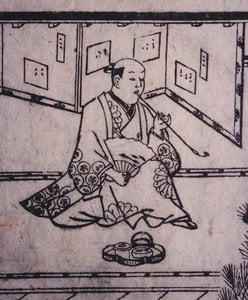 Хісікава МоронобуЯпонець · 1618–1694Утаґава КунісадаЯпонський · 1786–1865Чобунсаї ЕйсіЯпонець · 1756–1829Kawanabe KyōsaiJapanese · 1831–1889Keisai EisenJapanese · 1790–1848Utagawa Toyokuni IJapanese · 1769–1825Хірошіге I (Утагава) Та Цуруя КіемонJapanese · 1797–1858Утагава КунімасаЯпонський · 1773–1810Nishikawa SukenobuJapanese · 1671–1750SharakuJapan · UtashigeJapanese · Miyagawa ChōshunJapanese · 1683–1753Goyō HashiguchiDutch · 1880–1921Isoda KoryūsaiJapanese · 1735–1790Ogata GekkoJapanese · 1859–1920Кобаясі КійотікаЯпонець · 1847–1915Adachi GinkoJapanese · народився 1853Toyohara ChikanobuJapanese · 1838–1912Утаґава ТойхіроJapanese · 1773–1828Mizuno ToshikataJapanese · 1866–1908Ishikawa ToyonobuJapanese · 1711–1785Kogyo SakamakiJapanese · 1869–1927Hokkei1780–1850SadatoraJapanese · Utagawa YoshitoraТойохара КунітікаЯпонська · 1835–1900Утаґава Кунісада IIЯпонська · 1823–1880Utagawa Toyokuni IIJapanese · 1777–1835Utagawa YoshitakiJapanese · 1841–1899Utagawa Kunitsuna Ii, Ichiransai, SadashigeJapanese · Utagawa YoshikazuJapanese · Shunkōsai HokushūJapanese ·
Your questions, answered
First place goes to Кацушіка Хокусай (#1); Утаґава Хірошіґе (#2) and Кітаґава Утамаро (#3) complete the podium.
Кацушіка Хокусай (#1), Утаґава Хірошіґе (#2), Кітаґава Утамаро (#3), Цукіока Йосітосі (#4) та Торії Кійонага (#5).
The highest-ranked художники born in Японія are Кацушіка Хокусай (#1), Утаґава Хірошіґе (#2), Кітаґава Утамаро (#3), Цукіока Йосітосі (#4) та Торії Кійонага (#5).
Утаґава Кунійосі (#6) taught Utagawa Yoshitora (#32) та Kawanabe Kyōsai (#11); Utagawa Toyokuni I (#13) taught Utagawa Toyokuni II (#35).
Едо: 7 of the художники in this list were born there.
The earliest-born художник in this list is Хісікава Моронобу (#8), born in 1618.
The highest-ranked living художники in this list are Adachi Ginko (#24).
The museums holding the most key works of this list are Бібліотека Університету Кейо (12), Bujalance Collection (11) та Метрополітен-музей (9).
Most художники in this list were born in the 18th століття (17 of 39), between 1618 and 1880 overall.
Japan: 21 of the 39 художники in this list were born there, then Японія (15).
The highest-ranked художники born in Japan are Kawanabe Kyōsai (#11), Keisai Eisen (#12), Utagawa Toyokuni I (#13), Хірошіге I (Утагава) Та Цуруя Кіемон (#14) та Nishikawa Sukenobu (#16).
Our catalogue holds 5,896 works by these художники. Each one can be ordered as a hand-painted oil reproduction or a print.
Keep reading
Other movements
 Знамениті художники BaroqueНічна варта · Рембрандт
 Знамениті художники Contemporary RealistЗбирачки · Жан-Франсуа Мілле
 Знамениті художники ImpressionistЗорі Ніч (Нью Йорк, MoMA) · Вінсент Ван Гог
 Знамениті художники RomanticistСатурн, що пожирає свого сина · Франсіско-Хосе де Гоя
 Знамениті художники NeoclassicistСмерть Марата · Жак-Луї Давід
 Знамениті художники RealistПоходження світу · Гюстав Курбе
 Знамениті художники RenaissanceМона Ліза (Джоконда) · Леонардо Да Вінчі
 Знамениті художники Dutch Golden AgeДівчина з перловою сережкою · Ян Вермер
 Знамениті художники ExpressionistКомпозиция VII · Кандінський Василь Васильович
 Знамениті художники RococoВідплив до Кітер · Антуан Ватто
Other periods
 Знамениті художники Early MedievalSnowy River · Ван Вей
 Знамениті художники High MedievalМадонна у Маєсті (Огнассанті Мадонна) · Джотто
 Знамениті художники Late MedievalБлаговіщення та двоє святих · Сімоне Мартіні
 Знамениті художники RenaissanceСтворення Адама · Мікеланджело Буонарроті
 Знамениті художники Early ModernПокликання святого Матвія · Мікеланджело да Караваджо
 Знамениті художники 19th CenturyВодяні лілії (або Латаття) · Клод Моне
 Знамениті художники ModernГерніка · Пабло Пікассо
 Знамениті художники ContemporaryWind Sculpture III (one in a series of nine) · Yinka Shonibare
More rankings