1of 39
Жан-Леон Жером 1824–1904
Француз Born in Везуль Академізм, Орієнталізм, Неогрек Wikipedia in 29/32 languages


Orientalist художники, ranked
The most famous Orientalist художник is Жан-Леон Жером (1824–1904), known for Pollice Verso (також «Палець вниз») та Фірна перед Ареопагом. Next come Осман Хамді Бей, Жан-Жозеф Бенджамін-Констант, Девід Робертс та Ежен Фромантен. This ranking of the 39 most famous Orientalist художники runs from Thomas Daniell (born 1749) to Léon Cauvy (born 1874), across 15 countries.
How this list is ranked. Artists whose works our catalogue files under Orientalist, in the order of our fame ranking of artists. Artists without a Wikidata identifier born after 1955 are left out until verified. The Wikipedia figure next to each name is the number of our 32 languages in which Wikipedia has an article on the artist.
The essentials
Ranked, with their masterpieces
1of 39
Француз Born in Везуль Академізм, Орієнталізм, Неогрек Wikipedia in 29/32 languages
2of 39
Turkish Born in Стамбул Orientalist Painting Wikipedia in 21/32 languages

3of 39
Француз Born in Париж ['Орієнталізм', 'Академічний стиль'] Wikipedia in 15/32 languages

His early training under Alexandre Cabanel instilled within him a deep appreciation for classical composition, anatomical accuracy, and the meticulous rendering of detail – hallmarks of academic art. National Gallery of Art in Washington D.C., ensuring that his artistic vision continues to inspire and captivate audiences for generations to come.
6of 39
English Orientalism

After establishing himself in the photographic studio scene in Liverpool during the early 1850s, Frith felt the pull of the distant unknown. His journeys between 1856 and 1860 were Herculean feats of both physical endurance and technical mastery. Though his early life was rooted in the practicalities of the Quaker tradition and even involved apprenticeships in the cutlery trade and success as a wholesale grocer, Frith possessed an innate curiosity that would eventually lead him to the sun-drenched landscapes of Egypt, Palestine, and Syria.
7of 39
Француз Born in Париж Романтизм; Орієнталізм Wikipedia in 14/32 languages

CHIENS BRIFAUTS: Чарівна орієнталістська сцена, що демонструє собак у яскравому оточенні. LA COUR DE FERME: Захопливий твір XIX століття, що поєднує французький романтизм з історичною деталізацією. L’ÉCOLE TURQUE: Жваве зображення турецької школи, що передає енергію та атмосферу повсякденного життя.
9of 39
Американець Born in Тускігея Орієнталізм, академізм Wikipedia in 15/32 languages

10of 39
Француз Born in 1-й округ Парижа Ориенталізм Wikipedia in 13/32 languages

12of 39
Француз Born in колишній 10-й округ Парижа Орієнталізм Wikipedia in 9/32 languages

13of 39
Француз Born in Париж Орієнталізм Wikipedia in 10/32 languages

14of 39
Belgian Born in Vilvoorde ['Orientalism', 'Academic Art'] Wikipedia in 12/32 languages

Students such as Théo van Rysselberghe, Jan Toorop, and Émile Wauters find their footing under his guidance.
15of 39
Czech/Swiss Born in Zurich Orientalism

Born in 1866 in České Budějovice, Bohemia, his early years were shaped by the cultural currents of the Austro-Hungarian Empire after his family relocated to Prague. Between 1889 and 1892, Pilny returned to Egypt, finding himself deeply embedded in the vibrant, bustling atmospheres of Alexandria and Cairo. He possessed a remarkable ability to navigate the complexities of Middle Eastern social structures, from the bustling energy of the Orientalischer Basar to the more harrowing and complex realities depicted in works like Slave Market.
16of 39
French Born in Avesnes-sur-Helpe Romanticism

Born into the quiet nobility of Avesnes-sur-Helpe, Achille Constant Théodore Émile Prisse d’Avennes was destined for a life defined by intellectual rigor and a profound curiosity about the world beyond Europe. This intimate connection to the Nile allowed him to perceive the nuances of Egyptian society with a clarity that remained invisible to many of his Western contemporaries. His scholarly publications, such as L'art arabe d'après les monuments du Kaire, provided much-needed documentation of Islamic architecture from the 7th to the 18th century, bridging the gap between archaeological discovery and public appreciation.
17of 39
Art Nouveau, Orientalism
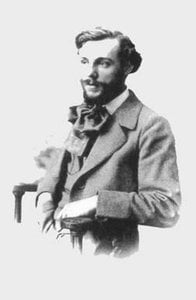
Léon Cauvy began his formal training at the École Nationale des Beaux-Arts de Montpellier, but the pull of the larger art world led him to Paris in 1895. Between 1896 and 1906, his work for furniture and interiors earned him twelve prizes featured in Paul Arnavielhe's Art et Décoration magazine.
18of 39
French Orientalist, Nude Painting

Tanoux’s technique was characterized by a masterful command of light and shadow, often employing impasto—thickly applied paint—to create a tactile surface that seemed to shimmer with life. He was particularly adept at capturing the subtle nuances of skin tone and fabric texture, imbuing his figures with a remarkable sense of realism. His works are now held in prestigious collections across France, including the Musée des Beaux-Arts de Nice, Musée de Grenoble, and Musée Cantini, testament to the enduring appeal of this often-overlooked master of French painting.
21of 39
French Born in Vertaizon Orientalist Painter Wikipedia in 8/32 languages

However, the Baron de Barante, a prominent figure who recognized Marilhat's innate talent and passion, intervened, advocating for his artistic pursuits. This pivotal moment propelled young Prosper to Paris in 1829, where he enrolled under the tutelage of Camille Roqueplan, a respected academic painter. Ruines de la mosquée El-Hakem au Caire (1840), for example, became renowned for its ability to capture both the monumental scale of the ruined structure and the evocative atmosphere of decay—a testament to the passage of time and the grandeur of a lost civilization.
22of 39
Austrian/French Born in Відень Orientalism Wikipedia in 9/32 languages

In 1919, he became a French citizen, eventually writing his name as Louis Deutsch. This transition mirrored the evolution of his art, which had moved from the classical traditions of Vienna to a specialized mastery of the Orientalist style. The historical significance of Ludwig Deutsch lies in his role as a bridge between the European academic tradition and the romanticized fascination with the East.
23of 39
Британці Born in Кінгстон-на-Темзі Пейзаж та марина Wikipedia in 5/32 languages

24of 39
German Born in Weimar Orientalism Wikipedia in 8/32 languages

His early years were shaped by the rigorous artistic traditions of Germany, where he studied under the esteemed Julius Schnorr von Carolsfeld in Leipzig. As he moved through Europe, exhibiting in prestigious venues like the New Watercolour Society in England, his reputation as a master of the medium began to solidify, setting the stage for his most ambitious expeditions. While the Romantic movement often leaned toward the dramatic and the exaggerated, Werner maintained a commitment to a certain truthfulness, even when depicting the exotic.
26of 39
Британський Born in Лондон Орієнталізм Wikipedia in 9/32 languages

“Рамзесський храм” (Yale Center for British Art, Нью-Гейвен) – чудовий приклад уваги до архітектурних деталей.
27of 39
Француз Born in Шарсе Орієнталізм, Архітектура

WahooArt з гордістю пропонує високоякісні репродукції захопливих зображень Тремо, дозволяючи глядачам на власні очі відчути красу, детальність та інтелектуальну глибину візії цього надзвичайного митця.
28of 39
British Born in Kingston upon Thames Orientalist landscape Wikipedia in 6/32 languages

While initially influenced by British landscape traditions—artists like Richard Wilson and Paul Sandby —he gradually developed a unique aesthetic that blended European techniques with Indian sensibilities. He became a Royal Academician in 1804, solidifying his position as a leading artist of his time.
29of 39
Italian Born in Frascati Orientalism Wikipedia in 6/32 languages

He possessed a gift for rendering textures—the rough stone of ancient ruins, the shimmering silk of fabrics in a bazaar, the delicate play of sunlight on water. Similarly, Bethlehem transcends simple religious iconography to become a poignant meditation on faith and devotion. In 1893, he was honored as an Academic of Merit by the Academy of St Luke—a testament to his standing within the Italian art world—and subsequently served as a professor at the institution.
30of 39
Австро-француз Born in Відень Орієнталізм Wikipedia in 9/32 languages

31of 39
Німецько-британський Born in Ерланген Водяне фарсування Wikipedia in 7/32 languages

Initially grounded in the academic traditions of Nuremberg and Munich, where he honed his skills in portraiture, architectural studies, and illustration, Haag possessed a meticulous attention to detail that would become a hallmark of his work.
32of 39
Американець Born in Манліус Орієнталізм Wikipedia in 3/32 languages

33of 39
French Born in Le Lude Orientalist Painting Wikipedia in 4/32 languages

Huguet's first significant journey abroad occurred in 1852, when he traveled to Egypt. Crucially, Huguet’s artistic development was profoundly influenced by his extensive travels throughout North Africa – Libya, Algeria, Tunisia, and Egypt. Victor Huguet continued to exhibit his works at the Salon de Marseille and the Paris Salon until 1893, after which he became a regular exhibitor at the Société des Peintres Orientalistes Français.
36of 39
French Born in Rodez Orientalism, Impressionism Wikipedia in 4/32 languages

One may find his work within the walls of the Musée d'Orsay, while other pieces are held by the Musée des Beaux-Arts de Marseille.
Where to see The influence of Maurice Bompard extended far beyond the canvas, reaching into the very organization of his peers.
38of 39
French Born in Versailles Orientalist Painter Wikipedia in 2/32 languages

André Suréda (1872–1930) remains a captivating figure in the annals of French art, a painter whose brush captured the shifting light and profound cultural textures of the Maghreb. His early life was steeped in an atmosphere of classical excellence; he studied at the prestigious Lycée Henri-IV before entering the École Nationale Supérieure des Beaux-Arts. His work serves as a vital visual record of the Belle Époque and the early Surrealist period, capturing a specific era of fascination with the "Orient" through a lens that was both technically precise and emotionally resonant.
39of 39
Italian Born in Genoa Academic Realism Wikipedia in 2/32 languages

His early career saw him capturing the vanishing natural beauty of the Roman countryside, specifically the area around Prati, which was then undergoing rapid urbanization. Whether painting the dusty streets of Marrakech or the opulent halls of a bygone European era, his work remained anchored by an unwavering commitment to idealized beauty and psychological depth. Though his life was tragically short, ending in Rome in 1922, Amedeo Momo Simonetti left behind a body of work that remains a vital bridge between the disciplined traditions of Italian Academicism and the romantic, imaginative allure of the Orientalist movement.
The paintings behind the names
Through time
In figures
| Франція | 11 |
|---|---|
| France | 6 |
| Сполучене Королівство | 3 |
| Сполучені Штати Америки | 3 |
| Італія | 2 |
| Австрія | 2 |
| Italy | 2 |
| Туреччина | 1 |
| 1740s | 1 |
|---|---|
| 1760s | 1 |
| 1790s | 1 |
| 1800s | 6 |
| 1810s | 5 |
| 1820s | 6 |
| 1830s | 1 |
| 1840s | 6 |
| 1850s | 5 |
| 1860s | 4 |
| 1870s | 3 |
| Art Institute of Chicago | 4 |
|---|---|
| New York Historical Society | 3 |
| Метрополітен-музей | 2 |
| Музей Конде | 2 |
| Музей Карнавале | 2 |
| Phoenix Art Museum | 1 |
| Гамбургська художня галерея | 1 |
| Sakıp Sabancı Museum | 1 |
All of them, in order
Жан-Леон ЖеромФранцуз · 1824–1904Осман Хамді БейTurkish · 1842–1910Жан-Жозеф Бенджамін-КонстантФранцуз · 1845–1902 Девід РобертсScottish · 1796–1864
 Ежен ФромантенФранцуз · 1820–1876Francis FrithEnglish · 1822–1898Александр Габріель ДекампФранцуз · 1803–1860
 Жорж-Антуан РошегроссФранцуз · 1859–1938Фредерік Артур БріджменАмериканець · 1847–1928Насреддін ДінеФранцуз · 1861–1929
 Едвін Лорд ВікзAmerican · 1849–1903Жорж КлеренФранцуз · 1843–1919Чарлз-Теодор Фрер (Бей)Француз · 1814–1888Jean François PortaelsBelgian · 1818–1895Otto PilnyCzech/Swiss · 1866–1936Émile Prisse D'AvennesFrench · 1807–1879Léon Cauvy1874–1933Adrien Henri TanouxFrench · 1865–1923
 Джуліо Розаті1858–1917
 Альберто Пасіні1826–1899Prosper MarilhatFrench · 1811–1847Людвиг ДойчAustrian/French · 1855–1935Томас І Вільям ДаніельБританці · 1769–1837Carl WernerGerman · 1808–1894
 Альфред Деоданк1822–1882Джон Фредерік ЛьюїсБританський · 1805–1876П'Єр-Віктор ТремоФранцуз · 1818–1895Thomas DaniellBritish · 1749–1840Hermann David Salomon CorrodiItalian · 1844–1905Рудольф ЕрнстАвстро-француз · 1854–1932Карл ХагНімецько-британський · 1820–1915Майнер Кілборн КеллогАмериканець · 1814–1889Victor HuguetFrench · 1835–1902
 Адріен ДозатФранцуз · 1804–1868
 Дьюла Торнай1861–1928Maurice BompardFrench · 1857–1935
 Фредерік Р. СпенсерАмериканець · 1806–1875André SuredaFrench · 1872–1930Amedeo SimonettiItalian · 1874–1922
Your questions, answered
First place goes to Жан-Леон Жером (#1); Осман Хамді Бей (#2) and Жан-Жозеф Бенджамін-Констант (#3) complete the podium.
Жан-Леон Жером (#1), Осман Хамді Бей (#2), Жан-Жозеф Бенджамін-Констант (#3), Девід Робертс (#4) та Ежен Фромантен (#5).
The highest-ranked художники born in Франція are Жан-Леон Жером (#1), Жан-Жозеф Бенджамін-Констант (#3), Ежен Фромантен (#5), Александр Габріель Декамп (#7) та Жорж-Антуан Рошегросс (#8).
“Benjamin-Constant’s technique involved layering thin glazes of oil paint to achieve luminous colors and subtle gradations of tone.” — from our biography of Жан-Жозеф Бенджамін-Констант (#3).
Франція: 11 of the 39 художники in this list were born there, then France (6) та Сполучене Королівство (3).
The museums holding the most key works of this list are Art Institute of Chicago (4), New York Historical Society (3) та Метрополітен-музей (2).
The earliest-born художник in this list is Thomas Daniell (#28), born in 1749.
Париж: 3 of the художники in this list were born there.
The highest-ranked художники born in France are Émile Prisse D'Avennes (#16), Adrien Henri Tanoux (#18), Prosper Marilhat (#21), Victor Huguet (#33) та Maurice Bompard (#36).
Most художники in this list were born in the 1820s (6 of 39), between 1749 and 1874 overall.
Our catalogue holds 3,180 works by these художники. Each one can be ordered as a hand-painted oil reproduction or a print.
Keep reading
Other movements
 Знамениті художники BaroqueНічна варта · Рембрандт
 Знамениті художники Contemporary RealistЗбирачки · Жан-Франсуа Мілле
 Знамениті художники ImpressionistЗорі Ніч (Нью Йорк, MoMA) · Вінсент Ван Гог
 Знамениті художники RomanticistСатурн, що пожирає свого сина · Франсіско-Хосе де Гоя
 Знамениті художники NeoclassicistСмерть Марата · Жак-Луї Давід
 Знамениті художники RealistПоходження світу · Гюстав Курбе
 Знамениті художники RenaissanceМона Ліза (Джоконда) · Леонардо Да Вінчі
 Знамениті художники Dutch Golden AgeДівчина з перловою сережкою · Ян Вермер
 Знамениті художники ExpressionistКомпозиция VII · Кандінський Василь Васильович
 Знамениті художники RococoВідплив до Кітер · Антуан Ватто
Other periods
 Знамениті художники Early MedievalSnowy River · Ван Вей
 Знамениті художники High MedievalМадонна у Маєсті (Огнассанті Мадонна) · Джотто
 Знамениті художники Late MedievalБлаговіщення та двоє святих · Сімоне Мартіні
 Знамениті художники RenaissanceСтворення Адама · Мікеланджело Буонарроті
 Знамениті художники Early ModernПокликання святого Матвія · Мікеланджело да Караваджо
 Знамениті художники 19th CenturyВодяні лілії (або Латаття) · Клод Моне
 Знамениті художники ModernГерніка · Пабло Пікассо
 Знамениті художники ContemporaryWind Sculpture III (one in a series of nine) · Yinka Shonibare
More rankings