1of 36
Леонардо Да Вінчі 1452–1519
Італієць Born in Анк'яно Високе Відродження Wikipedia in 32/32 languages

Salvator Mundi, повністю або частково приписується автору. Таємна вечеря, Мілан. Вітрувіанська людина, без дати створення.

High Renaissance художники, ranked
The most famous High Renaissance художник is Леонардо Да Вінчі (1452–1519), known for Мона Ліза (Джоконда) та ІЧ-рефлектографія — Дама з горностаєм. Next come Мікеланджело Буонарроті, Рафаель Санті, Тіціан та Джорджоне. This ranking of the 36 most famous High Renaissance художники runs from Giuliano da Sangallo (born 1443) to Якопо Бассано (born 1510), across 3 countries.
How this list is ranked. Artists whose works our catalogue files under High Renaissance, in the order of our fame ranking of artists. Artists without a Wikidata identifier born after 1955 are left out until verified. The Wikipedia figure next to each name is the number of our 32 languages in which Wikipedia has an article on the artist.
The essentials
Ranked, with their masterpieces
1of 36
Італієць Born in Анк'яно Високе Відродження Wikipedia in 32/32 languages
Salvator Mundi, повністю або частково приписується автору. Таємна вечеря, Мілан. Вітрувіанська людина, без дати створення.
2of 36
Італієць Born in Капрезе-Мікеланджело Високе Відродження, маньєризм Wikipedia in 32/32 languages

3of 36
Італієць Born in Урбіно Високе Відродження Wikipedia in 32/32 languages

«Мадонна Седжола», Палац Пітті, Флоренція. Портрет Юлія II, Галерея Уффіці, Флоренція. Автопортрет, Галерея Уффіці, Флоренція.
4of 36
Італієць Born in П'єве-ді-Кадоре Венеційський Ренесанс Wikipedia in 32/32 languages

5of 36
Італієць Born in Кастельфранко-Венето Венеційська школа Wikipedia in 31/32 languages

6of 36
Італієць Born in Читта-делла-П'єве Ренесанс Wikipedia in 30/32 languages

Teacher of Lo Spagna #33
8of 36
Італієць Born in Флоренція Високе Відродження та маньєризм Wikipedia in 28/32 languages

10of 36
Італійський Born in Венеція Ренесанс, Маньєризм Wikipedia in 29/32 languages

However, a sojourn in Rome brought him into contact with the art of Raphael, imbuing his work with a newfound clarity of form and compositional balance. Later, during his extended stay in Bergamo, he absorbed elements of Lombard realism, adding a grounded physicality to his figures—a shift away from the purely idealized forms often found in Venetian painting.
11of 36
Італійський Born in Венеція Різджання, Манієризм Wikipedia in 23/32 languages

12of 36
Італієць Born in Серена Високе Відродження Wikipedia in 22/32 languages

13of 36
Італієць Born in Ферміньяно Високе Відродження Wikipedia in 30/32 languages

14of 36
Італієць Born in Прато Високе Відродження Wikipedia in 27/32 languages

15of 36
Венеціанська Born in Бассано-дель-Граппа Венеціанське Відродження Wikipedia in 24/32 languages

16of 36
Італійський Born in Думенца Ренесанс, Маньєризм Wikipedia in 20/32 languages

Luini's artistic development wasn't defined by a wholesale replication of Da Vinci’s methods; rather, it was a sensitive assimilation of the master’s techniques filtered through the lens of his own Lombard sensibility. Early works like The Adoration of the Magi (c. 1505), painted for San Pietro in Luino, already hint at this emerging style – showcasing a delicate handling of light and shadow, a masterful use of perspective, and a growing sense of spatial depth.
17of 36
Італійське Відродження Born in Феррара Феррарська та Болонська школи Wikipedia in 22/32 languages

18of 36
Італієць Born in Сієна Високе Відродження та маньєризм Wikipedia in 23/32 languages

19of 36
Born in Флоренція Високе Відродження/Манєризм Wikipedia in 16/32 languages

20of 36
Італійський Born in Брешія Високий Ренесанс Wikipedia in 15/32 languages

21of 36
італієць Born in Трамаккіо Феррарська школа Wikipedia in 24/32 languages

22of 36
Італієць Born in Флоренція Флорентійський Ренесанс Wikipedia in 22/32 languages

23of 36
Німець Born in Мілан Північне Відродження Wikipedia in 15/32 languages

24of 36
Італійський Ренесанс Born in Мілан Міланська школа Wikipedia in 17/32 languages

25of 36
Italian Born in Брешія High Renaissance Wikipedia in 13/32 languages

His work contributed to a vibrant artistic dialogue in Brescia, notably through his participation in "artistic duels" with contemporaries like Moretto, such as the decoration of the Cappella del Santissimo Sacramento. Regional Impact: Serving as a pivotal figure in the Brescia school, enriching the cultural heritage of both Lombardy and the Veneto.
26of 36
Italian Born in Bologna Mannerism Wikipedia in 19/32 languages

Sebastiano Serlio was an Italian Mannerist architect, painter, writer, designer, and civil engineer. Born in Bologna, he worked in the atelier of Baldassare Peruzzi in Rome and later lived in Venice. His career was significantly shaped by an invitation from François I to France, where he advised on the construction and decoration of the Château of Fontainebleau.
27of 36
Italian Born in Florence Renaissance

His influence was not merely structural but also deeply personal; through his brother Antonio da Sangallo the elder and his sons, Antonio and Francesco, the architectural language he helped pioneer continued to evolve and dominate the European landscape for decades.
29of 36
Italian Born in Northern Italy Renaissance Art Wikipedia in 12/32 languages

Paintings like Portrait of Ludovico Martinengo (1530) exemplify this mature style, showcasing a masterful command of volume, depth, and nuanced expression.
30of 36
Italian Born in Флоренція Italian Renaissance Wikipedia in 11/32 languages

Narrative Depth: The capacity to weave complex biblical or mythological stories into vibrant, social snapshots that reflect the spirit of Florentine society. Color and Light: A rich palette featuring deep reds, vibrant blues, and earthy tones, utilized through careful layering to create texture and luminosity.
31of 36
хорватсько-італієць Born in Грижани-Белград Високе Відродження Wikipedia in 17/32 languages

32of 36
German Born in Florence German Renaissance, Mannerism

His work is now appreciated for its complex psychological depth, its masterful use of color, and its crucial role in bridging the gap between late Gothic art and the Renaissance.
33of 36
Spanish Born in Perugia Wikipedia in 9/32 languages

The name Lo Spagna carries the weight of a traveler's identity, a nod to Spanish origins etched into his Italian life. Born Giovanni di Pietro, he moved through the landscapes of Umbria and the Marches, leaving traces of his brush in places like Perugia, Todi, Trevi, and Spoleto. His presence in Perugia is noted as early as 1470, though by 1492, he was a recognized member of Perugino's workshop.
34of 36
Italian Born in Venice High Renaissance Wikipedia in 8/32 languages

Licinio’s art represents a fascinating synthesis of prevailing Venetian styles. His early religious paintings bear the clear imprint of Giovanni Bellini's serene compositions and delicate color palettes, reflecting a commitment to traditional devotional imagery. For centuries, Licinio’s legacy languished obscured by a critical misattribution—a consequence of Giorgio Vasari’s confusion with Giovanni Antonio da Pordenone.
35of 36
Italian Rococo Art

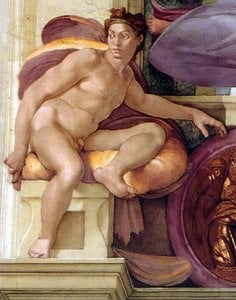
Michelangelo Morlaiter’s contribution to Venetian art extends far beyond individual masterpieces. Morlaiter gained renown for his monumental sculptures, notably ‘Ignudo,’ a stunning nude study reflecting the influence of Michelangelo Buonarroti and embodying the humanist spirit of the Renaissance. He drew inspiration from Michelangelo Buonarroti’s sculptural achievements—particularly his David—and embraced the stylistic conventions of Venetian Rococo art, prioritizing decorative splendor and emotional expression alongside technical virtuosity.
36of 36
Italian Born in Chivasso Renaissance Art; Late Gothic Style Wikipedia in 8/32 languages

His achievements can be summarized through several key pillars of his artistry: Stylistic Synthesis: The seamless blending of Northern European Flemish detail with Italian Renaissance humanism.
The paintings behind the names
Through time
In figures
| Італія | 27 |
|---|---|
| Italy | 7 |
| Хорватія | 1 |
| 1440s | 3 |
|---|---|
| 1450s | 3 |
| 1460s | 3 |
| 1470s | 6 |
| 1480s | 15 |
| 1490s | 3 |
| 1500s | 1 |
| 1510s | 1 |
| Kunsthistorisches Museum | 7 |
|---|---|
| Лувр | 5 |
| Галерея Уффіці | 5 |
| Національна галерея | 4 |
| Метрополітен-музей | 4 |
| Gemäldegalerie | 3 |
| Державний музей-заповідник «Ермітаж» | 3 |
| Королівська колекція | 3 |
All of them, in order
Леонардо Да ВінчіІталієць · 1452–1519Мікеланджело БуонарротіІталієць · 1475–1564Рафаель СантіІталієць · 1483–1520ТіціанІталієць · 1490–1576ДжорджонеІталієць · 1478–1510П'єтро ПеруджіноІталієць · 1448–1523 Антоніо да Корреджо1489–1534Андреа Дель СартоІталієць · 1486–1530
 Філіппіно Ліппі1457–1504Лоренцо ЛоттоІталійський · 1480–1556Себастьяно дель ПьйомбоІталійський · 1485–1547Пальма ВеккьоІталієць · 1480–1528Донато БрамантеІталієць · 1444–1514Фра БартоломеоІталієць · 1472–1517Якопо БассаноВенеціанська · 1510–1592Бернардіно ЛуїніІталійський · 1480–1532Лоренцо КостаІталійське Відродження · 1460–1535Бальтассаре ПеруцціІталієць · 1481–1536Рідольфо Гірландайо1483–1561Джованні Джироламо СавольдоІталійський · 1480–1548Доссо Доссііталієць · 1480–1542Маріотто АльбертінелліІталієць · 1474–1515Джованні Антоніо БольтраффіоНімець · 1467–1516Андреа СоларіоІталійський Ренесанс · 1460–1524Джироламо РоманіноItalian · 1485–1562Sebastiano SerlioItalian · 1475–1554Giuliano da SangalloItalian · 1443–1516
 ФранчабіджіоІталієць · 1484–1525Bartolomeo VenetoItalian · 1502–1555Джуліано БуджардініItalian · 1475–1554Джорджо Джуліо Кловіохорватсько-італієць · 1498–1578Antonio Da Sangallo The YoungerGerman · 1484–1546Lo SpagnaSpanish · 1450–1528Bernardino LicinioItalian · 1489–1565Michelangelo MorlaiterItalian · Defendente FerrariItalian · 1490–1540
Your questions, answered
First place goes to Леонардо Да Вінчі (#1); Мікеланджело Буонарроті (#2) and Рафаель Санті (#3) complete the podium.
Леонардо Да Вінчі (#1), Мікеланджело Буонарроті (#2), Рафаель Санті (#3), Тіціан (#4) та Джорджоне (#5).
Італія: 27 of the 36 художники in this list were born there, then Italy (7) та Хорватія (1).
“He studied the precise lines and balanced arrangements of Raphael's frescoes in the Vatican, adopting a greater sense of order and perspective.” — from our biography of Лоренцо Лотто (#10).
The highest-ranked художники born in Італія are Леонардо Да Вінчі (#1), Мікеланджело Буонарроті (#2), Рафаель Санті (#3), Тіціан (#4) та Джорджоне (#5).
П'єтро Перуджіно (#6) taught Lo Spagna (#33).
Флоренція: 5 of the художники in this list were born there.
The museums holding the most key works of this list are Kunsthistorisches Museum (7), Лувр (5) та Галерея Уффіці (5).
Most художники in this list were born in the 1480s (15 of 36), between 1443 and 1510 overall.
The highest-ranked художники born in Italy are Sebastiano Serlio (#26), Giuliano da Sangallo (#27), Bartolomeo Veneto (#29), Antonio Da Sangallo The Younger (#32) та Lo Spagna (#33).
The earliest-born художник in this list is Giuliano da Sangallo (#27), born in 1443.
Our catalogue holds 5,647 works by these художники. Each one can be ordered as a hand-painted oil reproduction or a print.
Keep reading
Other movements
 Знамениті художники BaroqueНічна варта · Рембрандт
 Знамениті художники Contemporary RealistЗбирачки · Жан-Франсуа Мілле
 Знамениті художники ImpressionistЗорі Ніч (Нью Йорк, MoMA) · Вінсент Ван Гог
 Знамениті художники RomanticistСатурн, що пожирає свого сина · Франсіско-Хосе де Гоя
 Знамениті художники NeoclassicistСмерть Марата · Жак-Луї Давід
 Знамениті художники RealistПоходження світу · Гюстав КурбеЗнамениті художники Renaissance
 Знамениті художники Dutch Golden AgeДівчина з перловою сережкою · Ян Вермер
 Знамениті художники ExpressionistКомпозиция VII · Кандінський Василь Васильович
 Знамениті художники RococoВідплив до Кітер · Антуан Ватто
Other periods
 Знамениті художники Early MedievalSnowy River · Ван Вей
 Знамениті художники High MedievalМадонна у Маєсті (Огнассанті Мадонна) · Джотто
 Знамениті художники Late MedievalБлаговіщення та двоє святих · Сімоне МартініЗнамениті художники Renaissance
 Знамениті художники Early ModernПокликання святого Матвія · Мікеланджело да Караваджо
 Знамениті художники 19th CenturyВодяні лілії (або Латаття) · Клод Моне
 Знамениті художники ModernГерніка · Пабло Пікассо
 Знамениті художники ContemporaryWind Sculpture III (one in a series of nine) · Yinka Shonibare
More rankings