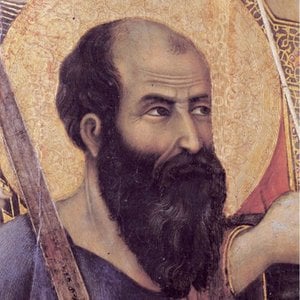
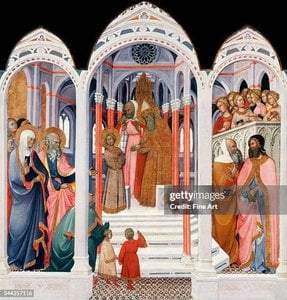
The most famous Gothic художник is Дуччо ді Буонінсенья (1255–1319), known for Stories of the Passion (Maestà, verso) та Поліптих № 28. Next come Сімоне Мартіні, Джентіле да Фабріано, Пізанелло та Штефан Лохнер. This ranking of the 38 most famous Gothic художники runs from Мастер Матео (born 1161) to Jan Baegert (born 1465), across 8 countries.
WBy the WahooArt.com curators
How this list is ranked. Artists whose works our catalogue files under Gothic, in the order of our fame ranking of artists. Artists without a Wikidata identifier born after 1955 are left out until verified. The Wikipedia figure next to each name is the number of our 32 languages in which Wikipedia has an article on the artist.
ІталійськийBorn in СієнаПізня готична / Ранній ренесансWikipedia in 22/32 languages
A pivotal moment in Lorenzo Monaco’s life occurred in 1390 when he embraced monastic vows at Santa Maria degli Angeli in Florence—joining the Camaldolese order, a movement dedicated to contemplative prayer and scholarly pursuits. Lorenzo Monaco's formative years were spent honing his craft in the bottega of Agnolo Gaddi—a workshop renowned for its patronage of Giottoesque painting and its commitment to upholding the stylistic conventions of the International Gothic style.
ІталійськийBorn in ФлоренціяГотичний, Ранній ренесансWikipedia in 20/32 languages
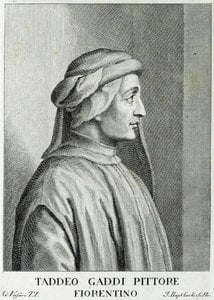
The monumental figures, the emotional resonance, and the narrative clarity that characterized Giotto’s frescoes are all present in Agnolo’s initial paintings. This isn’t to say he abandoned the naturalism pioneered by Giotto; rather, he layered it with a sophisticated aesthetic sensibility that reflected the evolving tastes of Florentine society. He wasn’t merely an artist; he was the inheritor of a powerful lineage, the son of Taddeo Gaddi, himself a devoted and gifted pupil of the revolutionary Giotto di Bondone.
Loggia del Bigallo, Флоренція: Дослідіть мистецтво XIV століття та історичні артефакти Compagnia del Bigallo, включаючи роботи Арнольді та Дадді. Унікальна флорентійська перлина! Бернардо Дадді - Музей Гетті: Ознайомтеся з колекцією Музею Дж. Пола Гетті в Центрі Гетті та Віллі Гетті. Бернардо Дадді - Вікіпедія: Дізнайтеся більше про його життя, творчість та вплив у Вікіпедії.
НімецькийBorn in ГейлігенштадтПізня готика та Ренесанс
Riemenschneider’s artistic style is instantly recognizable by several key characteristics: Mastery of Limewood Carving: He possessed an unparalleled skill in working with limewood, transforming this relatively soft wood into sculptures of astonishing detail and expressive power. He stands as a crucial figure in the transition between the Late Gothic and Early Renaissance periods, embodying the evolving artistic and intellectual landscape of 15th-century Germany.
Born around 1357 and passing away in 1406, his life coincided with a period of significant artistic and cultural change across Europe, yet he maintained a distinctly Catalan sensibility throughout his career. The city was a vibrant hub for trade and artistic exchange, exposed to influences from Italy, France, and Flanders.
He took the established decorative language of the Gothic period and infused it with a burgeoning sense of naturalism that would eventually pave the way for the Renaissance.
CatalanBorn in GironaInternational GothicWikipedia in 8/32 languages
By successfully introducing and refining the International Gothic style in the Principality, he provided a bridge between the medieval past and the approaching Renaissance.
ItalianBorn in VeniceInternational GothicWikipedia in 10/32 languages
While the broader Renaissance would eventually move toward the anatomical realism and linear perspective of masters like Bellini, Giambono’s dedication to the International Gothic aesthetic provided the essential foundation of splendor upon which later Venetian art was built.
ІталійськийBorn in ФлоренціяПізній готизм/Ранній РенесансWikipedia in 7/32 languages
These weren't merely functional storage pieces; they were elaborate canvases, central to Florentine wedding rituals and serving as potent symbols of a family’s wealth, status, and aspirations. Giovanni dal Ponte may not occupy a central position within the traditional narrative of Renaissance art, but his contribution is nonetheless significant.
The Master’s style is a compelling synthesis of Northern European Gothic and Early Renaissance influences. However, the Master’s work transcends mere imitation; he infused these borrowed elements with his own unique sensibility, creating paintings that are both technically proficient and emotionally resonant. The influence of Netherlandish masters is readily apparent in his draftsmanship and compositional structure.
Born in WeselLate GothicWikipedia in 3/32 languages
Jan Baegert emerged from the established artistic traditions of Wesel, Germany, where he was born in 1465. He received his formal training under his father, Derick Baegert, a painter who provided the essential technical groundwork for Jan's later career.
Where to see Tracing the physical remains of Jan Baegert’s output requires looking toward the Westphalian and Lower Rhine regions.
The Osservanza cycle emerged around 1430-1450, a period marked by significant stylistic shifts in Siena. Influenced by the vibrant Sienese school —particularly the work of Duccio di Buoninsegna and Simone Martini —the Master nevertheless developed a distinct visual language characterized by a heightened sense of drama, emotional intensity, and an innovative use of color. His innovative use of color, dramatic composition, and psychological realism paved the way for the development of Renaissance art in Siena.
AustrianInternational GothicWikipedia in 5/32 languages
The Master’s style is a complex synthesis of influences. He drew heavily from the Gothic tradition, evident in his meticulous attention to detail, particularly in the rendering of drapery and architectural elements.
Більшість художники у цьому списку народилися в 14th століття (22 із 38), у період між 1161 та 1465 загалом.
Хто був найпершим Gothic художник?
Найдавнішим художник у цьому списку є Мастер Матео (#16), народився у 1161.
Які техніки використовували Gothic художники?
“The monumental figures, the emotional resonance, and the narrative clarity that characterized Giotto’s frescoes are all present in Agnolo’s initial paintings.” — з нашої біографії Аньйоло Гадді (#9).
Де народилася більшість Gothic художники?
Італія: 19 із 38 художники у цьому списку народилися там, а Німеччина (5) та Іспанія (4).