


Написана вручну олією на полотні у вашому розмірі та рамі, виготовлена на замовлення нашими художниками. ( Замовити принт Купити цифрове зображення)





























Обирайте з наших стандартних розмірів, що відповідають оригінальним пропорціям твору мистецтва.

Ви можете вказати власні розміри, щоб репродукція ідеально підійшла до конкретної рами або інтер'єру. Якщо вибраний вами розмір не відповідає пропорціям оригіналу, ми або обріжемо полотно, або доповнимо картину додатковими елементами, промальованими вручну. Цифровий макет буде надіслано вам на затвердження перед початком виробництва.
Зверніть увагу, що попередній перегляд на екрані не відображає фактичне обрізання або розширення зображення. Тільки макет точно покаже остаточну композицію.
Хоча ми можемо виготовити виріб у нестандартному розмірі, для збереження оригінальних пропорцій рекомендуємо обирати варіанти зі встановленого списку.
Доставка по всьому світу () за 3–4 тижні замість стандартних 5 тижнів. (7 Вересень). Без жодних компромісів у якості.


Poem
Розмір репродукції
In the quiet intersection of spiritual devotion and artistic mastery lies the profound beauty of "Poem," a breathtaking work of calligraphy created in 1671 by the venerable monk Yinyuan Longqi. To gaze upon this piece is to step into a meditative trance, where every stroke of black ink serves as a rhythmic pulse of Zen philosophy. The artwork, currently preserved within the hallowed halls of the Museum of Zen Buddhist Culture in Setagaya, Japan, transcends mere writing; it is a visual manifestation of the soul's movement. The characters, rendered with a deliberate and graceful hand, dance across a striking blue background—a choice that provides a celestial contrast to the deep, obsidian tones of the ink, evoking the infinite depth of a twilight sky or the stillness of a mountain lake.
The technique employed by Yinyuan Longqi is a testament to the Ming-style calligraphy he brought from China to Japan, establishing the influential Ōbaku school of Zen. Each character is not merely formed but breathed into existence through a mastery of pressure and flow. The varying thickness of the lines reveals the artist's internal rhythm, capturing the essence of wabi-sabi—the beauty of imperfection and the transient nature of life. For the discerning collector or interior designer, this piece offers more than just aesthetic appeal; it provides a focal point of profound tranquility. Its presence in a room can transform a modern space into a sanctuary of contemplation, offering a sophisticated touch of historical weight and spiritual elegance.
To understand "Poem," one must understand the man behind the brush. Yinyuan Longqi, known in Japan as Ingen Ryūki, was far more than a calligrapher; he was a visionary who bridged two cultures. His journey from the Fujian province of China to the heart of Japan brought with it a wave of new artistic and religious energy. This specific work, dating from the height of his influence, embodies the synthesis of poetic thought and Zen discipline. The calligraphy acts as a bridge between the physical world and the metaphysical, where the ink represents the tangible presence of the monk, and the blue expanse represents the boundless void of enlightenment.
For those seeking to incorporate high-quality reproductions into their curated environments, "Poem" serves as an exquisite example of how historical art can breathe life into contemporary decor. The piece does not demand attention through loud colors or chaotic forms; instead, it commands respect through its understated power and the emotional resonance of its simplicity. It is a masterpiece of balance, making it an ideal selection for spaces dedicated to mindfulness, study, or refined luxury. Owning a reproduction of such a significant historical artifact allows one to keep the enduring spirit of the 17th-century Zen masters alive within the walls of a modern home.


1592 - 1673 , China
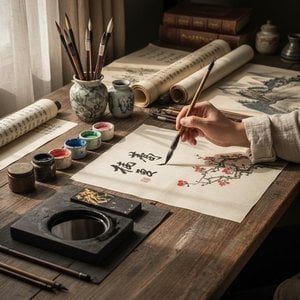
Embark on a sophisticated exploration of ink wash painting and Sumi-e. Uncover the profound historical lineages, Zen philosophies, and technical mastery behind this timeless medium in our authoritative guide for fine art enthusiasts.
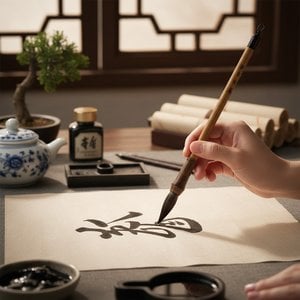
Embark on a profound journey through the soul of Chinese calligraphy. Explore the historical mastery of ink, brush, and script, from ancient Zhuanshu to elegant running script, and discover how this timeless art form reflects the enduring spirit of classical East Asian aesthetics.
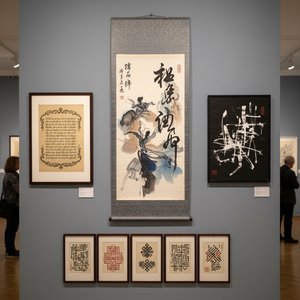
Explore the profound beauty of calligraphy art. From the fluid running script of Chinese masters to historical ink masterpieces, discover how the elegance of line transforms spaces with timeless grace and scholarly sophistication.

 Переглянути в інтер'єрі
 Надіслати як листівку
 Поділитися
 Детальніше

 Завантажити
 Схожі експонати
 Рентгенівське дослідження
 Слайд-шоу


 Читати далі







 Скляний варіант доступний лише для розмірів до 110 см


