x
Замовити принт Замовити принтЗамовити репродукцію ручної роботи Замовити репродукцію ручної роботи Надіслати як листівкуНадіслати як листівку
ДетальнішеДетальніше Додати до улюблених Додати до улюблених ЗавантажитиЗавантажити Схожі експонатиСхожі експонати Слайд-шоуСлайд-шоу

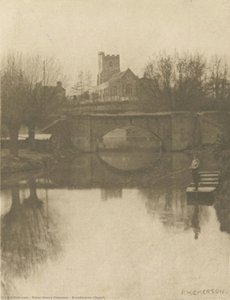
Broxbourne Church

A serene black and white view of Broxbourne Church captured by Peter Henry Emerson in 1888 features a peaceful bridge scene that invites you to explore the timeless beauty of this historic photographic masterpiece.

Explore the unique photography of Peter Henry Emerson! Early art photographer known for natural landscapes & challenging photographic conventions. #photography #art #emerson

Придбайте цифрову копію високої роздільної здатності з покращеною якістю, що значно перевершує онлайн-перегляд.

Кожен файл ретельно підготовлений нашими фахівцями за допомогою сучасних інструментів та професійної ручної ретуші. Ми гарантуємо виняткову чіткість, точну передачу кольору та високу деталізацію кожного зображення.

Фінальний файл надсилається електронною поштою протягом 72 годин і оптимізований для негайного використання у професійних виданнях та друкованих матеріалах. Таку якість обирають провідні дизайнерські студії, видавництва та галереї.

Цифрове зображення

Завантажте файл високої роздільної здатності для особистого використання, друку та творчих проєктів. (Замовити принт Замовити принтЗамовити репродукцію ручної роботи Замовити репродукцію ручної роботи)

Підсумкова вартість

$ 24,90

Переваги кожного замовлення цифрових зображень

Експертна цифрова доставка з гарантією якості

Обираючи WahooArt.com, ви отримуєте не просто зображення — ви отримуєте професійно вдосконалений цифровий витвір мистецтва, створений з надзвичайною точністю та підкріплений гарантією задоволення. Ось усе, що автоматично додається до вашого замовлення:

shipping_icon
Швидка доставка на email

Ваш цифровий файл із зображенням високої роздільної здатності буде надісланий вам електронною поштою протягом 72 годин після оформлення замовлення — він буде готовий до негайного використання.

canvas_icon
Цифровий файл із покращенням ШІ

Ваш витвір мистецтва професійно оптимізовано за допомогою передових інструментів штучного інтелекту та ручної корекції, що забезпечує максимальну деталізацію, чіткість і точність передачі кольорів.

insurance_icon
Безкоштовне повторне завантаження назавжди

Випадково видалили або втратили файл? Не хвилюйтеся — ми надішлемо його вам повторно в будь-який час безкоштовно.

tax_icon
Без митних зборів — ніколи

Насолоджуйтесь вашим витвором мистецтва миттєво без жодних мит, зборів або плати за доставку — цифрові завантаження завжди не оподатковуються.

color_icon
Гарантія точності кольорів

Ми гарантуємо максимально точне відтворення оригінальних кольорів на вашому цифровому зображенні завдяки використанню професійних інструментів та систем управління кольором.

return_icon
Гарантія задоволення протягом 60 днів

Якщо ви не задоволені придбаним цифровим зображенням, ми відкоригуємо його або повернемо 100% вартості протягом 60 днів — без жодних запитань.

guarantee_icon
Гарантія повернення 100% коштів

Не задоволені покупкою? Отримайте повне повернення коштів протягом 60 днів після отримання цифрового файлу — без жодних запитань.

discount_icon
Знижки на оптові замовлення

Купуйте 3 зображення — заощаджуйте 10% — Купуйте 5 — заощаджуйте 15% — Купуйте 10+ — заощаджуйте 20%. Чудово підходить для творчих проєктів, галерей та агентств.

A Window into the Victorian Soul

In the quiet, silvered tones of Broxbourne Church, we are transported back to the year 1888, a moment frozen in the delicate interplay of light and shadow. This evocative photograph by Peter Henry Emerson captures more than just a landscape; it captures a profound sense of stillness. The composition presents a view of St. Augustine, where a stone bridge with graceful arches spans a tranquil body of water, acting as a gateway between the viewer and the distant, sacred architecture. As the eye wanders across the scene, it encounters the gentle presence of figures gathered near the water's edge—souls caught in a shared moment of repose. The inclusion of a solitary bench suggests an invitation to linger, to sit, and to contemplate the enduring relationship between humanity, nature, and the divine.

The aesthetic power of this piece lies in its mastery of the monochrome medium. Eschewing the distractions of color, Emerson utilizes a rich spectrum of greys to define texture and depth. The bridge emerges from the mist with a structural weight that contrasts beautifully against the soft, ethereal atmosphere surrounding the church. This technique, characteristic of the naturalistic movement in photography, avoids the overly sharp, artificial clarity often sought by his contemporaries, opting instead for a soft focus that mimics the way the human eye perceives the world. It is this painterly quality that makes the work so captivating for modern collectors and interior designers alike, as it brings a sense of historical depth and atmospheric calm to any curated space.

Beyond its technical brilliance, Broxbourne Church serves as a poignant symbol of continuity and peace. The bridge represents a transition—a connection between the temporal world of the people on the shore and the spiritual permanence represented by the church in the background. There is a rhythmic harmony in the way the arches of the bridge echo the architectural dignity of the sanctuary, creating a visual dialogue that feels both ancient and timeless. For those looking to adorn a home or gallery with art that evokes introspection, this reproduction offers an unparalleled emotional resonance. It is not merely a depiction of a place, but an invitation to experience the quiet majesty of a bygone era, making it a sophisticated choice for any collection dedicated to the beauty of historical photography.


Біографія митця

Early Life and Education: A Cuban Beginning

Peter Henry Emerson, born on May 13th, 1856, began life amidst the lush landscapes of La Palma Estate, a sugar plantation near Encrucijada, Cuba. His parents, Henry Ezekiel Emerson, an American, and Jane Harris Billing, a British woman, provided him with a unique upbringing far removed from the artistic circles he would later inhabit. A distant relative of both Samuel Morse and Ralph Waldo Emerson, young Peter’s early years were shaped by the rhythms of plantation life, a world steeped in natural beauty but also marked by the complexities of colonial society. The family's move to England in 1869, following his father’s death, signaled a significant shift in his trajectory. He received a classical education at Cranleigh School, where he distinguished himself as both a scholar and an athlete—a testament to his multifaceted intellect and energy. This foundation continued at King’s College London before culminating in a medical degree from Clare College, Cambridge in 1885.

From Surgeon to Photographer: A New Vision Emerges

Despite achieving academic success in medicine, Emerson harbored passions that lay elsewhere. In 1881, he acquired his first camera not as a tool for professional practice, but as an aid to bird-watching alongside ornithologist A.T. Evans. This seemingly casual beginning quickly blossomed into something far more profound. His involvement with the Camera Club of London in 1885 and subsequent election to the Council of the Photographic Society in 1886 marked a decisive turning point. He abandoned his surgical career, driven by an increasingly compelling desire to explore photography as a legitimate art form—a radical notion at the time. Emerson possessed not only intelligence and wealth but also a remarkable ability to articulate his convictions, qualities that would prove crucial in challenging established photographic norms.

Naturalistic Photography: Challenging Conventions

Emerson’s early work was deeply influenced by the naturalistic French painters, particularly those who focused on depicting rural life with honesty and detail. He championed a “naturalistic” approach to photography, advocating for sharp focus and meticulous recording of country scenes as they appeared—rejecting the then-popular practice of manipulating photographs to mimic painted effects. His first album, *Life and Landscape on the Norfolk Broads* (1886), comprised forty platinum prints that embodied this philosophy. However, Emerson was not one to remain static in his beliefs. He soon found himself dissatisfied with the indiscriminate clarity of sharp focus, recognizing it didn’t fully replicate human perception. This led him to experiment with soft focus techniques, though he ultimately found them lacking in their ability to capture the true depth and atmosphere of nature.

The Evolution of Style: Photogravure and a Shifting Aesthetic

Over the next decade, Emerson produced a remarkable body of work documenting the East Anglian fenlands. He published seven further books, culminating in *Marsh Leaves* (1895), widely considered his masterpiece. Increasingly frustrated with commercial printing processes that failed to meet his exacting standards, he took control of production himself, mastering the intricate art of photogravure for the final two volumes. This commitment to quality underscored his dedication to realizing his artistic vision. In 1889, Emerson published *Naturalistic Photography for Students of the Art*, a seminal text outlining his aesthetic principles and challenging prevailing photographic conventions. However, in a surprising turn, he recanted these views just two years later, acknowledging that accurate reproduction wasn’t synonymous with art itself.

Legacy and Historical Significance: A Pioneer of Straight Photography

Despite this shift in perspective, Emerson's initial arguments proved profoundly influential, laying the groundwork for much of 20th-century photography. He championed the idea of photography as a unique medium capable of capturing reality with unparalleled fidelity—a concept central to the development of straight photography. After *Marsh Leaves*, he largely ceased publishing photographs, turning his attention to other literary and scholarly pursuits, including genealogy and billiards. He began writing a history of artistic photography in 1924, completing the manuscript shortly before his death on May 12th, 1936, in Falmouth, Cornwall. Peter Henry Emerson’s legacy extends beyond his beautiful images; he was a visionary who dared to question established norms and elevate photography to its rightful place among the fine arts.

Основна інформація

  • Artistic Movement Or Style: Straight photography, Pictorialism
  • Artists Who Influenced This Artist: ['Jean-Francois Millet']
  • Date Of Birth: May 13, 1856
  • Date Of Death: May 12, 1936
  • Full Name: Peter Henry Emerson
  • Nationality: British
  • Notable Artworks:
    • Life and Landscape on Norfolk Broads
    • Pictures of East Anglian Life
    • Marsh Leaves
  • Place Of Birth: Cuba