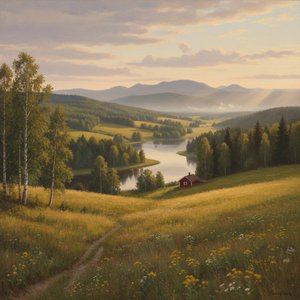
Pradyumna Kumar Mahanandia: A Journey Through Color and Resilience
Pradyumna Kumar Mahanandia, born in Athmallik, India, in 1949, is an artist whose life story intertwines with his artistic vision—a testament to perseverance against adversity and a celebration of cultural heritage. His formative years were marked by challenges stemming from caste discrimination, experiences that profoundly shaped his perspective on social justice and fueled his dedication to advocating for marginalized communities.
- Early Life & Education: Mahanandia pursued his artistic education at Government College of Art and Crafts Khallikote, honing his skills in traditional Odia art forms. This grounding in heritage would become a cornerstone of his distinctive style.
- The Bicycle Journey: Perhaps the most iconic chapter of Mahanandia’s life unfolded in 1977 when he embarked on an ambitious solo bicycle expedition from New Delhi to Borås, Sweden—a pilgrimage driven by love for Charlotte von Schedvin. This journey served not only as a personal quest but also as a powerful symbol of freedom and determination.
- Artistic Style & Technique: Mahanandia’s artwork is characterized by vibrant color palettes and meticulous detail, reflecting influences from Indian folk art traditions. He skillfully employs layering techniques to create textured surfaces that convey emotion and depth.
Exploring Themes of Nature and Spirituality
Mahanandia's artistic explorations consistently gravitate towards themes of nature—particularly the mango tree—representing life, growth, and interconnectedness. His depictions capture the essence of these subjects with remarkable accuracy and sensitivity, imbued with spiritual undertones that resonate deeply with viewers.
- Notable Works: Among his celebrated pieces are “Mango Tree of Life,” “Pollution,” and “Bararsingha – The Balance of Life.” Each artwork embodies a distinct visual language—from the lush vibrancy of mango blossoms to the stark realities of environmental degradation, and finally, the harmonious balance of natural elements.
- Symbolism & Color Palette: Mahanandia’s masterful use of color is deliberate; he employs hues that evoke feelings of tranquility, optimism, and contemplation. These colors serve as conduits for conveying profound messages about our relationship with the environment and the importance of preserving biodiversity.
Advocacy & Artistic Legacy
Beyond his artistic accomplishments, Mahanandia is a vocal champion for Dalit rights—individuals historically subjected to discrimination based on caste. He utilizes his art as a platform for raising awareness about social injustices and promoting equality. His unwavering commitment to activism underscores the transformative power of creativity in fostering positive change.
- Social Commentary: Mahanandia’s artworks often engage with pressing societal issues, prompting viewers to confront uncomfortable truths and consider alternative perspectives.
- Cultural Significance: He represents a significant voice within Dalit art—a tradition rooted in resilience and resistance—contributing to the broader narrative of cultural expression amidst systemic oppression.
Conclusion
Pradyumna Kumar Mahanandia’s artistic journey is inextricably linked to his personal experiences—a story of overcoming obstacles, pursuing dreams against odds, and channeling passion into impactful creative endeavors. His enduring legacy lies not only in his captivating paintings but also in his unwavering dedication to social justice and his profound appreciation for the beauty and interconnectedness of the natural world.
Soru & Cevap
Pradyumna Kumar Mahanandia hangi takma adlar veya alternatif isimlerle tanınmaktadır?
Pradyumna Kumar Mahanandia, Pradyumna Kumar alternatif isimleriyle de yer almaktadır.
Pradyumna Kumar Mahanandia adlı sanatçının eserlerini renklere göre sıralayabilir miyim?
Pradyumna Kumar Mahanandia sanatçısının Renk İndeksi sayfası, sanatçının eserlerini renklerine göre düzenleyen bir sayfadır.
Pradyumna Kumar Mahanandia adlı sanatçının eserlerine ruh haline göre göz atabilir miyim?
Sanatçının Ruh Haline Göre Oda sayfası, Pradyumna Kumar Mahanandia eserlerini atmosferlerine göre düzenlenmiş bir şekilde sunuyor.