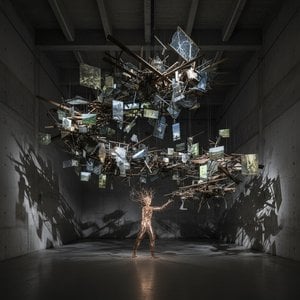
A Cosmopolitan Gaze: The Art of Mustafa Sabbagh
Mustafa Sabbagh, a name increasingly recognized within the contemporary art world, embodies a fascinating confluence of cultural influences and artistic evolution. Born in 1961 in Amman, Jordan, his journey is one shaped by a nomadic spirit and a cosmopolitan upbringing, straddling both European and Middle Eastern landscapes. This unique background has profoundly informed his artistic vision, leading him to explore complex themes of identity, culture, and politics through a compelling blend of photography, installation, and performance art. Sabbagh’s path wasn't always rooted in the fine arts; he initially carved out a successful career as a fashion photographer, working with some of the world’s most prestigious magazines. However, a pivotal shift occurred around 2012 when he dedicated himself fully to contemporary artistic exploration, marking a significant turning point that would redefine his creative trajectory.
From Fashion's Lens to Contemporary Expression
Sabbagh’s early experience in fashion photography provided him with an invaluable foundation—a mastery of light, composition, and the art of capturing human presence. This technical expertise, honed through years of working within a demanding industry, seamlessly translates into his contemporary work. However, it was not merely about transferring skills; Sabbagh actively sought to dismantle the conventions of commercial photography, moving beyond surface aesthetics to delve into deeper psychological and anthropological inquiries. His transition wasn't abrupt but rather an organic evolution, fueled by a desire to explore more profound narratives than those dictated by the fashion world. The influence of masters like Richard Avedon, for whom he worked as an assistant, is evident in his meticulous attention to detail and his ability to capture raw emotion within a portrait. His time teaching at Central Saint Martins College of Art and Design further solidified his understanding of artistic theory and practice, providing him with the tools to articulate his evolving vision.
The Skin as Canvas: Themes of Identity and Imperfection
At the heart of Sabbagh’s oeuvre lies an exploration of identity—not in a simplistic or celebratory manner, but rather through a nuanced examination of its complexities and contradictions. His work frequently focuses on the human skin, not merely as a surface but as a repository of lived experience, bearing the marks of time, culture, and personal history. This concept, articulated by Sabbagh himself as "punctum," refers to that singular point within an image that arrests the viewer's attention—a detail that resonates with profound emotional or psychological weight. He embraces imperfection, rejecting idealized notions of beauty in favor of a raw, unflinching portrayal of human vulnerability. His series “About Skin,” for example, is a testament to this philosophy, presenting intimate portraits that reveal not just physical features but also the underlying narratives etched upon each individual’s skin. This focus on the imperfect and the vulnerable aligns with contemporary artistic trends that challenge conventional notions of representation and celebrate diversity in all its forms.
Recognition and Legacy: A Growing Influence
Sabbagh's work has garnered increasing recognition within both the art and photography worlds. Exhibitions at prestigious venues such as the Fondazione Dino Zoli, Aria Art Gallery, and MLBGallery underscore his growing prominence on the international stage. His inclusion among the “100 most influential photographers in the world” by Peter Weiermair is a testament to his impact on contemporary visual culture. Furthermore, being recognized as one of the eight most significant artists of the contemporary Italian scene by Sky Arte HD highlights his contribution to the artistic landscape. Sabbagh’s art has been featured in numerous publications and acquired by esteemed collections, including the Farnesina Art Collection and the MAXXI – National Museum of XXI Century Arts, solidifying his place within the canon of modern art. His honorary citizenship from the City of Palermo further demonstrates the profound impact his work has had on communities and individuals alike. As Sabbagh continues to evolve as an artist, his unique perspective—rooted in a cosmopolitan upbringing and a commitment to exploring the complexities of human identity—promises to leave an enduring mark on the world of contemporary art.