Bu sayfada sergilenen eser telif hakkı yasasıyla korunmaktadır; bu da yasal olarak eserin birebir kopyasını oluşturamayacağımız veya satamayacağımız anlamına gelir. Bu koruma, aşağıdakiler gibi uluslararası anlaşmalar kapsamında uygulanmaktadır: Bern Sözleşmesi ve aşağıdakiler de dahil olmak üzere ulusal yasalarca belirlenen ABD Telif Hakkı Kanunu - 17. Başlık.
Bu yöntem, koruma altındaki sanat eserinin kopyalanmasını veya çoğaltılmasını içermediği için telif hakkı düzenlemelerine tam uyum sağlar. Bunun yerine, yaratıcı bir yeniden yorumlamadır; orijinalinden etkilenen ancak onunla aynı olmayan yeni bir tablodur.
Hızlı üretim ve esnek bitiş seçenekleriyle müze kalitesinde giclée veya kanvas baskı. ( El Yapımı Tablo Satın Al Dijital Görsele Geç)





























Eserin orijinal oranlarıyla uyumlu, önceden belirlenmiş boyutlarımız arasından seçim yapın.

Çerçevenize veya duvarınıza uygun olması için ihtiyacınız olan genişlik ve yüksekliği yazın. Bir baskı yalnızca kesilebilir, görselden daha büyük hale getirilemez; bu nedenle farklı bir formdaki boyut seçimi, görselin bir kısmının kaybına neden olur. Herhangi bir baskı yapmadan önce onaylamanız için size bir dijital taslak gönderiyoruz. Bu sayfada gösterilen resim gerçek kesimi göstermez — bunu yalnızca taslak gösterir.
Dünya Çapında Teslimat (); standart 4/5 hafta yerine 2 haftada. (9 Kasım)
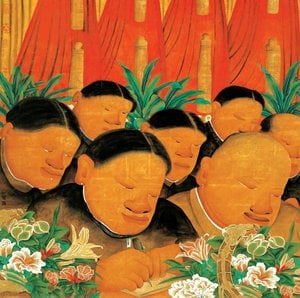
Curtain, No.8
Reproduksiyon Boyutu
In the quiet corridors of contemporary Chinese art, few works command attention with such rhythmic simplicity as Zhu Wei’s Curtain, No.8. At first glance, the viewer is met with a striking expanse of deep red, interrupted only by the disciplined cadence of white stripes. This is not merely a study of fabric or pattern; it is an immersive experience that pulls the observer into a space of profound stillness. The painting, measuring a monumental 160 x 200 cm, utilizes its large scale to envelop the room, making it an ideal centerpiece for those seeking to introduce a sense of dramatic elegance and contemplative depth into a sophisticated interior.
The artistry lies in the masterful tension between tradition and modernity. Executed on paper, Zhu Wei employs techniques that bridge the gap between classical Chinese ink traditions and a contemporary, almost minimalist aesthetic. The way the red pigment interacts with the surface creates a visual texture that suggests the heavy, tactile weight of velvet or thick silk, yet retains a certain ethereal lightness characteristic of fine paper works. Each stripe serves as a structural element, guiding the eye across the composition and creating a hypnotic, undulating movement that mimics the gentle sway of a curtain caught in a phantom breeze.
To understand Curtain, No.8, one must look through the lens of Zhu Wei’s unique position in the post-Tiananmen era of Chinese art. As an artist trained at the People’s Liberation Army Art Academy, his early exposure to propaganda art—characterized by bold colors and clear messaging—informs his ability to manipulate powerful symbols. In this work, the red curtain acts as a potent metaphor. Red is a color deeply embedded in the Chinese cultural consciousness, representing both vitality and the political landscape of the nation. By presenting the curtain as an abstract, patterned object, Zhu Wei invites us to consider what lies behind the veil—the boundary between the public spectacle and the private reality.
For the discerning collector or interior designer, this piece offers a rare opportunity to possess a work that is both visually arresting and intellectually stimulating. The painting does not demand attention through chaos, but rather through a curated, rhythmic order. It provides a sophisticated anchor for a gallery wall or a standalone statement in a minimalist lounge. Whether viewed as a study of geometric pattern or a subtle critique of social layers, Curtain, No.8 remains an evocative masterpiece that brings the nuanced history of modern China into the contemporary living space.
"Curtain, No.8", bir wall art eseridir.
Zhu Wei imzalı "Curtain, No.8" için önerilen alan bir Living Room'dur. Bu öneri, elbette iç mekanınıza göre uyarlanabilir.
"Curtain, No.8" eserinde, Bold bir ruh hali Dramatic bir duyguya eşlik ediyor.
1966 yılında Çin'in Pekin kentinde dünyaya gelen Zhu Wei, modern Çin'in hızla değişen manzarası içinde siyaset ve toplumla kurduğu ince eleştirel bağ ile tanınan, önde gelen çağdaş Çinli sanatçılardan biridir. Tiananmen sonrası dönem sanatının en görünür temsilcilerinden biri olarak duran sanatçı, geleneksel Çin resmine olan olağanüstü sadakatini sergilerken, aynı zamanda tarihsel bağlama dair nüanslı bir yorum sunmaktadır.
Zhu Wei, çağdaş Çin sanatı içerisinde çok kritik bir konumda yer almaktadır. Tiananmen Meydanı olaylarının sonrasında ortaya çıkan bir sanatçı olarak eserleri; gelenek ile modernite, devlet kontrolü ile bireysel ifade arasındaki karmaşık müzakereyi yansıtır. Klasik Çin resminin merceğinden sunulan siyasi ve sosyal yapılara yönelik ince eleştirisi, Çin'in hızlı dönüşümüne benzersiz bir perspektif sunar. Sanatçı, geleneksel sanatsal formların çağdaş sorunları ele almak için güçlü bir şekilde uyarlanabileceğini kanıtlayarak, küresel sanat söylemindeki hayati rolünü ve mirasını sağlamlaştırmaktadır.

1966 - , Çin

Discover the profound beauty of abstract art. Our expert guide explores geometric abstraction, Op Art, and Expressionism, offering connoisseurs deep insights into collecting and curating powerful, non-representational masterpieces for sophisticated interiors.

Explore the profound evolution of Neo-Abstract art. Discover how bold geometric forms, vibrant chromatic depth, and tactile textures redefine modern expression for the discerning collector seeking sophisticated, high-impact masterpieces for contemporary interiors.
 Gerçek Boyutta Önizle
 Paylaş
 Paylaş
 Detayları Gör
 Rehber

 İndir
İndir
 Benzer ürünler
 X-Işını
 Slayt Gösterisi
 Soru & Cevap
 İstatistikler


 Tümünü Gör









 Cam seçeneği yalnızca 110 cm altındaki boyutlar için mevcuttur.