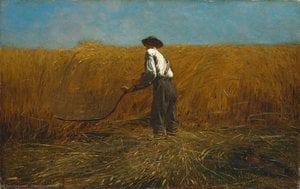
Amerikan Ruhunun Fırçasıyla: Winslow Homer’ın Yaşamı ve Sanatı
Winslow Homer, 1836'da Boston'da doğan bir sanatçıydı; geleneksel Avrupa sanat akademilerinin şekillendirdiği pek çok çağdaşından farklı olarak, Amerika deneyiminin özünden doğdu. Yolculuğu, büyük tarihi tuvaller yerine Harper’s Weekly için on iki yaşındayken ticari illüstratör olarak başlamasıyla başladı. Bu erken dönem çıraklığı, sahnelere açıklık ve detayla yakalama yeteneğini geliştiren, olgun eserlerinin de damgasını vuracak becerileri keskinleştirdi. Paris’te perspektifi öğrenmek yerine, Amerika'yı, insanlarını ve gelişen hikayesini görmeyi öğrendi. Boston'un hareketli sokakları, kırsal New England yaşamının sessiz onuru – bunlar onun ilk konularıydı; baskı medyası taleplerinin gerekliliğinden doğan bir hassasiyetle ifade edildi. Bu temel, öncelikle suluboya ile çalışmaya başlayarak resme geçişine izin verdi ve ardından yağlı boyaların ifade gücünü tamamen kucakladı.
Doğal Gücün Hamlığına Doğru: Pastoral Sahnelerden
Homer’ın ilk tabloları genellikle çocukların oynadığı, çiftçilerin tarlalarını işlediği, sessiz ev yaşamının anları gibi pastoral sahneleri tasvir ediyordu. Bu eserler, büyüleyici olsalar da, içinde gizli bir sanatsal duyarlılığın serbest bırakılmayı beklediğini ima ediyordu. Bu dönüşümün katalizörü şüphesiz Amerikan İç Savaşı’ydı. Harper's Weekly için savaş muhabiri olarak Homer, çatışmanın acımasız gerçeklerine tanık oldu. Kahramanca savaşları veya büyük stratejileri değil, askerlerin ve sivillerin gündelik yaşamlarını, kaosun ortasındaki sessiz keder ve direnç anlarını belgeledi. Bu deneyim sanatsal vizyonunu derinden değiştirdi. Pastoral sahneler yerini daha zorlu konulara bıraktı: travmayla boğuşan gaziler, yeni bir dünya gezen kurtulmuş köleler ve zorluklarla dokunmuş manzaraların sert güzelliği. Mücadele, izolasyon ve insanın doğayla olan kırılgan ilişkisi gibi temaları keşfetmeye başladı – eserlerinin en güçlülerini domine edecek temalar. Tarzı da cesur ve daha doğrudan hale geldi; gördüklerinin ham duygusal etkisini yansıtıyordu.
Işığı, Dokuyu ve Amerikan Manzarasını Ustaca Yakalamak
Winslow Homer’ın sanatsal tekniği, dayanıklılığı ve dokusuyla hemen tanınabilir. Geçici izlenimleri yakalamakla ilgilenmiyordu; tuvalde somut bir gerçeklik duygusu oluşturmak istiyordu. Yağlı boya tabloları, doğrudan bir resim yaklaşımı ile karakterize edilir – katmanlar güvenle uygulanır ve derinlik ve parlaklık yaratır. Okyanusun üzerindeki göz kamaştırıcı güneş ışığını veya kırsal bir manzaranın üzerine çöken alacakaranlığın yumuşak parlamasını yakalama konusunda olağanüstü bir yeteneğe sahipti. Bu ustalık, canlı renkler ve narin suluboyalar aracılığıyla etkileyici atmosferik efektler elde ettiği suluboya çalışmalarına da uzanıyordu. 1876'da boyadığı
Breezing Up (A Fair Wind), bu becerinin mükemmel bir örneğidir – Amerikan deniz yaşamının özgün bir tasviri, enerji ve hareketle dolu. Onlarca yıl sonra oluşturulan
The Gulf Stream, belki de onun en ikonik eseridir; insanın doğanın güçleriyle mücadele ettiğini güçlü ve sembolik bir şekilde betimleyen bir metafor. Sadece gördüklerini resmetmiyordu; bir duygu, zamanın zorluklarıyla karşı karşıya kalan insanlık durumu hakkında duygusal bir gerçek ifade ediyordu.
Amerikan Gerçekçiliğinde Damga Vuran Bir Miras
Homer, Barbizon okulu sanatçıları gibi Avrupa sanatçılarını takdir etse de – kırsal yaşamın gerçekçi tasvirleriyle tanınıyor – ve Courbet ve Millet’ten etkilenmiş olsa da, sonunda kendi kendine özgü Amerikan yolunu çizdi. Hakim akademik gelenekleri reddetti ve bunun yerine ülkesinin benzersiz ruhunu yakalamaya odaklandı. Mirası, Amerika'yı romantizm veya idealize etmeden dürüstlükle ve otantiklikle tasvir etme yeteneğinde yatmaktadır. Avrupa tarzlarını taklit etmekle ilgilenmiyordu; manzaralarını, insanlarını ve zorluklarını yansıtan benzersiz bir Amerikan sanatı yaratmak istiyordu.
Innocence, doğanın arka planına karşı yerleştirilmiş çocukluğun dokunaklı bir tasviri ve insan psikolojisini yakalama becerisini gösteren
Man of Science, bu taahhüde tanıklık ediyor. Etkisi, kendi ülkelerini benzer bir doğrudanlık ve duygusal derinlikle tasvir etmeye çalışan daha sonraki Amerikan ressamların çalışmalarında görülebilir.
Sürekli Bir İzlenim: Homer’ın Tarihsel Önemi
Winslow Homer'ın sanatı, 19. yüzyıl Amerika'sına dair derin bir pencere sunarak o dönemdeki sosyal, politik ve kültürel manzara hakkında paha biçilmez bilgiler sağlıyor. Tabloları sadece güzel temsiller değil; aynı zamanda insan dayanıklılığı, doğanın güzelliği ve gücü ve Amerikan deneyiminin karmaşıklıkları üzerine güçlü ifadelerdir. 1910'da eserleri hala günümüz izleyicileriyle yankılanmaya devam eden verimli bir çalışma vücudu bırakarak öldü. Hızla değişen bir ulusun özünü yakalama yeteneği, onu Amerika’nın en önemli ve kalıcı sanatçılarından biri olarak konumlandırmaktadır. Sadece resimler çizmiyor; bir anı belgeliyordu, gelecek nesiller için koruyordu.
- Çalışmaları günümüz sanatçılarına ilham vermeye devam ediyor.
- Homer, Amerikan Gerçekçiliğinin gelişiminde önemli bir figür olmaya devam ediyor.



 Önizleme yap
 Baskı Moduna Geç
 Paylaş
 Paylaş
 Detayları Gör
 Rehber

 İndir
İndir
 Benzerlerini gör
 X-Işını
 Slayt Gösterisi
 İstatistikler

 Tümünü Gör






































 Cam seçeneği yalnızca 110 cm altındaki boyutlar için mevcuttur.