A Symphony of Chaos: The Visceral World of Willem de Kooning
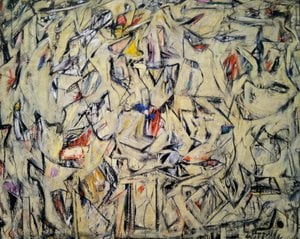
In the pantheon of mid-century modernism, few works command the room with such raw, unbridled energy as Willem de Kooning’s Untitled (10). Painted in 1950, this monumental canvas serves as a profound window into the heart of Abstract Expressionism, specifically the high-octane subgenre known as action painting. To stand before this piece is to witness an artist in the midst of a physical struggle with his medium. De Kooning did not merely paint; he famously described his process as attacking the canvas, and that sense of combat is palpable in every stroke. The work eschews the comfort of recognizable landscapes or serene portraits, opting instead to prioritize spontaneous gesture and impulsive marks as the primary conduits for human emotion.
The technique employed here is nothing short of sculptural. Through a heavy use of thick impasto, De Kooning creates palpable ridges and valleys of pigment that catch the light and cast miniature shadows across the surface. This layered approach gives the painting a three-dimensional vitality, where the texture itself mimics the feeling of psychological exertion and struggle. For the discerning collector or interior designer, this tactile quality offers an unparalleled depth, making the artwork feel less like a static image and more like a living, breathing entity that evolves as one moves around it.
Fragmented Identities and Domestic Tension
While the painting defies easy categorization, it is far from purely abstract. Within the swirling vortex of color and texture, one can discern the ghostly, distorted remnants of human figures and domestic objects. These fragmented forms—ostensibly human yet rendered with a grotesque, unsettling distortion—appear caught in an agitated confrontation. This deliberate fragmentation serves as a powerful symbol of psychological complexity and the fractured nature of identity in the post-war era. De Kooning uses these shapes to mirror the inner turmoil and anxieties that characterized the intellectual climate of the 1950s.
Adding a layer of profound unease to the composition is the inclusion of mundane objects, such as a chair and a dining table, scattered amidst the chaos. These elements ground the abstraction in a recognizable, albeit fractured, reality. The presence of furniture suggests a domestic setting fraught with tension, transforming a simple scene into an arena of existential dread. This juxtaposition of the familiar with the chaotic creates a captivating tension that draws the viewer deeper into the narrative, making it an ideal centerpiece for spaces that value intellectual depth and provocative conversation.
An Enduring Legacy for Modern Interiors
For those looking to curate a space of distinction, Untitled (10) offers more than just visual interest; it provides an emotional anchor. The vibrant and varied color palette, ranging from aggressive primaries to muted, earthy tones, allows the piece to integrate seamlessly into diverse high-end environments—from minimalist galleries to richly textured, eclectic studies. It is a work that demands attention and rewards prolonged contemplation.
Owning a high-quality reproduction of this masterpiece allows one to bring the revolutionary spirit of the New York School into the contemporary home. It serves as a tribute to an era when art broke free from its representational chains to explore the very essence of the human soul. Whether used to add a sense of movement to a quiet corner or to act as the bold protagonist of a large-scale room, this work remains a timeless testament to the power of spontaneous, uninhibited expression.



 Önizleme yap
 El yapımı tablo satın al
 Paylaş
 Paylaş
 Detayları Gör

 İndir
İndir
 Benzerlerini gör
 X-Işını
 Slayt Gösterisi
 İstatistikler

 Tümünü Gör






































 Cam seçeneği yalnızca 110 cm altındaki boyutlar için mevcuttur.