Önizleme yap AR ile önizle El yapımı tablo satın al Dijital Görsele Geç Paylaş
Detayları Gör Rehber Favorilere ekle İndir Benzerlerini gör X-Işını Slayt Gösterisi İstatistikler

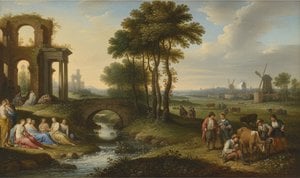
A wooded ridge

Discover "A Wooded Ridge" by Sir Anthony van Dyck – a stunning 1630s landscape painting capturing nature's beauty with rich detail and masterful technique. Explore the artistry of this Baroque masterpiece.

Anthony van Dyck (1599-1641): Flaman Rönesansı ustası, aristokrat Avrupa ve Kral I. Charles’ın portreleriyle tanınıyor. İngiliz sanatına etkisi büyük; dini eserleri ve özgün tarzıyla öne çıkıyor.

Giclée / Sanat Baskısı

Hızlı üretim ve esnek bitiş seçenekleriyle müze kalitesinde giclée veya kanvas baskı. ( El yapımı tablo satın al Dijital Görsele Geç)

P118B $10
P118H $10
P118W $10
P438Z $10
P508JH $12
P508YH $12
P805H $10
P805Z $10
P919BZ $10
P919G $10
P919XJ $10
P959ZH $10
P968JZ $12
W106C $8
W218G $10
W218JH $8
W218Y $10
W307PJ $10
W316G $10
W316PJ $8
W316Y $10
W398PJ $8
W4111J $10
W500HY $15
W500JH $15
W692G $12
W849H $8
W940BG $15
W953PJ $8

Standart
kişiye özel
CM
INCH

Eserin orijinal oranlarıyla uyumlu, önceden belirlenmiş boyutlarımız arasından seçim yapın.

genişlik
yükseklik

Belirli bir çerçeveye veya alana uyması için kendi ölçülerinizi girebilirsiniz. Seçtiğiniz boyut orijinal görüntünün oranlarıyla eşleşmiyorsa, sanat eserini kırpacağız veya görüntüyü aynalanmış ya da düz dolgulu bir kenarlıkla genişleteceğiz. Üretim başlamadan önce onayınız için bir dijital taslak gönderilecektir.
Lütfen ekrandaki önizlemenin gerçek kırpma veya genişletmeyi yansıtmadığını unutmayın. Nihai kompozisyonu yalnızca taslak doğru bir şekilde gösterecektir.
Özel boyutlar mevcut olsa da, orijinal oranları korumak için önceden tanımlanmış listeden bir boyut seçmenizi öneririz.

Dünya Çapında Teslimat (); standart 4/5 hafta yerine 2 haftada. (23 Eylül)

why_choose_icon
Dünya Çapında Ücretsiz Ekspres Kargo
why_choose_icon
Yüksek Kaliteli Keten Tuval
why_choose_icon
Tam Kapsamlı Nakliye Sigortası
why_choose_icon
Gümrük Vergisi İade Garantisi
why_choose_icon
Gerçek Renk Uyumu Garantisi
why_choose_icon
100 Günlük İade Politikası (Sadece Kusurlu Ürünler İçin)
why_choose_icon
%100 Para İade Garantisi
why_choose_icon
Toplu Alım İndirimi

Toplam Fiyat

$ 68

reproduction

A wooded ridge

Giclée / Sanat Baskısı

Reproduksiyon Boyutu

-

Toplam Tutar

$ 68

Hızlı Bilgiler

  • Influences: Rubens
  • Subject: Landscape painting
  • Style: Elegant portraiture
  • Dimensions: 29 x 20 cm
  • Movement: Baroque
  • Location: Art Gallery of SA
  • Notable elements: Blurred trees, depth

Sanat Bilgisi Testi

Her soru için yalnızca bir doğru cevap bulunmaktadır.

Soru 1:
What is the primary subject depicted in Sir Anthony van Dyck’s ‘A Wooded Ridge’?
Soru 2:
In what year was ‘A Wooded Ridge’ painted?
Soru 3:
Which of the following best describes Van Dyck’s artistic style as evident in this painting?
Soru 4:
Sir Anthony van Dyck was primarily known for his work as:
Soru 5:
The painting ‘A Wooded Ridge’ is considered a significant example of Van Dyck's work during his time in:

A Woodland Reverie: Van Dyck’s “A Wooded Ridge”

Sir Anthony van Dyck's "A Wooded Ridge," painted around 1630, isn’t merely a landscape; it’s an invitation into a hushed and contemplative realm. This evocative piece, rendered in delicate pen and brown ink on paper, captures a fleeting moment of autumnal beauty within the Flemish countryside – a scene imbued with both serene tranquility and a subtle undercurrent of melancholy. Van Dyck, already establishing his distinctive style as he navigated the courts of Europe, demonstrates here a masterful command of atmospheric perspective and a profound understanding of how light interacts with foliage, creating an illusion of depth that draws the viewer into the heart of the forest.

The composition is deceptively simple. A gently undulating ridge dominates the midground, its trees – primarily birches and oaks – rendered in varying shades of brown and ochre. Van Dyck employs a technique known as ‘grisaille,’ utilizing monochrome tones to establish the forms and spatial relationships before adding subtle washes of color. This careful layering builds a remarkable sense of volume and texture; you can almost feel the rough bark beneath your fingertips, and smell the damp earth after a rain.

The Court Painter’s Palette: Context and Influences

Understanding “A Wooded Ridge” requires acknowledging Van Dyck's unique position within the artistic landscape of his time. Initially apprenticed to Peter Paul Rubens at the prestigious Antwerp workshop, he absorbed much of Rubens’ dynamic energy and rich color palette. However, Van Dyck quickly developed a refined elegance and restraint that distinguished him from his mentor. This piece exemplifies this shift – it lacks the exuberant drama of some of Rubens' works but possesses a quiet sophistication and an almost melancholic beauty.

Crucially, “A Wooded Ridge” was created during a period when Van Dyck was establishing himself as a court painter for Charles I of England. This move to London profoundly influenced his style, leading him to prioritize portraiture while retaining a deep appreciation for landscape painting. The influence of the English countryside – with its muted light and atmospheric haze – can be detected in this work, subtly shaping his approach to color and composition.

Symbolism and Emotional Resonance

While seemingly a straightforward depiction of nature, “A Wooded Ridge” is rich in symbolic potential. The ridge itself could represent the journey of life, with its ups and downs, while the trees symbolize resilience and endurance. The muted palette evokes a sense of introspection and contemplation – a feeling of being lost in thought amidst the vastness of nature. There’s an undeniable sadness woven into the scene; perhaps reflecting Van Dyck's own premature death at the age of 42.

The use of light is particularly significant. It filters through the trees, creating dappled patterns on the ground and highlighting the textures of the foliage. This interplay of light and shadow not only adds depth to the composition but also contributes to the overall mood – a sense of quiet beauty tinged with melancholy. The distant horizon suggests an infinite expanse, inviting the viewer to lose themselves in the contemplation of nature’s grandeur.

A Timeless Masterpiece: Reproduction and Beyond

Reproductions of “A Wooded Ridge” offer a remarkable opportunity to bring this exquisite landscape into your home or office. The delicate detail and atmospheric depth captured by Van Dyck are faithfully reproduced, allowing you to appreciate the nuances of his technique and the emotional resonance of the scene. Consider framing the artwork in a simple, elegant frame – one that complements its understated beauty without overpowering it.

Whether displayed as a focal point or incorporated into a larger collection, “A Wooded Ridge” remains a testament to Van Dyck’s artistic genius and his ability to capture the essence of nature with remarkable sensitivity. It's more than just a painting; it’s an invitation to pause, reflect, and connect with the timeless beauty of the natural world.


Sanatçı Özgeçmişi

A Flemish Master at the Courts of Europe

Sir Anthony van Dyck, born in Antwerp in 1599, emerged as one of the most celebrated and influential portraitists of the Baroque era. His life, though tragically cut short at just forty-two years old, was a whirlwind of artistic exploration and prestigious commissions that took him from his native Flanders to Italy and ultimately to the heart of the English court. From an early age, van Dyck displayed remarkable talent, entering Hendrick van Balen’s workshop as a young apprentice and quickly absorbing the prevailing styles of the time. However, it was his association with Peter Paul Rubens – not merely as a student but as a collaborator – that truly shaped his artistic foundation. He learned from Rubens' dynamic compositions, rich color palettes, and masterful handling of light and shadow, yet van Dyck soon began to forge his own distinct path, one characterized by an elegance and refinement that would become his signature.

Italian Sojourns and the Birth of a Style

The years van Dyck spent in Italy, beginning around 1621, proved pivotal in his artistic development. He resided primarily in Genoa, where he found favor among the city’s aristocratic families. It was here that he began to cultivate the sophisticated style for which he would become renowned – a style marked by graceful poses, luxurious fabrics, and an almost palpable sense of nobility. Unlike the robust energy often found in Rubens' work, van Dyck’s Italian portraits exude a refined composure, capturing not just physical likeness but also the inner character and social standing of his sitters. During this period, he embarked on his *Iconography*, a series of meticulously rendered portrait etchings featuring prominent figures of his time – artists, scholars, and rulers alike. This project showcased his exceptional technical skill and established him as a leading printmaker. These etchings weren’t simply records; they were carefully constructed images designed to immortalize the subjects and convey their status and intellect. He also honed his skills in watercolor painting, experimenting with delicate washes of color that complemented his oil paintings beautifully.

Rubens' Influence: Shaping His Artistic Vision

Peter Paul Rubens undeniably served as a formative influence on van Dyck’s artistic sensibilities. Rubens’ monumental canvases—filled with dramatic movement and vibrant hues—taught van Dyck the importance of grand scale and expressive gesture. However, recognizing that Rubens’ style wasn’t suited to his own temperament, van Dyck skillfully adapted Rubens' techniques while maintaining his distinctive aesthetic. He embraced a more restrained approach, prioritizing subtlety and nuance – qualities that would become hallmarks of his oeuvre. This careful balance between dynamism and elegance distinguishes van Dyck’s work from many of his contemporaries and underscores the profound impact of Rubens on his artistic development.

The King's Painter: Van Dyck in England

In 1632, van Dyck received an invitation that would forever alter his career trajectory – a summons from Charles I of England to become the court painter. This appointment marked a turning point, not only for van Dyck but also for English portraiture. He arrived in London with a considerable reputation and quickly became indispensable to the king, tasked with creating images that projected an aura of power, majesty, and divine right. Van Dyck’s portraits of Charles I are particularly noteworthy; he moved away from the stiff, formal representations favored by earlier artists, instead portraying the king as a dynamic, charismatic leader. He employed innovative techniques – dramatic lighting, sweeping gestures, and carefully chosen backgrounds – to create images that were both visually stunning and politically charged. His influence extended beyond the royal family, shaping the visual culture of the English aristocracy for generations to come. He didn’t just paint portraits; he crafted an image of kingship, influencing how royalty was perceived for over a century.

Legacy and Enduring Influence

Van Dyck's untimely death in 1641 tragically curtailed his artistic career, yet his legacy continues to resonate throughout art history. His contributions to portraiture are unparalleled; he elevated the genre to new heights of sophistication and psychological insight. He established a standard of elegance and refinement that subsequent artists would strive to emulate.
  • Technical Mastery: Van Dyck’s command of oil paint, etching, and watercolor demonstrated an extraordinary level of skill and innovation.
  • Stylistic Innovation: His portraits are distinguished by their graceful poses, luxurious fabrics, and subtle expressions—a style that captivated audiences across Europe.
  • Cultural Significance: He profoundly impacted the visual culture of his time, shaping perceptions of royalty and aristocratic identity.
His works – including *Portrait of Charles I*, *The Balbi Children*, and numerous other masterpieces – remain treasured symbols of Baroque artistry and continue to inspire artists today. His influence can be seen in fashion, photography, and contemporary portraiture—a testament to the timeless beauty and psychological depth of his art.

Anthony Van Dyck

Anthony Van Dyck

1599 - 1641 , Belçika

Kısa Bilgiler

  • Artistic Movement Or Style: Barok
  • Artists Or Movements Influenced By This Artist: ['İngiliz Portre Okulu']
  • Artists Who Influenced This Artist: ['Peter Paul Rubens']
  • Date Of Birth: Mart 22, 1599
  • Date Of Death: Aralık 9, 1641
  • Full Name: Sir Anthony van Dyck
  • Nationality: Flamanca
  • Notable Artworks:
    • Portre Çocuğun ve Kızının
    • Charles I Kralı için Atlı Portresi
    • John Stuart Lord ve Kardeşi
    • Şefkat
    • Charles I Üç Pozisyonda
  • Place Of Birth: Anvers, Belçika
Temalara, stillere ve özelliklere göre düzenlenmiş sanat eserlerini keşfedin.