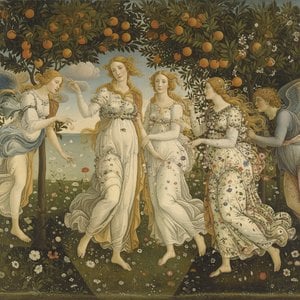
Sandro Botticelli tarafından yapılan Mystic Nativity, usta bir sanatçı tarafından el ile boyanmış yağlı boya reprodüksiyon
Gerçek Boyutta Önizle AR ile önizle Baskı Satışına Geç Dijital Görsele Geç Paylaş
Detayları Gör Rehber Favorilere ekle İndir Benzer ürünler X-Işını Slayt Gösterisi Soru & Cevap Presentation İstatistikler

Mystic Nativity El boyaması yağlı boya reprodüksiyon

Botticelli’s Mystic Nativity captures the serene beauty of the nativity scene with intricate detail and graceful figures, showcasing the artist's signature style from the Early Renaissance period – a timeless masterpiece to cherish and own.

Rönesansın büyüleyici ressamı Sandro Botticelli'yi keşfedin! 'Venüs'ün Doğuşu' ve 'İlkbahar' gibi başyapıtlarıyla tanınan Botticelli, mitolojiyle harmanladığı zarif tarzıyla sanat tarihine damgasını vurmuştur.

El Yapımı Yağlı Boya Reproduksiyon

Sanatçılarımız tarafından sipariş üzerine hazırlanan; istediğiniz boyut ve çerçevede, tuval üzerine el boyaması yağlı boya. ( Baskı Satışına Geç Dijital Görsele Geç)

Corner sample of the P118B picture frame: kalıplanmış polistiren, 5 cm wide and 3 cm thick
P118B ₺10
Corner sample of the P118H picture frame: kalıplanmış polistiren, 5 cm wide and 3 cm thick
P118H ₺10
Corner sample of the P118W picture frame: kalıplanmış polistiren, 5 cm wide and 3 cm thick
P118W ₺10
Corner sample of the P438Z picture frame: kalıplanmış polistiren, 5.5 cm wide and 3.5 cm thick
P438Z ₺10
Corner sample of the P508JH picture frame: kalıplanmış polistiren, 7 cm wide and 3.5 cm thick
P508JH ₺12
Corner sample of the P508YH picture frame: kalıplanmış polistiren, 7 cm wide and 3.5 cm thick
P508YH ₺12
Corner sample of the P805H picture frame: kalıplanmış polistiren, 5 cm wide and 3.5 cm thick
P805H ₺10
Corner sample of the P805Z picture frame: kalıplanmış polistiren, 5 cm wide and 3.5 cm thick
P805Z ₺10
Corner sample of the P919BZ picture frame: kalıplanmış polistiren, 7 cm wide and 3.5 cm thick
P919BZ ₺10
Corner sample of the P919G picture frame: kalıplanmış polistiren, 7 cm wide and 3.5 cm thick
P919G ₺10
Corner sample of the P919XJ picture frame: kalıplanmış polistiren, 7 cm wide and 3.5 cm thick
P919XJ ₺10
Corner sample of the P959ZH picture frame: kalıplanmış polistiren, 5 cm wide and 3 cm thick
P959ZH ₺10
Corner sample of the P968JZ picture frame: kalıplanmış polistiren, 6 cm wide and 4 cm thick
P968JZ ₺12
Corner sample of the W106C picture frame: masif ahşap, 5 cm wide and 3 cm thick
W106C ₺8
Corner sample of the W218G picture frame: masif ahşap, 5 cm wide and 3 cm thick
W218G ₺10
Corner sample of the W218JH picture frame: masif ahşap, 5 cm wide and 3 cm thick
W218JH ₺8
Corner sample of the W218Y picture frame: masif ahşap, 5 cm wide and 3 cm thick
W218Y ₺10
Corner sample of the W307PJ picture frame: masif ahşap, 6 cm wide and 3 cm thick
W307PJ ₺10
Corner sample of the W316G picture frame: masif ahşap, 6 cm wide and 3 cm thick
W316G ₺10
Corner sample of the W316PJ picture frame: masif ahşap, 6 cm wide and 3 cm thick
W316PJ ₺8
Corner sample of the W316Y picture frame: masif ahşap, 6 cm wide and 3 cm thick
W316Y ₺10
Corner sample of the W398PJ picture frame: masif ahşap, 5 cm wide and 3 cm thick
W398PJ ₺8
Corner sample of the W4111J picture frame: masif ahşap, 6.5 cm wide and 3.5 cm thick
W4111J ₺10
Corner sample of the W500HY picture frame: masif ahşap, 7 cm wide and 5 cm thick
W500HY ₺15
Corner sample of the W500JH picture frame: masif ahşap, 7 cm wide and 5 cm thick
W500JH ₺15
Corner sample of the W692G picture frame: masif ahşap, 8 cm wide and 4 cm thick
W692G ₺12
Corner sample of the W849H picture frame: masif ahşap, 5 cm wide and 3 cm thick
W849H ₺8
Corner sample of the W940BG picture frame: masif ahşap, 7.5 cm wide and 4.5 cm thick
W940BG ₺15
Corner sample of the W953PJ picture frame: masif ahşap, 6 cm wide and 3.5 cm thick
W953PJ ₺8

Standart
özel boyutlu
CM
INCH

Eserin orijinal oranlarıyla uyumlu, önceden belirlenmiş boyutlarımız arasından seçim yapın.

genişlik
yükseklik

Çerçevenize veya duvarınıza uygun olması için ihtiyacınız olan genişlik ve yüksekliği yazın. Bu eser el boyamasıdır; bu nedenle farklı bir formdaki boyutlar için sanatçı, resmin etrafına biraz daha fazla boya ekleyebilir veya kenarlardan biraz kırpabilir — seçim sizin. Boyama işlemi başlamadan önce onaylamanız için size bir dijital taslak gönderiyoruz. Bu sayfada gösterilen resim gerçek sonucu yansıtmamaktadır; gerçek sonucu yalnızca taslak göstermektedir.

Değiştirilebilecek örneklere dair: Yüzün müşteri fotoğrafıyla değiştirilmesi; Evcil hayvan eklenmesi (örneğin kedinin köpek ile değiştirilmesi); Arka plana gizli bir mesaj dahil edilmesi; Arka plan manzarasının veya öğelerinin değiştirilmesi.
Siparişten sonra, WahooArt.com ekibi talimatlar için müşteriye e-posta gönderecek ve bir taslak önizleme sunacaktır

Dünya Çapında Teslimat (); standart 5 hafta yerine 3/4 haftada. (4 Kasım). Kaliteden ödün verilmez.

Dünya Çapında Ücretsiz Ekspres Kargo
Yüksek Kaliteli Keten Kanvas
Tam Nakliye Sigortası
Gümrük Vergisi İadesi Garantisi
Gerçek Renk Uyumu Garantisi
100 Günlük İade Politikası (Sadece Kusurlu Ürünler İçin)
%100 Para İade Garantisi
Toplu Alım İndirimi

Toplam Tutar

₺ 13380

Mystic Nativity

Reproduksiyon Tekniği

Reproduksiyon Boyutu

-

Toplam Tutar

₺ 13380

Hızlı Bilgiler

  • Movement: Early Renaissance
  • Artist: Sandro Botticelli
  • Subject or theme: Nativity scene

Sanat Bilgisi Testi

Her soru için yalnızca bir doğru cevap bulunmaktadır.

Soru 1:
What is the central theme depicted in the artwork 'Mystic Nativity'?
Soru 2:
Which famous Renaissance artist is associated with the style and period suggested by this artwork's context?
Soru 3:
Besides Mary, Joseph, and the baby Jesus, what animals are specifically mentioned as being present in the scene?
Soru 4:
The setting of the painting includes what natural element, adding depth to the composition?
Soru 5:
Botticelli's early life and artistic development were deeply rooted in which Italian city?

A Celestial Vision Amidst Earthly Turmoil

In the twilight of the Quattrocento, as the political landscape of Italy fractured under the weight of papal ambitions and dynastic strife, Sandro Botticelli captured something far more profound than a mere religious milestone. His Mystic Nativity serves as an eloquent distillation of Renaissance ideals interwoven with the palpable anxieties of a world in flux. At first glance, the painting presents the serene, familiar scene of the Nativity—Mary cradling the infant Jesus amidst a pastoral landscape—yet the work breathes with a much deeper, more unsettling spiritual energy. It is not merely a depiction of a birth, but a complex theological vision that bridges the gap between the historical event of Christ's arrival and the apocalyptic prophecies of the Book of Revelation.

The composition guides the viewer’s eye upward through multiple narrative layers, emphasizing the sacredness of the moment while inviting contemplation of divine intervention and human humility. The central figures of Mary, Joseph, and the infant Jesus radiate divine grace, surrounded by celestial angels and humble earthly witnesses. There is a shimmering brilliance to the hues that seems to emanate from within the panel itself, creating a sense of divine light that transcends the physical medium. This luminosity serves to elevate the scene from a rustic outdoor setting into a celestial realm, where the boundaries between the earthly and the divine become beautifully blurred.

Symbolism, Technique, and the Divine Order

To gaze upon the Mystic Nativity is to engage in a silent dialogue with a dense web of symbolism. Botticelli meticulously constructed the composition to reflect a cosmic order. At the top of the work, a celestial dome of twelve angels encircles the heavens, representing both the twelve hours of the day and the twelve months of the year, acting as divine guardians over the unfolding drama. These angelic figures, draped in robes of white, red, and green, embody the virtues of faith, hope, and charity. Below this heavenly host, the landscape is punctuated by olive branches entwined with scrolls—symbols of peace and wisdom that stand in poignant contrast to the darker elements lurking in the shadows.

The emotional depth of the piece lies in its tension between salvation and peril. Beneath the rocky outcrops, demons emerge, embodying the evil forces that threaten the world. The painting employs a fascinating blend of styles; while it utilizes the emerging Renaissance naturalism, it also retains the earlier medieval convention of showing the Virgin Mary and infant Jesus on a larger scale than other figures. This deliberate distortion creates a powerful effect, emphasizing their importance above all else. Botticelli’s technical mastery is evident in his ability to manipulate oil on canvas to achieve an ethereal, luminous quality, capturing intricate textures—from flowing fabrics to natural foliage—that bring this biblical story to life.

For the discerning collector or interior designer, this masterpiece offers a profound sense of spiritual reverence and historical weight. Whether placed in a sacred space or an elegant, contemplative interior, the Mystic Nativity acts as a captivating focal point, inviting viewers to contemplate the sacred mystery of Christ’s birth and the enduring promise of peace amidst the darkness of the world.

Soru ve Cevaplar

"Mystic Nativity" için önerilen baskı formatı nedir; hangi boyut ve hangi yönlendirme ile basılmalıdır?

"Mystic Nativity" için önerilen baskı düzeni, Medium boyutunda ve Portrait yönlendirmesindedir.

Sandro Botticelli imzalı "Mystic Nativity" hangi durumlar için bir hediye olarak öneriliyor?

Bir hediye olarak, Seasonal Gift için Sandro Botticelli imzalı "Mystic Nativity" önerilmektedir. Diğer özel günler için de oldukça uygundur.

Sandro Botticelli imzalı "Mystic Nativity" ne düzeyde bir kontrast sunuyor?

"Mystic Nativity" eserinin ışık-gölge kontrastı Statement olarak kaydedilmiştir. Kontrast, açık ve koyu alanların birbirinden ne kadar belirgin şekilde ayrıldığını ifade eder.


Sanatçı Özgeçmişi

Alessandro Filipepi: Rönesansın Zarafet ve Mitoloji Üstadı Sandro Botticelli

Floransa’nın kalbinde, 1445 yılında doğan Alessandro di Mariano di Vanni Filipepi, sanat tarihine Sandro Botticelli olarak geçecek bir dâhinin ilk adımıydı. Ognissanti mahallesinde büyüyen genç Alessandro, kısa sürede “Küçük Fıçı” lakabıyla tanınacak ve Floransa’nın o dönemki canlı sanat atmosferi içinde kendine özgü bir yer edinecekti. Babasının önce kuyumculuk, sonra dericilik mesleği, onun ince işçiliğe olan ilgisini şekillendirirken, Fra Filippo Lippi'nin atölyesinde aldığı resim eğitimi ise yeteneğini parlatma fırsatı sundu. Bu dönemde Medici ailesi gibi güçlü patronlarla tanışması, sanatının gelişiminde önemli bir rol oynadı.

Botticelli’nin sanatsal tarzı, geç Gotik gelenekleri ve yükselen Rönesans estetiği arasında ustaca bir köprü kurdu. Fra Angelico ve Paolo Uccello gibi ustalardan etkilenmiş olsa da, kendine has bir vizyonla onları aştı. Eserlerinde zarif çizgiler, akıcı formlar ve yumuşak renk kullanımı ön plana çıkarken, figürleri mistik bir güzellikle canlandırdı. Botticelli’nin en belirgin özelliklerinden biri, eserlerine sıkça mitolojik ögeler katmasıydı. Antik Yunan ve Roma mitolojisinden ilham alarak aşk, güzellik ve ruhani arayış gibi evrensel temaları işledi. Bu sadece bir illüstrasyon değil, aynı zamanda antik hikâyelere yeni anlamlar yükleme çabasıydı.

Teknik açıdan Botticelli, döneminin ötesine geçen yenilikler getirdi. Gümüş kalem tekniğiyle yaptığı ön çizimler, eserlerine ışık ve detay katarken, tempera boyaların kullanımı canlı renklerin elde edilmesini sağladı. Daha sonra yağlı boyalara yönelmesi ise ifade olanaklarını genişletti. Venüs'ün Doğuşu (1482-1486) ve Primavera (İlkbahar) gibi başyapıtları, kompozisyon yeteneğini, atmosferik derinlik yaratma becerisini ve insan duygularını anlamasını gözler önüne seriyor. Venüs'ün Doğuşu, Rönesans ideallerini somutlaştıran bir alegori olarak sanat tarihinde ölümsüzleşirken, Primavera ise karmaşık sembolizmiyle izleyiciyi büyülemeye devam ediyor.

Sanatının farklı evreleri gözlemlenebilir. 1470’lerin başında dini konulara yoğunlaşarak teknik becerilerini geliştirdi ve ün kazandı. 1480’ler, yaratıcılığının zirvesi olarak kabul edilirken, bu dönemde mitolojik başyapıtlarını yarattı. Ancak 1490’ların sonu, Girolamo Savonarola'nın ateşli vaazlarının etkisiyle sanatsal bir dönüşüme işaret etti. Bu dönem eserlerinde daha sade ve duygusal bir ifade tarzı hakim oldu, ruhani yoğunluk ön plana çıktı. Örneğin, Gizemli Doğuş (1501) bu değişimin önemli bir göstergesi.

Botticelli’nin Mirası ve Yeniden Keşfi

Sanatçının 1510'daki ölümünden sonra ünü giderek azaldı. Yaklaşık üç yüzyıl boyunca unutulmaya yüz tutan Botticelli, 19. yüzyılın sonlarında İngiliz sanatçı grubu Pre-Raphaelite Brotherhood’un ilgisiyle yeniden keşfedildi. Bu grup, akademik kuralları reddederek İtalyan Rönesansının erken dönemlerine yöneldi ve Botticelli'nin zarif çizgilerini, canlı renklerini ve şiirsel duyarlılığını takdir etti.

Bu yeniden değerlendirme, sanat tarihine olan katkısını ortaya koyarak onu Erken Rönesans’ın en önemli sanatçılarından biri olarak kabul edilmesini sağladı. Günümüzde Botticelli, eşsiz sanatsal vizyonu, ustalıkla kullandığı teknikler ve güzelliği, duyguyu ve ruhani düşünceyi uyandırma yeteneğiyle tanınıyor. Eserleri, sonraki nesillere ilham vermeye devam ediyor ve Floransa sanatının sembolü olarak kalbimizde yaşamaya devam ediyor.

Başlıca Eserler

  • Venüs'ün Doğuşu (c. 1486): Rönesans güzellik ideallerini somutlaştıran ikonik bir tasvir.
  • Primavera (İlkbahar) (c. 1482): Baharı ve aşkı kutlayan karmaşık bir alegorik resim.
  • Magi'lerin Tapınışı (1475-1476): Kompozisyon ve perspektif konusundaki erken dönem ustalığını sergiliyor.
  • Gizemli Doğuş (1501): Kariyerinin sonuna doğru ruhani temalara yöneldiğinin bir yansıması.
Sandro Botticelli

Sandro Botticelli

1445 - 1510 , İtalya

Kısa Bilgiler

  • Doğum Tarihi: 1 Mart 1445
  • Doğum Yeri: Floransa, İtalya
  • Etkilenen Sanatçılar:
    • Fra Angelico
    • Paolo Uccello
  • Notable Eserler:
    • Venüs'ün Doğuşu
    • İlkbahar
    • Müneccim Kralların Tapınağı
  • Sanat Akımları: ['Pre-Raphaelite']
  • Sanatsal Akım: Erken Rönesans
  • Tam Adı: Alessandro di Mariano Filipepi
  • Uyruk: İtalyan
  • Ölüm Tarihi: 17 Mayıs 1510
Temalara, stillere ve özelliklere göre düzenlenmiş sanat eserlerini keşfedin.