

Bu sayfada sergilenen eser telif hakkı yasasıyla korunmaktadır; bu da yasal olarak eserin birebir kopyasını oluşturamayacağımız veya satamayacağımız anlamına gelir. Bu koruma, aşağıdakiler gibi uluslararası anlaşmalar kapsamında uygulanmaktadır: Bern Sözleşmesi ve aşağıdakiler de dahil olmak üzere ulusal yasalarca belirlenen ABD Telif Hakkı Kanunu - 17. Başlık.
Bu yöntem, koruma altındaki sanat eserinin kopyalanmasını veya çoğaltılmasını içermediği için telif hakkı düzenlemelerine tam uyum sağlar. Bunun yerine, yaratıcı bir yeniden yorumlamadır; orijinalinden etkilenen ancak onunla aynı olmayan yeni bir tablodur.
Hızlı üretim ve esnek bitiş seçenekleriyle müze kalitesinde giclée veya kanvas baskı. ( El Yapımı Tablo Satın Al Dijital Görsele Geç)
Eserin orijinal oranlarıyla uyumlu, önceden belirlenmiş boyutlarımız arasından seçim yapın.

Çerçevenize veya duvarınıza uygun olması için ihtiyacınız olan genişlik ve yüksekliği yazın. Bir baskı yalnızca kesilebilir, görselden daha büyük hale getirilemez; bu nedenle farklı bir formdaki boyut seçimi, görselin bir kısmının kaybına neden olur. Herhangi bir baskı yapmadan önce onaylamanız için size bir dijital taslak gönderiyoruz. Bu sayfada gösterilen resim gerçek kesimi göstermez — bunu yalnızca taslak gösterir.
Dünya Çapında Teslimat (); standart 4/5 hafta yerine 2 haftada. (12 Kasım)
Prototype for a laced shoe
Reproduksiyon Boyutu
Prototype for a laced shoe is a prototype created by Salvatore Ferragamo in 1938. This work originated in Florence, Italy, during a period of significant artistic and cultural transition. It represents an early conceptual stage in the designer's development of footwear design.
The piece, titled Prototype for a laced shoe, was produced by Salvatore Ferragamo as a study of form and color. It exists as a physical model intended to explore the intersection of functional footwear and avant-garde aesthetic principles. This specific iteration highlights the designer's move toward experimental silhouettes and unconventional material pairings.
The composition focuses on a single brown shoe, presented as a conceptual model. A wooden heel provides a structural foundation, creating a stark material contrast against the softer elements of the design. The silhouette is defined by streamlined lines that prioritize form over ornamentation.
A colorful sock is positioned within the shoe, featuring a rainbow pattern. This element introduces a spectrum of hues that interrupts the muted brown tones of the leather. The juxtaposition of the multicolored fabric against the solid, dark surface of the shoe creates a deliberate visual tension. The arrangement emphasizes a departure from traditional footwear aesthetics through this use of unexpected color and material pairing.
The construction of this prototype utilizes felt decorated with cotton stripes. This choice of medium emphasizes the conceptual nature of the object, prioritizing form and color over traditional leatherwork. The fabric sock features a rainbow pattern, providing a sharp chromatic contrast to the muted tones of the shoe's body.
The piece measures 22 cm in height. The heel, which provides a structural counterpoint to the soft fabric elements, reaches a height of 7 cm. These dimensions reflect the experimental approach taken during the design process in Florence, Italy.
This prototype is held within the Salvatore Ferragamo Museum in Florence, Italy. Also known as the Museo Salvatore Ferragamo or the Ferragamo Museum, the institution was established in 1995. It functions as a repository for the designer's extensive creative output, housing a collection that contains over 10,000 models.
The museum is situated in a setting that reflects the historical significance of the region's craftsmanship. By preserving such diverse prototypes, the collection provides a record of technical experimentation and the evolution of footwear design from the early 20th century through the mid-century period.
The artist's experimental approach to footwear is evident in several other designs from the early to mid-twentieth century. In 1935, he produced the Prototype for a court shoe. This was followed by the 1938 Rainbow wedge sandal, a piece that shares the same era of innovation as the laced shoe prototype. These works reflect a period of intense technical development and material experimentation.
Earlier explorations in form can be seen in the Prototipo di décolleté from 1929. Later, around 1940, the artist produced Evening Shoes. These various models demonstrate a consistent focus on the intersection of sculptural design and functional anatomy throughout his career.
Salvatore Ferragamo imzalı "Prototype for a laced shoe" eserinin dijital kopyasını yüksek çözünürlüklü dijital görsel indirme seçeneğiyle eserin Dijital İndirme sayfasından indirebilirsiniz.
"Prototype for a laced shoe" eserinin renk paleti, Muted düzeyinde bir doygunluğa sahiptir.
Salvatore Ferragamo Müzesi koleksiyonunda yer alan Salvatore Ferragamo imzalı "Prototype for a laced shoe", telif hakları ile korunmaya devam etmektedir statüsündedir. Bu durum, görüntünün çoğaltılıp çoğaltılamayacağını belirler.


1898 - 1960 , İtalya

Discover the unparalleled elegance of Art Deco through the lens of Erté. Explore a masterclass in linear precision, theatrical costume design, and high-fashion illustration that continues to define modern luxury and sophisticated interior aesthetics.

Embark on a visual journey through the evolution of fashion photography. Discover how masters like Gianfranco Ferré blended geometry, surrealism, and texture to redefine high-fashion art for collectors and connoisseurs of luxury imagery.

Explore the profound beauty of the Italian Renaissance. From Raphael's divine frescoes to Michelangelo's anatomical mastery, discover how this era of classical grandeur and humanistic ideals continues to inspire the world's most sophisticated art collectors and designers.
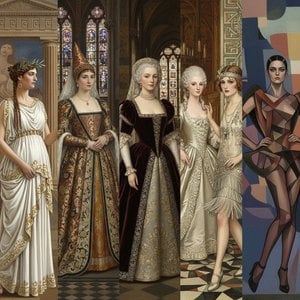
Explore the breathtaking intersection of fine art and high fashion. Discover how iconic masterpieces from Art Deco to Impressionism have shaped the world of luxury couture and timeless design in this curated visual journey.

Discover the exquisite world of fashion illustration art. From Art Deco elegance to bespoke oil reproductions, explore how timeless sartorial beauty transforms luxury interiors through masterfully crafted canvas works and curated historical masterpieces.
 Paylaş
 Paylaş
 Detayları Gör
 Rehber

 İndir
İndir
 Benzer ürünler
 Slayt Gösterisi
 Soru & Cevap
 İstatistikler


 Tümünü Gör






































 Cam seçeneği yalnızca 110 cm altındaki boyutlar için mevcuttur.


