A Descent into the Subconscious: Dalí's "Pieta", 1982
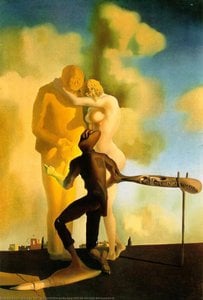
Salvador Dalí’s “Pieta,” painted in 1982, represents a potent culmination of decades spent exploring the unsettling landscapes of the human psyche. This surrealist masterpiece, rendered with the meticulous precision that defined Dalí’s oeuvre, isn't merely a depiction of the biblical scene – it’s an intensely personal and profoundly disturbing meditation on loss, identity, and the fractured nature of reality itself. The painting immediately confronts the viewer with a jarring juxtaposition: the Virgin Mary, stripped bare both literally and figuratively, cradles her son in a posture that simultaneously evokes tenderness and profound anguish. The ripped fabric of her dress, exposing her breasts, is not presented as an act of provocation but rather as a symbolic unveiling – a raw exposure to vulnerability and grief.
- Subject Matter: A surrealist interpretation of the Pieta scene, featuring Mary and Christ.
- Style: Pure Surrealism - characterized by illogical scenes and dreamlike imagery.
- Technique: Oil on canvas, executed with Dalí’s signature hyperrealism, emphasizing meticulous detail and a photographic quality.
Symbolic Layers of Grief and Duality
The elongated figure on the left, often interpreted as a representation of Dalí's deceased brother Salvador, adds another layer of complexity to the work. This ghostly presence reinforces the artist’s lifelong preoccupation with themes of loss, replacement, and duality – a direct consequence of his brother’s early death. The second figure, holding a baby, could be seen as an echo of Mary’s role, yet subtly different, perhaps representing a distorted or incomplete version of maternal care. The inclusion of the bird in the upper-left corner is particularly evocative; birds frequently symbolize hope and resurrection within religious iconography, but here, its presence feels unsettling, almost predatory, suggesting a corrupted or diminished promise.
Historical Context: The Late Period of Dalí
Painted in 1982, “Pieta” falls squarely within the latter half of Dalí’s career. Following his initial embrace of Surrealism in the 1930s, he increasingly explored themes of religion, mythology, and personal obsession. This period saw a shift towards greater technical mastery and a deepening engagement with optical illusions and meticulous detail. While earlier works like “The Persistence of Memory” captivated the world with their dreamlike imagery, "Pieta" demonstrates a more mature and intensely private exploration of Dalí’s own anxieties and memories. The painting reflects a growing disillusionment with the grand narratives of religion and a turn towards confronting the raw realities of human experience.
Emotional Impact and Artistic Legacy
"Pieta" is not a comfortable image; it's deliberately unsettling, designed to provoke a visceral response. The painting’s power lies in its ability to tap into universal anxieties surrounding death, grief, and the search for meaning. Dalí’s masterful manipulation of scale, perspective, and symbolism creates an atmosphere of profound unease, inviting viewers to confront their own mortality and grapple with the complexities of the subconscious. This work stands as a testament to Dalí's genius – a hauntingly beautiful and profoundly disturbing exploration of the darkest corners of the human soul. Its enduring appeal lies in its ability to resonate with our deepest fears and desires, solidifying its place as one of the most significant works from the artist’s final years.



 Önizleme yap
 El yapımı tablo satın al
 Paylaş
 Paylaş
 Detayları Gör

 İndir
İndir
 Benzerlerini gör
 X-Işını
 Slayt Gösterisi
 İstatistikler

 Tümünü Gör






































 Cam seçeneği yalnızca 110 cm altındaki boyutlar için mevcuttur.