Önizleme yapÖnizleme yap AR ile önizleAR ile önizle Baskı Moduna Geç Baskı Moduna GeçDijital Görsele Geç Dijital Görsele Geç PaylaşPaylaş
Detayları GörDetayları Gör Favorilere ekle Favorilere ekle İndirİndir Benzerlerini görBenzerlerini gör X-IşınıX-Işını Slayt GösterisiSlayt Gösterisi İstatistiklerİstatistikler

The Nightingale

René Magritte’s surreal "The Nightingale" depicts a serene train journey alongside angelic figures and a solitary observer, capturing the artist's signature exploration of reality and perception from the 20th century. Discover this iconic artwork and bring its enigmatic beauty into your space.

René Magritte (1898-1967): İkonik eserleriyle gerçeküstücü sanatın zirvesine ulaşan Belçikalı ustasının dünyasına adım atın! "Aşk Uzayı" gibi eserlerinde gerçekliği sorgulayarak ve hayal gücünü harekete geçiren eserleri keşfedin.

El Yapımı Yağlı Boya Reproduksiyon

Sanatçılarımız tarafından sipariş üzerine hazırlanan; istediğiniz boyut ve çerçevede, tuval üzerine el boyaması yağlı boya. (Baskı Moduna Geç Baskı Moduna GeçDijital Görsele Geç Dijital Görsele Geç)

P118B $10
P118H $10
P118W $10
P438Z $10
P508JH $12
P508YH $12
P805H $10
P805Z $10
P919BZ $10
P919G $10
P919XJ $10
P959ZH $10
P968JZ $12
W106C $8
W218G $10
W218JH $8
W218Y $10
W307PJ $10
W316G $10
W316PJ $8
W316Y $10
W398PJ $8
W4111J $10
W500HY $15
W500JH $15
W692G $12
W849H $8
W940BG $15
W953PJ $8

Standart
kişiye özel
CM
INCH

Eserin orijinal oranlarıyla uyumlu, önceden belirlenmiş boyutlarımız arasından seçim yapın.

genişlik
yükseklik

Belirli bir çerçeveye veya alana uyması için kendi boyutlarınızı girebilirsiniz. Seçtiğiniz boyut orijinal görüntünün oranlarıyla eşleşmiyorsa, sanat eserini kırparak veya ek el boyaması öğelerle resmi uzatarak ayarlayacağız. Üretim başlamadan önce onayınız için dijital bir taslak gönderilecektir.
Lütfen ekrandaki önizlemenin gerçek kırpmayı veya uzatmayı yansıtmadığını unutmayın. Nihai kompozisyonu yalnızca hazırlanan taslak doğru şekilde gösterecektir.
Özel boyutlar mevcut olsa da, orijinal oranları korumak adına önceden tanımlanmış listeden bir boyut seçmenizi öneririz.

Değiştirilebilecek örneklere dair: Yüzün müşteri fotoğrafıyla değiştirilmesi; Evcil hayvan eklenmesi (örneğin kedinin köpek ile değiştirilmesi); Arka plana gizli bir mesaj dahil edilmesi; Arka plan manzarasının veya öğelerinin değiştirilmesi.
Siparişten sonra, WahooArt.com ekibi talimatlar için müşteriye e-posta gönderecek ve bir taslak önizleme sunacaktır

Dünya Çapında Teslimat (); standart 5 hafta yerine 3/4 haftada. (13 Eylül). Kaliteden ödün verilmez.

why_choose_icon
Dünya Çapında Ücretsiz Ekspres Kargo
why_choose_icon
Yüksek Kaliteli Keten Tuval
why_choose_icon
Tam Kapsamlı Nakliye Sigortası
why_choose_icon
Gümrük Vergisi İade Garantisi
why_choose_icon
Gerçek Renk Uyumu Garantisi
why_choose_icon
100 Günlük İade Politikası (Sadece Kusurlu Ürünler İçin)
why_choose_icon
%100 Para İade Garantisi
why_choose_icon
Toplu Alım İndirimi

Toplam Fiyat

$ 272

reproduction

The Nightingale

Reproduksiyon Tekniği

Reproduksiyon Boyutu

-

Toplam Tutar

$ 272

Hızlı Bilgiler

  • Notable elements: Angels, train, person
  • Title: The Nightingale
  • Influences:
    • Symbolism
    • Impressionism
  • Medium: Oil on canvas
  • Year: 1964
  • Location: Private Collection
  • Artist: René Magritte

The Enigmatic Journey of "The Nightingale": A Magritte Masterpiece

René Magritte’s “The Nightingale,” painted in an era defined by both the anxieties and burgeoning possibilities of the 20th century, is more than just a depiction of a train traversing a cloudy sky. It's a meticulously constructed puzzle for the viewer, a meditation on perception, faith, and the unsettling beauty of the unseen. Created during his most prolific period – from 1963 to 1965 – this surrealist work exemplifies Magritte’s signature style: a deliberate disruption of reality designed to provoke thought and challenge conventional interpretations. The painting's serene yet subtly disturbing atmosphere invites prolonged contemplation, drawing the observer into its enigmatic embrace.

  • Subject Matter: The scene presents a seemingly straightforward tableau – a train journey beneath a vast, overcast sky. However, this simplicity is immediately undermined by the presence of two angels, positioned deliberately on either side of the locomotive, and a solitary figure standing near the train’s left flank.
  • Style & Technique: Magritte's meticulous brushwork, combined with his precise attention to detail, creates an almost photographic realism that paradoxically enhances the surreal quality of the scene. The muted color palette – dominated by blues, grays, and browns – contributes to the painting’s melancholic mood and reinforces its sense of detachment from the everyday.

Symbolism and the Weight of History

The symbolism within “The Nightingale” is layered and open to interpretation, a hallmark of Magritte's approach. The train itself can be seen as representing progress, movement, and perhaps even the relentless march of time – themes frequently explored in his work. The angels, traditionally symbols of divine grace and protection, are rendered with an unsettling neutrality, their presence ambiguous and devoid of overt religious fervor. This deliberate ambiguity reflects Magritte’s skepticism towards traditional belief systems and his interest in exploring the subconscious mind.

  • The Figure: The lone figure near the train is particularly intriguing. Its obscured face mirrors the motif of veiled figures that haunted Magritte's early work, a direct consequence of his mother's tragic death. This figure represents perhaps lost innocence, or the individual’s struggle to reconcile faith with doubt.
  • The Sky: The cloudy sky isn’t merely a backdrop; it suggests a sense of uncertainty and concealment, mirroring the hidden realities that Magritte sought to expose through his art.

Magritte's Context and Legacy

“The Nightingale” is firmly rooted in the artistic currents of the mid-20th century, particularly the Surrealist movement. However, unlike some of his contemporaries who embraced overtly fantastical imagery, Magritte’s surrealism was characterized by its intellectual rigor and its focus on undermining rational thought. He belonged to a generation grappling with the aftermath of World War I, a period marked by disillusionment and a questioning of established values. His work reflects this broader cultural shift, prompting viewers to question their assumptions about reality and representation.

Magritte’s influence extends far beyond the realm of art history. His innovative approach to composition, his exploration of psychological themes, and his deliberate manipulation of perception have resonated with artists, designers, and thinkers across various disciplines. A hand-painted reproduction of “The Nightingale” offers a unique opportunity to experience this iconic work firsthand, bringing its enigmatic beauty into your home or studio.

Perfect for Interior Design & Art Collection

This meticulously crafted reproduction captures the essence of Magritte’s masterpiece with exceptional detail and fidelity. Whether adorning a contemporary living room or forming a cornerstone of an art collection, “The Nightingale” will undoubtedly spark conversation and inspire contemplation. Its timeless appeal ensures its place as a valued addition to any discerning space.


Sanatçı Özgeçmişi

Early Life and the Seeds of Surrealism

René Magritte, born René François Ghislain Magritte on November 21, 1898, in Lessines, Belgium, emerged into a world that would profoundly shape his enigmatic artistic vision. His early years were marked by an unsettling event – the suicide of his mother when he was just thirteen. The image of her body being recovered from the River Sambre, with her dress obscuring her face, became a haunting motif that would subtly permeate his later work, manifesting in veiled figures and a persistent exploration of hidden realities. This early trauma instilled within him a fascination with mystery, loss, and the unsettling power of what remains unseen. While details of his childhood remain somewhat elusive, it’s clear this formative experience laid the groundwork for his lifelong questioning of perception and representation. He began drawing lessons at age ten, revealing an innate inclination towards visual expression, but initially explored Impressionism before embarking on a path that would lead him to become one of the most significant figures in Surrealist art.

Artistic Development and Influences

Magritte’s artistic journey was not immediate or straightforward. He studied at the Académie Royale des Beaux-Arts in Brussels, yet found its traditional methods stifling. His early work experimented with Futurism and Cubism, absorbing elements of these avant-garde movements but ultimately rejecting their purely formal concerns. It wasn't until encountering Giorgio de Chirico’s painting *The Song of Love* in 1922 that Magritte discovered a resonance that would irrevocably alter his artistic course. De Chirico’s dreamlike landscapes and unsettling juxtapositions unlocked within Magritte a new way of seeing – a world where the familiar could be rendered strange, and the ordinary imbued with profound mystery. This encounter sparked his commitment to Surrealism, though he often maintained a unique distance from its more overtly psychological or automatic approaches. He preferred a meticulous, almost clinical precision in his painting, using realistic techniques to depict illogical scenarios.

The Heart of Surrealism: Challenging Reality

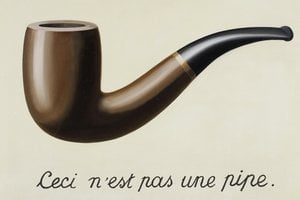
By 1926, Magritte had fully embraced the tenets of Surrealism, producing *Le Jockey Perdu (The Lost Jockey)*, widely considered his first truly surrealist work. However, his brand of Surrealism was distinct. He wasn’t interested in exploring the subconscious through free association or dream imagery in the manner of some of his contemporaries. Instead, Magritte sought to challenge viewers' perceptions of reality by presenting ordinary objects in unexpected contexts, forcing them to question their assumptions about the world around them. Iconic works like *The Treachery of Images (This is not a pipe)* (1929) brilliantly deconstructs the relationship between image and object, reminding us that a representation is never the thing itself. *Les Amants (The Lovers)* (1927-1928), with its shrouded figures, echoes the trauma of his mother’s death while simultaneously exploring themes of concealment and intimacy. *Time Transfixed* (1938) presents a locomotive bursting through a brick wall, disrupting our sense of space and time. And *The Human Condition* (1933), a canvas within a canvas, blurs the boundaries between representation and reality, prompting us to consider how we perceive and interpret the world.

Later Life, Recognition, and Enduring Legacy

Despite initial struggles for recognition, Magritte’s work gradually gained prominence, particularly in the United States with exhibitions in 1936 and later retrospective shows at the Museum of Modern Art (1965) and the Metropolitan Museum of Art (1992). He continued to refine his signature style, exploring themes of repetition, illusion, and the power of language in paintings that are both intellectually stimulating and visually arresting. Magritte died on August 15, 1967, leaving behind a body of work that continues to captivate and challenge audiences worldwide. His influence extends far beyond the realm of painting, impacting pop art, minimalist art, conceptual art, and even advertising and film. Today, his paintings are held in major museum collections around the globe, including the Musées royaux des beaux-arts de Belgique in Brussels, which houses the Magritte Museum – dedicated entirely to his work and boasting the world’s largest collection of his creations.

  • Museum Collections: Musées royaux des beaux-arts de Belgique, Brussels; Magritte Museum.

Magritte's enduring legacy lies in his ability to make us see the familiar anew, to question our assumptions about reality, and to appreciate the power of art to provoke thought and inspire wonder. He wasn’t simply painting images; he was crafting visual paradoxes that continue to resonate with viewers decades after their creation, solidifying his position as a true master of Surrealism and a pivotal figure in 20th-century art.

René Magritte

René Magritte

1898 - 1967 , Belçika

Kısa Bilgiler

  • Artistic Movement Or Style: Gerçeküstücülük
  • Artists Who Influenced This Artist: ['Giorgio de Chirico']
  • Date Of Birth: Kasım 21, 1898
  • Date Of Death: Ağustos 15, 1967
  • Full Name: René François Ghislain Magritte
  • Nationality: Belçikalı
  • Notable Artworks:
    • Les Amants
    • Treachery of Images
    • Time Transfixed
  • Place Of Birth: Lessines, Belçika
Temalara, stillere ve özelliklere göre düzenlenmiş sanat eserlerini keşfedin.