Tuval Üzerine Yağlı Boya
Duvar Sanatı
Surrealism
1952
Modern
80.0 x 100.0 cm
San Francisco Modern Sanat MüzesiSanatçılarımız tarafından sipariş üzerine hazırlanan; istediğiniz boyut ve çerçevede, tuval üzerine el boyaması yağlı boya. ( Baskı Moduna Geç
Dijital Görsele Geç)
Eserin orijinal oranlarıyla uyumlu, önceden belirlenmiş boyutlarımız arasından seçim yapın.
Belirli bir çerçeveye veya alana uyması için kendi boyutlarınızı girebilirsiniz. Seçtiğiniz boyut orijinal görüntünün oranlarıyla eşleşmiyorsa, sanat eserini kırparak veya ek el boyaması öğelerle resmi uzatarak ayarlayacağız. Üretim başlamadan önce onayınız için dijital bir taslak gönderilecektir.
Lütfen ekrandaki önizlemenin gerçek kırpmayı veya uzatmayı yansıtmadığını unutmayın. Nihai kompozisyonu yalnızca hazırlanan taslak doğru şekilde gösterecektir.
Özel boyutlar mevcut olsa da, orijinal oranları korumak adına önceden tanımlanmış listeden bir boyut seçmenizi öneririz.
Dünya Çapında Teslimat (); standart 5 hafta yerine 3/4 haftada. (10 Eylül). Kaliteden ödün verilmez.
"Personal Values" Türkçe Çevresi: Kişisel Değerler
Reproduksiyon Boyutu
René Magritte'nin 1952 tarihli "Kişisel Değerler" adlı eseri, izleyicileri geleneksel perspektif ve mantığa meydan okuyan sürreal, rüya benzeri bir iç mekana davet ediyor. Bu büyüleyici sanat eseri, Magritte'nin Sürrealizm üzerindeki ustalığının bir kanıtı niteliğindedir; gündelik nesneleri alışılmadık bir ortamda harmanlayarak düşündürücü bir kompozisyon yaratır.
Eser, birkaç belirgin öğeye sahip bir iç mekanı tasvir eder: solda bir yatak, arkasındaki duvara yaslanmış büyük bir tarak, ön planda bir bardak (veya vazo), odanın bir kısmını yansıtan bir ayna ve aynanın üzerinde duran bir fırça. Tavan, pamuksu bulutlarla dolu bir gökyüzüyle boyanmıştır; bu da gerçekliğe meydan okuyan açık hava etkisi yaratır.
Magritte'nin gökyüzü için yumuşak mavi ve beyazlar, ahşap mobilyalar için sıcak kahverengi ve kırmızılar ile nesneler için toprak tonlarını içeren, mat ama canlı renk kullanımı, esere derinlik ve görsel ilgi katar. Yeşilimsi mavi cam, aksi takdirca sıcak olan sahneye serin bir kontrast sağlar.
Muhtemelen tuval üzerine yağlı boya veya akrilik ile icra edilen bu titiz çalışma, Magritte'nin detaylara ve gerçekçiliğe verdiği önemi gözler önüne serer. Kompozisyon, karmaşık sahne boyunca izleyicinin gözünü yönlendiren yapısal yatay ve dikey çizgiler içerir. Dikdörtgenler (yatak, ayna çerçevesi) gibi geometrik şekiller ile bulutlar ve fırça kılları gibi organik formlar, görsel bir ilgi uyandırmak için yan yana getirilmiştir.
Işık yumuşak ve yaygındır; sert gölgeler oluşturmadan nesneleri eşit şekilde aydınlatır. Perspektif sürrealisttir; geleneksel mekânsal mantığa uymayan unsurlar barındırır. Örneğin, tarak diğer nesnelere kıyasla orantısız derecede büyüktür ve tavandaki gökykyüzü kafa karıştırıcı bir etki yaratır. Nesnelerin üst üste binmesi ve aynadaki yansıma derinlik katarken, alışılmadık perspektif nedeniyle genel sahne düzleşmiş hissi verir.
Konu, alışılmadık bir bağlamda yerleştirilmiş gündelik nesneleri içerir. Büyük tarak ve fırça kişisel bakımı veya kibri simgeliyor olabilir; cam ise kırılganlığı veya şeffaflığı temsil edebilir. Sürreal ortam, izleyicileri sahnenin anlamını yorumlamaya davet eden rüya benzeri bir nitelik uyandırır.
"Kişisel Değerler", izleyicinin gerçeklik ve mekan algısına meydan okuyarak hem merak uyandıran hem de düşündüren duygusal bir etki yaratır. Bu eser, sohbet başlatacak ve her mekana sürreal bir güzellik katacak bir parça arayan sanatseverler, koleksiyonerler ve iç mimarlar için mükemmel bir tamamlayıcıdır.
1898 doğumlu Belçikalı Sürrealist sanatçı René Magritte, gerçekliğe meydan okuyan düşündürücü tablolarıyla tanınırdı. Sanat tarzı; Empresyonizm, Fütürizm ve Kübizm gibi çeşitli akımlardan etkilenerek yıllar içinde önemli ölçüde gelişti. 1926 yılında ilk sürrealist tablosunu üreterek ikonik kariyerinin başlangıcını yaptı.
"Kişisel Değerler", Magritte'nin sıradan nesneleri olağanüstü kompozisyonlara dönüştürme yeteneğinin başlıca örneğidir. Bu sanat eseri, ziyaretçilerin sürrealist şaheserlerini keşfedebileceği Menil Collection ve Musées Royaux des Beaux-Arts gibi prestijli kurumlarda bulunan geniş koleksiyonun bir parçasıdır.
Bu büyüleyici sanat eserinin yüksek kaliteli bir reprodüksiyonuna sahip olmak isteyenler için WahooArt.com, Magritte'nin orijinal parçasının özünü ve detaylarını yakalayan el boyaması reprodüksiyonlar sunmaktadır. İster bir sanatsever, ister bir koleksiyoner veya iç mimar olun, "Kişisel Değerler", sürreal güzelliği ve düşündürücü kompozisyonuyla her mekanı yüceltecek çarpıcı bir eklentidir.

René Magritte, born René François Ghislain Magritte on November 21, 1898, in Lessines, Belgium, emerged into a world that would profoundly shape his enigmatic artistic vision. His early years were marked by an unsettling event – the suicide of his mother when he was just thirteen. The image of her body being recovered from the River Sambre, with her dress obscuring her face, became a haunting motif that would subtly permeate his later work, manifesting in veiled figures and a persistent exploration of hidden realities. This early trauma instilled within him a fascination with mystery, loss, and the unsettling power of what remains unseen. While details of his childhood remain somewhat elusive, it’s clear this formative experience laid the groundwork for his lifelong questioning of perception and representation. He began drawing lessons at age ten, revealing an innate inclination towards visual expression, but initially explored Impressionism before embarking on a path that would lead him to become one of the most significant figures in Surrealist art.
Magritte’s artistic journey was not immediate or straightforward. He studied at the Académie Royale des Beaux-Arts in Brussels, yet found its traditional methods stifling. His early work experimented with Futurism and Cubism, absorbing elements of these avant-garde movements but ultimately rejecting their purely formal concerns. It wasn't until encountering Giorgio de Chirico’s painting *The Song of Love* in 1922 that Magritte discovered a resonance that would irrevocably alter his artistic course. De Chirico’s dreamlike landscapes and unsettling juxtapositions unlocked within Magritte a new way of seeing – a world where the familiar could be rendered strange, and the ordinary imbued with profound mystery. This encounter sparked his commitment to Surrealism, though he often maintained a unique distance from its more overtly psychological or automatic approaches. He preferred a meticulous, almost clinical precision in his painting, using realistic techniques to depict illogical scenarios.
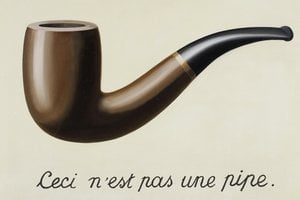
By 1926, Magritte had fully embraced the tenets of Surrealism, producing *Le Jockey Perdu (The Lost Jockey)*, widely considered his first truly surrealist work. However, his brand of Surrealism was distinct. He wasn’t interested in exploring the subconscious through free association or dream imagery in the manner of some of his contemporaries. Instead, Magritte sought to challenge viewers' perceptions of reality by presenting ordinary objects in unexpected contexts, forcing them to question their assumptions about the world around them. Iconic works like *The Treachery of Images (This is not a pipe)* (1929) brilliantly deconstructs the relationship between image and object, reminding us that a representation is never the thing itself. *Les Amants (The Lovers)* (1927-1928), with its shrouded figures, echoes the trauma of his mother’s death while simultaneously exploring themes of concealment and intimacy. *Time Transfixed* (1938) presents a locomotive bursting through a brick wall, disrupting our sense of space and time. And *The Human Condition* (1933), a canvas within a canvas, blurs the boundaries between representation and reality, prompting us to consider how we perceive and interpret the world.
Despite initial struggles for recognition, Magritte’s work gradually gained prominence, particularly in the United States with exhibitions in 1936 and later retrospective shows at the Museum of Modern Art (1965) and the Metropolitan Museum of Art (1992). He continued to refine his signature style, exploring themes of repetition, illusion, and the power of language in paintings that are both intellectually stimulating and visually arresting. Magritte died on August 15, 1967, leaving behind a body of work that continues to captivate and challenge audiences worldwide. His influence extends far beyond the realm of painting, impacting pop art, minimalist art, conceptual art, and even advertising and film. Today, his paintings are held in major museum collections around the globe, including the Musées royaux des beaux-arts de Belgique in Brussels, which houses the Magritte Museum – dedicated entirely to his work and boasting the world’s largest collection of his creations.
Magritte's enduring legacy lies in his ability to make us see the familiar anew, to question our assumptions about reality, and to appreciate the power of art to provoke thought and inspire wonder. He wasn’t simply painting images; he was crafting visual paradoxes that continue to resonate with viewers decades after their creation, solidifying his position as a true master of Surrealism and a pivotal figure in 20th-century art.
1898 - 1967 , Belçika