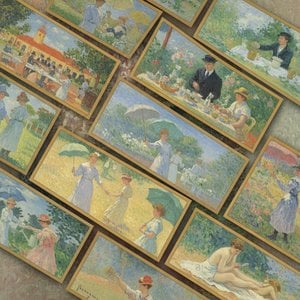
Pierre-Auguste Renoir: Işığın ve Neşenin Resmedicisi
Pierre-Auguste Renoir, 1841 yılında Fransa’nın Limoges kentinde doğmuş, empresyonist akımın en parlak temsilcilerinden biri olarak sanat tarihine adını altın harflerle yazdırmıştır. Sanat yolculuğu, mütevazı bir porselen ressamı olarak başlayan Renoir'ın hikayesi, azmi ve sanatsal vizyonu sayesinde zirveye ulaşmasının çarpıcı bir örneğidir. Ailesiyle birlikte ekonomik fırsatlar arayışı içinde Paris’e taşınması, onun sanatsal gelişimini derinden etkilemiştir. Hareketli şehir hayatı, renkli sokakları ve çeşitli karakterleri, eserlerinin büyük bir ilham kaynağı olmuştur. Porselen boyama ile geçimini sağlama zorunluluğu onu erken yaşta mesleğe bağlamış olsa da, Louvre Müzesi’ne sık ziyaretler sırasında eski ustaları inceleyerek güzelliğe dair takdirini geliştirmiş ve içindeki tutkuyu ateşlemiştir. Charles Gleyre atölyesindeki eğitimi sırasında Claude Monet, Alfred Sisley ve Frédéric Bazille gibi geleceğin empresyonistleriyle kurduğu dostluklar, sanat dünyasında bir dönüm noktası olmuş ve Empresyonizm akımının temellerini atmıştır.
Realizmden Işıl Işıl Empresyonlara: Sanatsal Evrim
Renoir’ın sanatsal gelişimi, Gustave Courbet ve Édouard Manet gibi realizm ustalarından etkilenerek başlamış, çağdaş yaşamı dürüstçe ve doğrudan betimlemeye olan bağlılıklarını takdir etmiştir. Ancak Peter Paul Rubens ve Jean-Antoine Watteau'nun ışık dolusu paletleri ve duyusal formları onu daha çok büyülemiş, eserlerine güzelliğe dair derin bir takdir ve neşe ve eğlence sahnelerini tasvir etme yönünde bir eğilim kazandırmıştır. Bu erken etkiler, Renoir’ın kendine özgü stilini şekillendirirken canlı renkler, gevşek fırça darbeleri ve ışığın geçici etkilerini yakalama konusundaki odak noktası belirlemiştir. 1874 yılında düzenlenen ilk Empresyonist sergideki katılımı bir dönüm noktası olmuş, geleneksel sanat çevrelerinden eleştiriler almasına rağmen yeni bir sanatsal vizyonun sinyalini vermiştir – gözün gördüğü şeyleri değil, belirli bir anda yaşamanın nasıl *hissettirdiğini* yakalamayı amaçlayan bir vizyon.
Moulin de la Galette'de Dans (1876) gibi eserler, zikzak güneş ışığı ve neşeli figürlerle Paris gece hayatının canlı atmosferine izleyiciyi dahil ederek bu yaklaşımı örneklendirir.
Yaşamın Geçici Anlarını Yakalamak: Başlıca Eserler ve Temalar
Renoir’ın yapıtları, yaşamın basit zevklerinin bir kutlamasıdır – samimi toplantılar, güneşli manzaralar ve insan formunun ışıltılı güzelliği.
Botcularda Öğle Yemeği (1880-81), belki de en ikonik eserlerinden biri olarak karşımıza çıkar; burada Seine Nehri’nde keyifli bir öğleden sonra geçiren samimi bir grup tasvir edilmiştir. Tablo, ışığı ve hareketi yakalama konusundaki ustalığını sergileyerek figürleri sıcak güneş ışığında ve suya yansıyan ışıltılarla banyo ettirir.
Banyodan Sonra (1885-87), Renoir’ın kadın nakdini tasvir etme konusundaki olağanüstü becerisini vurgulayarak hassas cilt tonlarını ve zarif pozları ön plana çıkarır. Eserleri sadece gerçekliğin temsilleri değil, aynı zamanda izleyicilerde derin yankı uyandıran sıcaklık, samimiyet ve neşeyle dolu bir duyguyla yüklüdür. Renoir, büyük tarihi anlatılara veya dramatik alegorilere ilgi duymamış; bunun yerine sıradan anları sanata yükselterek gündelik yaşamın özünde yatan güzelliği yakalamaya odaklanmıştır.
Bougival'da Dans gibi bir diğer kutlanan eser, geçici izlenimleri ve atmosferik etkileri yakalama yeteneğini göstererek hareket ve doğaçlama hissi yaratır.
Forma ve Yapıya Doğru Bir Dönüşüm: Son Yıllar ve Miras
1890'larda Renoir’ın stili önemli bir dönüşüme uğramıştır. Empresyonist köklerinden tamamen vazgeçmemiş olsa da, İtalya seyahatlerinden ve form ve yapı konusundaki yeniden canlanan ilgisinden etkilenerek daha heykelsi ve klasik bir yaklaşıma doğru yönelmiştir. Bu değişim kısmen fiziksel sınırlamalarından kaynaklanmıştır – artrit yavaş yavaş hareket kabiliyetini kısıtlamış, tekniğini uyarlamasını gerektirmiştir. Bu zorluklara rağmen Renoir, sarsılmaz bir özveriyle resim yapmaya devam etmiş ve daha dolgun figürler ve daha sıcak bir paletle karakterize edilen eserler üretmiştir. Daha sonraki tabloları genellikle daha düşünceli bir ruh hali yansıtırken, sanat tarihine damgasını vuran aynı temel güzellik kutlamasını korur. Sanatsal başarılarının ötesinde Renoir’ın mirası ailesi aracılığıyla devam eder; oğlu Jean Renoir ünlü bir film yönetmeni olmuş ve yaratıcı bir ruhu nesiller arasında taşımıştır. Pierre-Auguste Renoir, 1919 yılında hayata veda etmiş, dünya çapında izleyicileri büyülemeye ve ilham vermeye devam eden kalıcı bir eser bırakmıştır. Sanat tarihinde en sevilen figürlerden biri olarak kabul edilir; sanatı, yaşamın neşesini ve insan deneyiminin güzelliğini eşsiz bir hassasiyet ve zarafetle yakalama yeteneğiyle kutlanır.
Süregelen Etki
- Renoir’ın sonraki nesillerdeki sanatçılar üzerindeki etkisi yadsınamaz. Işık, renk ve geçici anları yakalamaya verdiği önem birçok modern sanatsal akıma zemin hazırlamıştır.
- Güzelliği ve duyusallığı kutlaması günümüzde de izleyicilerle yankı uyandırmaya devam ederek yapıtlarını evrensel olarak çekici kılmaktadır.
- Sanat tarihinde Empresyonizmi önemli bir güç olarak kurmada çok önemli bir rol oynamış, geleneksel normlara meydan okumuş ve sanatsal ifade için yeni olanaklar açmıştır.
- Yapıtlarının sayısız posterde, takvimde ve diğer ürünlerde yeniden üretilmesi, sanatının zamansız niteliğinin kanıtıdır.



 Önizleme yap
 El yapımı tablo satın al
 Paylaş
 Paylaş
 Detayları Gör
 Rehber

 İndir
İndir
 Benzerlerini gör
 X-Işını
 Slayt Gösterisi
 İstatistikler

 Tümünü Gör






































 Cam seçeneği yalnızca 110 cm altındaki boyutlar için mevcuttur.