Satın Alın
x
Önizleme yapÖnizleme yap AR ile önizleAR ile önizle Baskı satın al Baskı satın alGörsel satın al Görsel satın al PaylaşPaylaş
Detayları GörDetayları Gör Favorilere ekle Favorilere ekle İndirİndir Benzerlerini görBenzerlerini gör X-IşınıX-Işını Slayt GösterisiSlayt Gösterisi

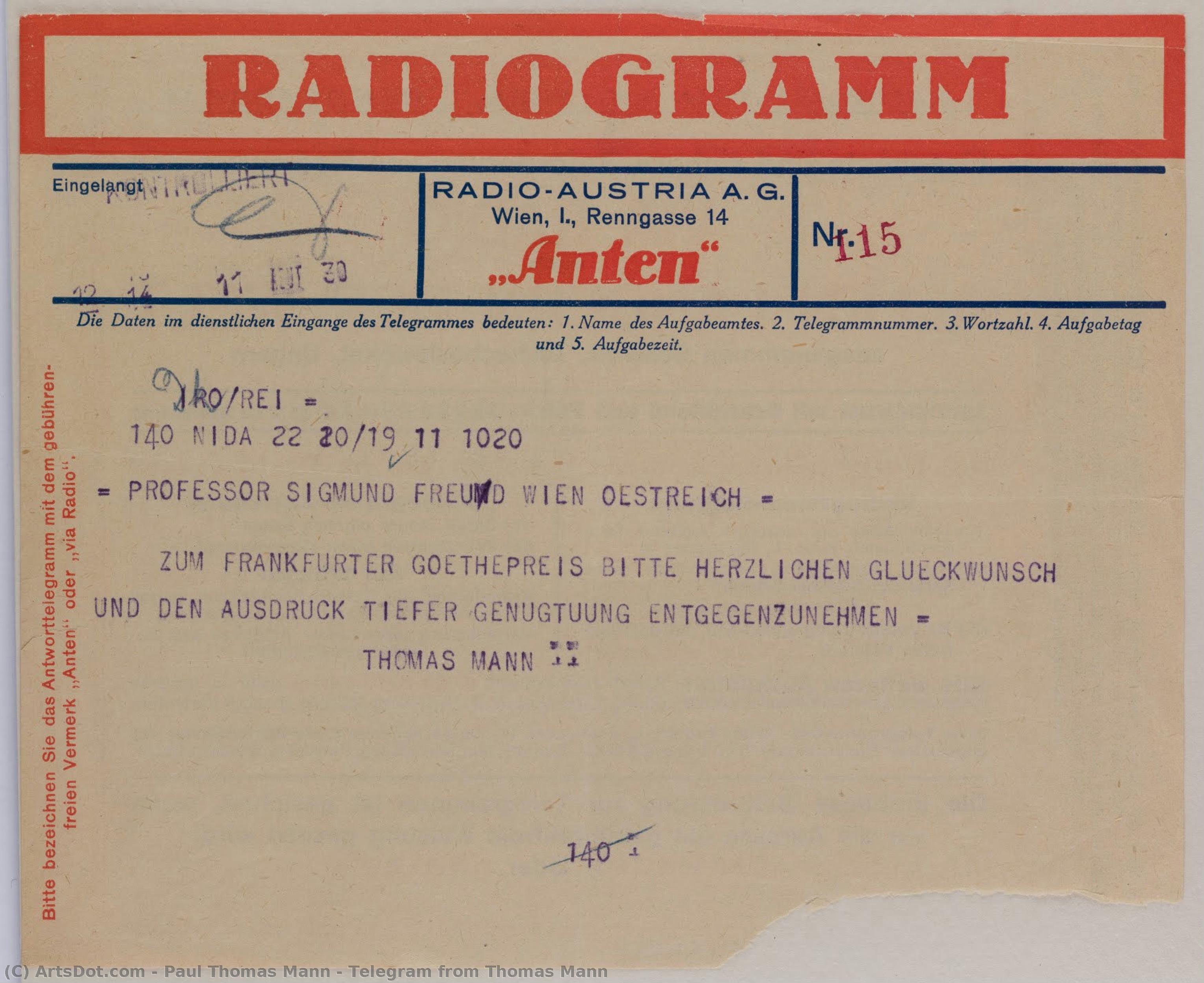
Telegram from Thomas Mann

Explore the life & works of Thomas Mann (1875-1955), Nobel laureate novelist known for socio-political novels, psychological insights & critiques of fascism. Discover Buddenbrooks & more!

El Yapımı Yağlı Boya Reproduksiyon

Sanatçılarımız tarafından sipariş üzerine hazırlanan; istediğiniz boyut ve çerçevede, tuval üzerine el boyaması yağlı boya. (Baskı satın al Baskı satın alGörsel satın al Görsel satın al)

Standard
custom
CM
INCH

Eserin orijinal oranlarıyla uyumlu, önceden belirlenmiş boyutlarımız arasından seçim yapın.

genişlik
yükseklik

Belirli bir çerçeveye veya alana uyması için kendi boyutlarınızı girebilirsiniz. Seçtiğiniz boyut orijinal görüntünün oranlarıyla eşleşmiyorsa, sanat eserini kırparak veya ek el boyaması öğelerle resmi uzatarak ayarlayacağız. Üretim başlamadan önce onayınız için dijital bir taslak gönderilecektir.
Lütfen ekrandaki önizlemenin gerçek kırpmayı veya uzatmayı yansıtmadığını unutmayın. Nihai kompozisyonu yalnızca hazırlanan taslak doğru şekilde gösterecektir.
Özel boyutlar mevcut olsa da, orijinal oranları korumak adına önceden tanımlanmış listeden bir boyut seçmenizi öneririz.

Değiştirilebilecek örneklere dair: Yüzün müşteri fotoğrafıyla değiştirilmesi; Evcil hayvan eklenmesi (örneğin kedinin köpek ile değiştirilmesi); Arka plana gizli bir mesaj dahil edilmesi; Arka plan manzarasının veya öğelerinin değiştirilmesi.
Siparişten sonra, WahooArt.com ekibi talimatlar için müşteriye e-posta gönderecek ve bir taslak önizleme sunacaktır

Dünya Çapında Teslimat (); standart 5 hafta yerine 3/4 haftada. (12 Ağustos). Kaliteden ödün verilmez.

why_choose_icon
Dünya Çapında Ücretsiz Ekspres Kargo
why_choose_icon
Yüksek Kaliteli Keten Tuval
why_choose_icon
Tam Kapsamlı Nakliye Sigortası
why_choose_icon
Gümrük Vergisi İade Garantisi
why_choose_icon
Gerçek Renk Uyumu Garantisi
why_choose_icon
60 Günlük İade Politikası (Sadece Kusurlu Ürünler İçin)
why_choose_icon
%100 Para İade Garantisi
why_choose_icon
Toplu Alım İndirimi

Toplam Fiyat

$ 272

reproduction

Telegram from Thomas Mann

Reproduksiyon Tekniği

Reproduksiyon Boyutu

-

Toplam Tutar

$ 272


Sanatçı Özgeçmişi

The Architect of the German Soul: The Life and Legacy of Thomas Mann

To traverse the literary landscape of the twentieth century is to inevitably encounter the towering, complex figure of Paul Thomas Mann. Born in the prosperous Hanseatic city of Lübeck in 1875, Mann was a product of an era defined by both aristocratic stability and the encroaching shadows of modern upheaval. Descended from a wealthy family of grain merchants, his early life was steeped in the traditions of the German bourgeoisie, a setting that would later serve as the psychological foundation for his most profound narratives. His creative spirit was further ignited by the presence of his elder brother, Heinrich Mann, whose political engagement and literary prowess provided both a familial rivalry and a shared intellectual heritage that would shape the trajectory of German letters.

Mann’s ascent to literary immortality began with the publication of Buddenbrooks in 1901. In this masterful debut, he did not merely tell a story of a family's decline; he orchestrated a poignant symphony of social decay, tracing the gradual erosion of Hanseatic values under the relentless pressure of rising capitalism. Through his meticulous prose, the dissolution of the Buddenbrook lineage became a metaphor for a broader cultural transformation. As his career progressed, Mann moved beyond the domestic sphere to explore the very essence of human existence, blending psychological realism with deep philosophical inquiry. His work became a mirror held up to the European soul, capturing the tension between the rational and the irrational, the civilized and the primal.

Philosophical Depth and the Shadows of History

The middle period of Mann’s career saw him grappling with the existential anxieties of a continent on the brink of catastrophe. In his monumental work, The Magic Mountain, he transported readers to the high-altitude sanatorium of Davos, creating a symbolic landscape where time dilates and intellectual discourse becomes a battleground for morality and faith. This novel stands as one of the most significant achievements of modernism, utilizing the setting of a tuberculosis clinic to explore the spiritual and political malaise of the Weimar Republic. His ability to weave intricate allegories allowed him to critique the creeping shadows of fascism while maintaining a profound focus on the individual's internal struggle.

As history descended into the darkness of the mid-twentieth century, Mann’s life was marked by the turbulence of exile. Forced to flee Germany due to his opposition to the Nazi regime, he navigated a path through Czechoslovakia and eventually to the United States. This period of displacement added a layer of profound melancholy and global perspective to his writing. In works such as Doctor Faustus, he explored the mythic dimensions of ambition and moral corruption, reflecting the tragic disintegration of German culture during the era of National Socialism. His later years in America, including a tenure as a lecturer at Princeton University, saw him acting as a vital bridge between European intellectual traditions and the New World.

A Nobel Legacy and Enduring Significance

The recognition of Mann’s immense contribution to world literature was solidified in 1929 when he was awarded the Nobel Prize in Literature. This honor celebrated his capacity for profound psychological insight and his mastery of the symbolic novel. Beyond his individual accolades, Mann’s historical significance lies in his role as a moral compass during times of unprecedented crisis. He remained a steadfast voice for humanism, using his pen to dissect the complexities of power, art, and the human condition.

The enduring power of Thomas Mann's work resides in its ability to remain relevant across generations. His explorations of the following themes continue to resonate with readers seeking to understand the intricacies of identity and society:

  • The tension between tradition and modernity: How established social structures succumb to the forces of change.
  • Psychological complexity: The deep, often contradictory layers of the human psyche and the artist's role in interpreting them.
  • Moral and political responsibility: The struggle of the individual to maintain integrity amidst systemic corruption and ideological extremism.
  • The intersection of myth and reality: Using legendary archetypes to illuminate contemporary historical truths.

Though he passed away in 1955 in Zurich, the literary monument built by Paul Thomas Mann remains unshaken. He left behind a body of work that serves as both a historical record of a vanished era and an eternal meditation on what it means to be human in an ever-changing world.

paul thomas mann

paul thomas mann

1875 - 1955 , Germany

Kısa Bilgiler

  • Artistic Movement Or Style: Psychological realism
  • Artists Or Movements Influenced By This Artist: ['Existentialism']
  • Artists Who Influenced This Artist:
    • Franz Kafka
    • Robert Musil
  • Date Of Birth: December 2, 1875
  • Date Of Death: September 24, 1955
  • Full Name: Thomas Mann
  • Nationality: German
  • Notable Artworks:
    • Buddenbrooks
    • Death in Venice
  • Place Of Birth: Lübeck, Germany