Paul Cézanne’s “Promenade”: A Moment of Leisure, a Bridge to Modernity
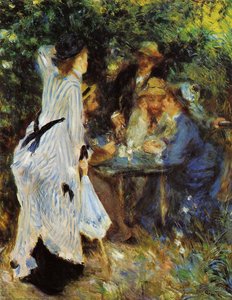
Paul Cézanne's "Promenade," painted in 1866, isn’t merely a depiction of three figures enjoying an outdoor gathering; it’s a pivotal work that encapsulates the burgeoning spirit of Romanticism while simultaneously foreshadowing the radical shifts occurring within art itself. This oil on canvas offers a glimpse into a tranquil scene—a grassy area punctuated by trees, hinting at a park or open countryside—but beneath its seemingly simple surface lies a complex exploration of form, color, and the very nature of perception. The painting’s enduring appeal stems from Cézanne's masterful ability to capture not just what he *saw*, but how he *felt* about what he saw, laying the groundwork for movements like Post-Impressionism and paving the way for 20th-century abstraction.
Cézanne’s artistic journey was one of profound transformation. Initially influenced by Romantic landscape painting—particularly the atmospheric effects of artists like Jean-François Millet—he gradually moved away from the fleeting impressions of Impressionism, seeking instead to establish a more enduring and structured representation of reality. “Promenade” exemplifies this shift. While retaining some of the Impressionist’s focus on light and color, Cézanne employs a deliberate solidity and geometric precision that anticipates his later explorations of form. The figures themselves are rendered with a sense of detached observation, almost as if they exist within a carefully constructed space rather than being fully integrated into the natural setting. This is evident in their slightly flattened forms and the way he uses overlapping planes of color to define their presence.
- Romantic Roots: The painting’s overall mood—a sense of peaceful leisure, an appreciation for nature—clearly echoes Romantic ideals. Cézanne captures a moment of respite from the demands of daily life, inviting the viewer to share in this feeling of tranquility.
- Color and Composition: Cézanne's use of color is particularly noteworthy. He employs a restrained palette of muted greens, blues, and browns, creating a harmonious yet subtly complex visual experience. The composition itself—the diagonal lines created by the figures and the trees—draws the eye through the scene, establishing a sense of depth and movement.
- Birds as Symbols: Scattered throughout the painting are several birds, adding a layer of life and dynamism to the otherwise static scene. Birds have long been associated with freedom, spirituality, and connection to nature in art – here they likely represent an element of joy and spontaneity within this carefully observed moment.
The figures themselves—a man in a top hat, another sporting a tie, and a woman seated on a bench—suggest a formal gathering or social event. Their attire hints at a certain level of sophistication, yet their relaxed postures and the overall atmosphere of the scene convey a sense of informality and ease. The inclusion of the bench adds to this feeling of invitation, as if the viewer is also invited to partake in this leisurely moment. It’s important to note that Cézanne wasn't simply recording a snapshot; he was actively shaping the scene through his artistic choices, imbuing it with meaning and emotion.
“Promenade” stands as more than just a charming depiction of an outdoor gathering. It represents a crucial turning point in art history—a transition from the fleeting impressions of Impressionism to the structured explorations of form that would define Post-Impressionism and ultimately influence the development of modern art. Cézanne’s innovative approach to perspective, color, and composition laid the foundation for artists like Picasso and Braque, who would later dismantle traditional notions of representation altogether. WahooArt offers meticulously crafted oil painting reproductions of “Promenade,” allowing you to experience this seminal work in stunning detail and bring its timeless beauty into your own space. For further insight, consider visiting the Ruskin Museum in the United Kingdom or exploring the collections at the Musée Faure in France – resources dedicated to celebrating Cézanne’s legacy and artistic innovations.