Önizle AR ile önizle El Yapımı Tablo Satın Al Dijital Görsel Satışına Geç Gönder
Detaylar Rehber Favorilere ekle Dosyayı İndir Benzerleri X-Işını Slayt Gösterisi İstatistikler

The violin

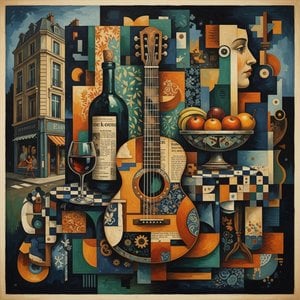
Dive into Picasso's 'The Violin'! This Synthetic Cubist masterpiece fragments the instrument with innovative collage & multiple perspectives, showcasing his revolutionary approach to modern art.

Pablo Picasso (1881-1973), Kübizm'in kurucularından devrimci bir İspanyol ressam ve heykeltıraştı. Guernica ve Les Demoiselles d'Avignon gibi ikonik eserleriyle tanınan mirası, ilham vermeye devam ediyor.

Bu sayfada sergilenen eser telif hakkı yasasıyla korunmaktadır; bu da yasal olarak eserin birebir kopyasını oluşturamayacağımız veya satamayacağımız anlamına gelir. Bu koruma, aşağıdakiler gibi uluslararası anlaşmalar kapsamında uygulanmaktadır: Bern Sözleşmesi ve aşağıdakiler de dahil olmak üzere ulusal yasalarca belirlenen ABD Telif Hakkı Kanunu - 17. Başlık.

Bu yöntem, koruma altındaki sanat eserinin kopyalanmasını veya çoğaltılmasını içermediği için telif hakkı düzenlemelerine tam uyum sağlar. Bunun yerine, yaratıcı bir yeniden yorumlamadır; orijinalinden etkilenen ancak onunla aynı olmayan yeni bir tablodur.

Giclée / Sanat Baskısı

Hızlı üretim ve esnek bitiş seçenekleriyle müze kalitesinde giclée veya kanvas baskı. ( El Yapımı Tablo Satın Al Dijital Görsel Satışına Geç)

Corner sample of the P118B picture frame: kalıplanmış polistiren, 5 cm wide and 3 cm thick
P118B ₺10
Corner sample of the P118H picture frame: kalıplanmış polistiren, 5 cm wide and 3 cm thick
P118H ₺10
Corner sample of the P118W picture frame: kalıplanmış polistiren, 5 cm wide and 3 cm thick
P118W ₺10
Corner sample of the P438Z picture frame: kalıplanmış polistiren, 5.5 cm wide and 3.5 cm thick
P438Z ₺10
Corner sample of the P508JH picture frame: kalıplanmış polistiren, 7 cm wide and 3.5 cm thick
P508JH ₺12
Corner sample of the P508YH picture frame: kalıplanmış polistiren, 7 cm wide and 3.5 cm thick
P508YH ₺12
Corner sample of the P805H picture frame: kalıplanmış polistiren, 5 cm wide and 3.5 cm thick
P805H ₺10
Corner sample of the P805Z picture frame: kalıplanmış polistiren, 5 cm wide and 3.5 cm thick
P805Z ₺10
Corner sample of the P919BZ picture frame: kalıplanmış polistiren, 7 cm wide and 3.5 cm thick
P919BZ ₺10
Corner sample of the P919G picture frame: kalıplanmış polistiren, 7 cm wide and 3.5 cm thick
P919G ₺10
Corner sample of the P919XJ picture frame: kalıplanmış polistiren, 7 cm wide and 3.5 cm thick
P919XJ ₺10
Corner sample of the P959ZH picture frame: kalıplanmış polistiren, 5 cm wide and 3 cm thick
P959ZH ₺10
Corner sample of the P968JZ picture frame: kalıplanmış polistiren, 6 cm wide and 4 cm thick
P968JZ ₺12
Corner sample of the W106C picture frame: masif ahşap, 5 cm wide and 3 cm thick
W106C ₺8
Corner sample of the W218G picture frame: masif ahşap, 5 cm wide and 3 cm thick
W218G ₺10
Corner sample of the W218JH picture frame: masif ahşap, 5 cm wide and 3 cm thick
W218JH ₺8
Corner sample of the W218Y picture frame: masif ahşap, 5 cm wide and 3 cm thick
W218Y ₺10
Corner sample of the W307PJ picture frame: masif ahşap, 6 cm wide and 3 cm thick
W307PJ ₺10
Corner sample of the W316G picture frame: masif ahşap, 6 cm wide and 3 cm thick
W316G ₺10
Corner sample of the W316PJ picture frame: masif ahşap, 6 cm wide and 3 cm thick
W316PJ ₺8
Corner sample of the W316Y picture frame: masif ahşap, 6 cm wide and 3 cm thick
W316Y ₺10
Corner sample of the W398PJ picture frame: masif ahşap, 5 cm wide and 3 cm thick
W398PJ ₺8
Corner sample of the W4111J picture frame: masif ahşap, 6.5 cm wide and 3.5 cm thick
W4111J ₺10
Corner sample of the W500HY picture frame: masif ahşap, 7 cm wide and 5 cm thick
W500HY ₺15
Corner sample of the W500JH picture frame: masif ahşap, 7 cm wide and 5 cm thick
W500JH ₺15
Corner sample of the W692G picture frame: masif ahşap, 8 cm wide and 4 cm thick
W692G ₺12
Corner sample of the W849H picture frame: masif ahşap, 5 cm wide and 3 cm thick
W849H ₺8
Corner sample of the W940BG picture frame: masif ahşap, 7.5 cm wide and 4.5 cm thick
W940BG ₺15
Corner sample of the W953PJ picture frame: masif ahşap, 6 cm wide and 3.5 cm thick
W953PJ ₺8

Standart Boyutlar
özel boyutlu
CM
INCH

Eserin orijinal oranlarıyla uyumlu, önceden belirlenmiş boyutlarımız arasından seçim yapın.

genişlik
yükseklik

Çerçevenize veya duvarınıza uygun olması için ihtiyacınız olan genişlik ve yüksekliği yazın. Bir baskı yalnızca kesilebilir, görselden daha büyük hale getirilemez; bu nedenle farklı bir formdaki boyut seçimi, görselin bir kısmının kaybına neden olur. Herhangi bir baskı yapmadan önce onaylamanız için size bir dijital taslak gönderiyoruz. Bu sayfada gösterilen resim gerçek kesimi göstermez — bunu yalnızca taslak gösterir.

Dünya Çapında Teslimat (); standart 4/5 hafta yerine 2 haftada. (27 Ekim)

Dünya Çapında Ücretsiz Ekspres Kargo
Yüksek Kaliteli Keten Tuval
Tam Nakliye Sigortası
Gümrük Vergisi İadesi Garantisi
Gerçek Renk Uyumu Garantisi
100 Günlük İade Koşulları (Sadece Üretim Hatalı Ürünler İçin)
%100 Para İade Garantisi
Toplu Alım Avantajı

Toplam Fiyat

₺ 3332

The violin

Giclée / Sanat Baskısı

Baskı Boyutu

-

Toplam Fiyat

₺ 3332

Kısa Bilgiler

  • Notable elements: Fragmented forms
  • Year: 1912
  • Dimensions: 62 x 46 cm
  • Location: Georges Pompidou
  • Artist: Pablo Picasso
  • Movement: Synthetic Cubism

Sanat Bilgisi Testi

Her soru için yalnızca bir doğru cevap bulunmaktadır.

Soru 1:
What artistic movement is Pablo Picasso’s ‘The Violin’ primarily associated with?
Soru 2:
Which of the following best describes the technique used in ‘The Violin’?
Soru 3:
The presence of books in the painting suggests what element?
Soru 4:
What is the primary purpose of the multiple perspectives shown in ‘The Violin’?
Soru 5:
Based on Picasso’s known work, what is a common theme explored in his still life paintings?

A Fragmented Melody: Picasso’s ‘The Violin’

Pablo Picasso's “The Violin,” painted in 1912 during his pivotal period of Synthetic Cubism, isn’t merely a depiction of an instrument; it’s a radical exploration of perception and the very nature of representation. This work, often overlooked amidst the grandeur of his later masterpieces like "Guernica," offers a surprisingly intimate glimpse into Picasso's evolving artistic language – a language driven by deconstruction and a profound fascination with the interplay between form and surface. The painting immediately confronts the viewer with an unsettling yet captivating scene: a violin dominates the composition, but it’s far from a straightforward portrayal. Instead, it’s fragmented, dissected, and reassembled in a manner that challenges our conventional understanding of how we see and interpret objects. The violin itself is not rendered as a unified whole; rather, it's presented as a collection of interlocking planes, sharp angles, and overlapping geometric shapes – a visual embodiment of the Cubist principle of showing multiple viewpoints simultaneously.

Synthetic Cubism: Collage and the Rejection of Illusion

“The Violin” is a quintessential example of Synthetic Cubism, a phase that moved beyond the analytical investigations of Picasso and Braque’s earlier work. Analytical Cubism focused on breaking down objects into their constituent forms, often using monochromatic palettes to emphasize this process. Synthetic Cubism, however, introduced new elements – collage, as seen here with the inclusion of newspaper fragments and other printed materials – to create a more layered and textured surface. These additions weren’t simply decorative; they actively disrupted the illusion of depth and space, forcing the viewer to engage with the painting on a purely visual level. The use of newsprint, in particular, carries a subtle commentary on the modern world—a world increasingly saturated with information and fragmented by rapid communication. Picasso deliberately rejects traditional perspective, opting instead for a dynamic arrangement where elements seem to float and overlap, creating a sense of instability and movement.

Symbolism and Emotional Resonance

Beyond its purely formal innovations, “The Violin” is rich in symbolic potential. The violin itself has long been associated with passion, beauty, and the power of music – emotions that Picasso seems to be grappling with here. The fragmented nature of the instrument could represent a broken or distorted sense of self, mirroring perhaps the artist’s own turbulent personal life during this period. The presence of the books scattered around the scene adds another layer of complexity. They suggest intellectual pursuits, contemplation, and perhaps even a yearning for order amidst the chaos of the composition. The figures in the background, though partially obscured, contribute to the overall sense of unease and ambiguity, hinting at human interaction within this fragmented world. The muted color palette – primarily browns, ochres, and grays – reinforces this mood of melancholy and introspection.

Technique and Materials: A Study in Texture

Picasso’s technique in “The Violin” is remarkably tactile. He employs a combination of charcoal, graphite, and collage elements to create a surface that is both visually arresting and physically engaging. The sharp lines of the charcoal and graphite contrast sharply with the softer textures of the paper fragments, generating a dynamic interplay between smoothness and roughness. Notice how he meticulously renders the edges of each element, emphasizing their geometric forms and creating a sense of depth through subtle variations in shading. The use of collage isn’t merely an afterthought; it's integral to the painting’s overall design, adding visual interest and disrupting the illusion of a single, unified surface. The layering of materials—the board itself, the charcoal, the paper—contributes to the painting’s complex texture and invites close examination.

A Legacy of Innovation

“The Violin” stands as a pivotal work in Picasso's artistic development and a cornerstone of 20th-century art. It exemplifies Synthetic Cubism’s radical departure from traditional representation, paving the way for subsequent movements such as Futurism and Constructivism. Reproductions of this captivating artwork offer a unique opportunity to experience Picasso’s revolutionary vision firsthand, bringing his fragmented world into your own space. Whether displayed in a modern gallery or a carefully curated interior, “The Violin” continues to challenge our perceptions and inspire contemplation about the nature of art and reality.

Soru ve Cevaplar

Pablo Picasso imzalı "The violin" eserinin renk yoğunluğu nedir?

"The violin" eserinin renk yoğunluğu Balanced düzeyindedir. Yoğunluk, renklerin ne kadar güçlü göründüğünü ifade eder.

Pablo Picasso imzalı "The violin" hangi duyguyu yansıtıyor?

"The violin", Melancholic bir duyguyla ilişkilendirilir. Duygusal ton, eserin uyandırdığı izlenimi tanımlar.

Pablo Picasso imzalı "The violin" eserindeki kontrast ne kadar güçlü?

Pablo Picasso imzalı "The violin" eserinin kontrast seviyesi Gentle'dır.


Sanatçı Biyografisi

Pablo Picasso'ın Kalıcı Mirası

Sanatsal devrimle eş anlamlı hale gelen bir isim olan Pablo Ruiz y Picasso, 25 Ekim 1881 tarihinde İspanya'nın Malaga kentinde dünyaya geldi. Varlığı sanki en başından beri yaratıcı bir ifadeye adanmış gibiydi; efsaneye göre söylediği ilk kelimeler, "kalem" demeye çalışan “piz, piz” sesleriydi. Bu erken dönem eğilimi, genç Pablo'ya temel eğitim sağlayan ressam ve sanat öğretmeni babası José Ruiz y Blasco tarafından beslendi. Ancak öğrenci, kısa sürede eğitmenini geride bırakarak içindeki muazzam yeteneğin habercisi olan doğal bir betimleme becerisi sergiledi. Ailenin daha sonra A Coruña ve ardından Barselona'ya yaptığı taşınmalar, Picasso'nun kız kardeşinin kaybı gibi kişisel trajedilerle gölgelendi; bu deneyimler, sanatçının sonraki eserlerine melankoli ve ölümlülük temalarını ince bir şekilde işleyecekti. Barselona Güzel Sanatlar Akademisi'ndeki resmi eğitimleri ve Madrid'deki San Fernando Kraliyet Akademisi'ndeki kısa süreli dönemi sırasında bile Picasso, katı akademik sınırlamalara karşı direnerek Velázquez ve Goya gibi ustaların eserlerine kendini kaptırmayı ve sanatsal yeniliğe giden kendi yolunu çizmeyi tercih etti.

Melankolik Mavilerden Gül Tonlu Renklere

20. yüzyılın ilk yılları, Picasso'nun külliyatında iki belirgin dönemin doğuşuna tanıklık etti: Mavi Dönem (yaklaşık 1901-1904) ve Pembe Dönem (1904-1906). Kişisel zorluklardan ve toplumsal acılara dair keskin bir farkındalıktan doğan Mavi Dönem, koyu mavi ve mavi-yeşil tonlara bürünmüş tablolarla karakterize edilir. Bu eserler; dilenciler, körler ve fahişeler gibi toplumun dışladığı figürlerle doludur ve bu figürler, izolasyon ve çaresizlik temalarına hitap eden büyüleyici bir empatiyle resmedilmiştir. La Vie (190ysa) ve <The Old Guitarist> (1903-1904), bu duygusal yoğunluğu yüksek evrenin dokunaklı örnekleri olarak durmaktadır. Picasso'nun kişisel hayatındaki bir değişim ve Paris'e taşınması, Pembe Dönem'in gelişini müjdeledi. Palet önemli ölçüde ısındı; pembe, turuncu ve kırmızı tonları daha iyimser bir bakış açısını yansıttı. Bu dönem, sirk sanatçılarına —palyaçolar, akrobatlar ve gösteri grupları— duyulan bir hayranlığa sahne oldu; bu figürler hem kırılganlığı hem de direnci bünyesinde barındırıyordu. Family of Saltimbanques (1905), ileride gelecek olan üslup arayışlarının ipuçlarını vererek bu geçişi harika bir şekilde özetler.

Perspektifin Parçalanışı: Kübizm ve Ötesi

1907 yılı, Les Demoiselles d'Avignon'un yaratılmasıyla sanat tarihinde dönüm noktası olan bir anı işaret etti. İber heykel sanatı ve Afrika maskelerinden etkilenen bu çığır açıcı tablo, geleneksel perspektif ve temsil anlayışını yerle bir etti. Bu, Kübizm'in yolunu açan, yüzyıllık kuralların bilinçli bir reddi ve radikal bir kopuştu. Georges Braque ile yakın iş birliği içinde çalışan Picasso, bu devrimci akımın kurucularından biri olarak sanatçıların gerçekliği algılama ve betimleme biçimini kökten değiştirdi. Analitik Kübizm (1909-1912), nesnelerin sanki formun kendisi parçalanıyormuş gibi mat renklerle geometrik şekillere bölünmesini içeriyordu. Bu süreç, kolaj öğelerini —gazete kupürleri, kumaş parçaları— dahil ederek doku ve yeni görsel karmaşıklık katmanları ekleyen Sentetik Kübizm'e (1912-1919) evrildi. Picasso dünyayı sadece temsil etmekle yetinmedi; onu kendi şartlarıyla dekonstrükte etmeye ve yeniden inşa etmeye çalıştı.

Huzursuz Bir Deneyci: Neoklasisizm, Sürrealizm ve Savaş

1920'ler, Picasso'nun klasik formları yankılatan ancak belirgin bir modern duyarlılığı koruyan anıtsal figürler yarattığı Neoklasik stilleri kısa süreliğine keşfettiği yıllardı. Aynı zamanda, prensipleriyle hiçbir zaman tam olarak bütünleşmese de, gelişmekte olan Sürrealist akımla da etkileşim halindeydi. Bu dönemdeki çalışmaları, önceki üslup etkilerini sürreal imgeler ve çarpıtılmış perspektiflerle harmanlayarak onun amansız deneyimselliğini kanıtlıyordu. İspanya İç Savaşı'nın dehşeti Picasso'yu derinden etkiledi ve bu durum, Guernica bombalanmasına verilen içsel ve duygusal olarak yıkıcı bir yanıt olan Guernica'nın (1937) doğuşuyla doruğa ulaştı. Bu anıtsal eser, savaşın vahşetinin kalıcı bir sembolü haline gelerek Picasso'nun sadece bir sanatçı değil, aynı zamanda barış ve sosyal adalet için güçlü bir ses olarak rolünü pekiştirdi. 1950'ler ve 60'lar boyunca sınırları zorlamaya devam etti; seramik, heykel ve baskı sanatını sarsılmaz bir merak ve beceriyle keşfetti. 1961 yılında Jacqueline Roque ile evlenmesi, kişisel hayatına ve sanatsal ifadesine yeni bir boyut kazandırdı.

Ölçülemez Bir Etki

Pablo Picasso, 8 Nisan 1973'te Fransa'nın Mougins kentinde hayata gözlerini yumdu; geride büyülemeye ve ilham vermeye devam eden, 50.000 parçadan fazla olduğu tahmin edilen inanılmaz bir eser külliyatı bıraktı. Sanatsal gelişimi; Velázquez ve Goya gibi İspanyol ustalarından İber heykel sanatına, Afrika sanatından Henri Matisse'in canlı renk paletlerine kadar çok çeşitli etkilerle şekillendi. Onun 20. yüzyıl sanatı üzerindeki etkisi ölçülemez boyuttadır. Kübizm'in kurucularındandı, kolaj ve inşa edilmiş heykel sanatının öncüsüydü ve sanatın geleneklerine sürekli meydan okudu. Picasso'nun amansız deneyleri modern sanatı yeniden tanımlayarak sanatçı nesilleri üzerinde silinmez bir iz bıraktı ve tarihin en önemli ve etkili figürlerinden biri olarak konumunu sağlamlaştırdı. Mirası tuvalin ötesine uzanmakta, çağdaş kültürün sayısız yönünde yankılanmakta ve bize sanatsal vizyonun dönüştürücü gücünü hatırlatmaktadır.

Pablo Picasso

Pablo Picasso

1881 - 1973 , İspanya

Kısa Bilgiler

  • Artistic Movement Or Style: Kübizm, Sürrealizm
  • Artists Or Movements Influenced By This Artist:
    • Kübizm
    • Modern sanat
  • Artists Who Influenced This Artist:
    • Velázquez
    • Goya
    • Matisse
  • Date Of Birth: 25 Ekim 1881
  • Date Of Death: 8 Nisan 1973
  • Full Name: Pablo Diego José Ruiz Picasso
  • Nationality: İspanyol
  • Notable Artworks:
    • Les Demoiselles d'Avignon
    • Guernica
    • Eski Gitarist
    • La Vie
    • Saltimbankes Ailesi
  • Place Of Birth: Málaga, İspanya
Temalara, stillere ve özelliklere göre gruplandırılmış sanat eserlerini keşfedin.