ÜCRETSİZ SANAT DANIŞMANLIĞI

x
Tabloyu Sipariş Et Tabloyu Sipariş EtGörseli Satın Al Görseli Satın Al PaylaşPaylaş
DetaylarDetaylar Favorilere ekle Favorilere ekle İndirİndir Benzerlerini görBenzerlerini gör X-IşınıX-Işını Slayt GösterisiSlayt Gösterisi

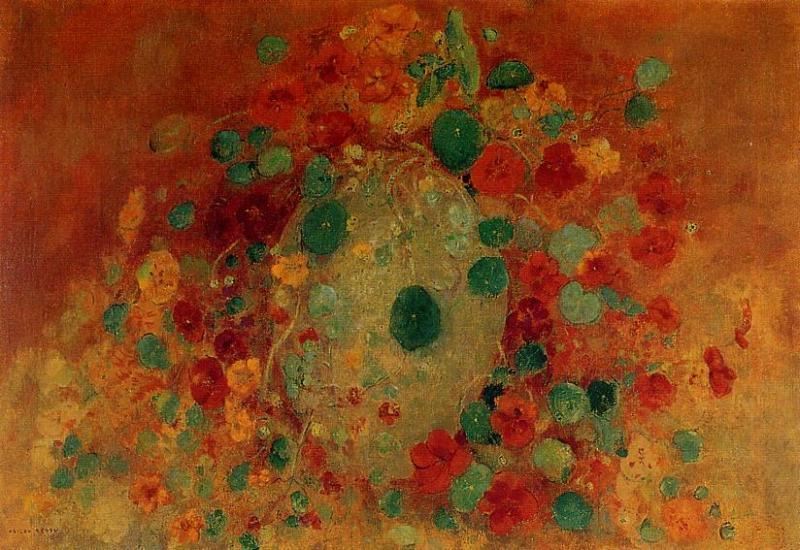
Nasturtiums

Nasturtiums by Odilon Redon (1912) is a captivating Symbolist painting featuring a woman’s face amidst flowers and a striking red hue background. Inspired by Henri Matisse and Sun Zong-Wei, explore its legacy at Yale University Art Gallery.

Odilon Redon (1840-1916), Fransız Ünlü Sembolist Ressam ve Taşbaskı Ustası; karanlık ve fantastik eserleriyle Surrealizm'in öncüsü oldu. Özellikle ‘noir’ adlı siyah renkli çizimleriyle bilinir ve ruhsal derinliği vurgulayan eserleriyle sanat tarihine yön verdi.

Giclée / Sanat Baskısı

Hızlı üretim ve esnek bitiş seçenekleriyle müze kalitesinde giclée veya kanvas baskı.

P118B $10
P118H $10
P118W $10
P438Z $10
P508JH $12
P508YH $12
P805H $10
P805Z $10
P919BZ $10
P919G $10
P919XJ $10
P959ZH $10
P968JZ $12
W106C $8
W218G $10
W218JH $8
W218Y $10
W307PJ $10
W316G $10
W316PJ $8
W316Y $10
W398PJ $8
W4111J $10
W500HY $15
W500JH $15
W692G $12
W849H $8
W940BG $15
W953PJ $8

Standard
custom
CM
INCH

Eserin orijinal oranlarıyla uyumlu, önceden belirlenmiş boyutlarımız arasından seçim yapın.

genişlik
yükseklik

Belirli bir çerçeveye veya alana uyması için kendi ölçülerinizi girebilirsiniz. Seçtiğiniz boyut orijinal görüntünün oranlarıyla eşleşmiyorsa, sanat eserini kırpacağız veya görüntüyü aynalanmış ya da düz dolgulu bir kenarlıkla genişleteceğiz. Üretim başlamadan önce onayınız için bir dijital taslak gönderilecektir.
Lütfen ekrandaki önizlemenin gerçek kırpma veya genişletmeyi yansıtmadığını unutmayın. Nihai kompozisyonu yalnızca taslak doğru bir şekilde gösterecektir.
Özel boyutlar mevcut olsa da, orijinal oranları korumak için önceden tanımlanmış listeden bir boyut seçmenizi öneririz.

Dünya Çapında Teslimat (); standart 4/5 hafta yerine 2 haftada. (3 Temmuz)

why_choose_icon
Dünya Çapında Ücretsiz Ekspres Kargo
why_choose_icon
Yüksek Kaliteli Keten Tuval
why_choose_icon
Tam Kapsamlı Nakliye Sigortası
why_choose_icon
Gümrük Vergisi İade Garantisi
why_choose_icon
Gerçek Renk Uyumu Garantisi
why_choose_icon
60 Günlük İade Politikası (Sadece Kusurlu Ürünler İçin)
why_choose_icon
%100 Para İade Garantisi
why_choose_icon
Toplu Alım İndirimi

Toplam Fiyat

-

reproduction

Nasturtiums

Giclée / Sanat Baskısı

Reproduksiyon Boyutu

-

Toplam Tutar

-

Hızlı Bilgiler

  • Notable elements or techniques: Bold colors, delicate brushstrokes
  • Movement: Symbolist
  • Artist: Odilon Redon
  • Title: Nasturtiums
  • Medium: Oil on canvas
  • Year: 1912
  • Influences: Henri Matisse

Eser Açıklaması

Nasturtiums by Odilon Redon: A Dreamscape of Floral Symbolism

The painting Nasturtiums by Odilon Redon is a captivating piece of art that showcases the artist’s unique style and technique. Created in 1912, this oil on canvas painting is a prime example of Symbolist art, characterized by its use of vibrant colors and dreamlike imagery. The painting features a woman's face surrounded by flowers, with a necklace made from the same flowers, creating a sense of harmony and balance. This evocative composition transcends mere representation; it delves into the subconscious mind, mirroring the artist’s fascination with exploring hidden emotions and spiritual truths—a hallmark of the Symbolist movement.
  • Artist & Context: Odilon Redon (1840-1916) emerged as a pivotal figure in French Symbolism, reacting against the materialism of Impressionism and embracing esoteric influences. His artistic vision sought to capture intangible realities—dreams, myths, and spiritual experiences—rather than objective depictions of the external world.
  • Style & Technique: Redon’s distinctive style is instantly recognizable by its muted palette dominated by earthy reds and browns, punctuated by delicate floral hues. He employed a meticulous technique utilizing thin glazes of oil paint layered upon canvas to achieve remarkable luminosity and textural depth. This painstaking process allowed him to convey an atmosphere of melancholy and contemplation.
  • Symbolism & Imagery: The central motif—a woman’s face intertwined with flowers—holds profound symbolic significance. Flowers, particularly nasturtiums, represent beauty, fragility, and rebirth – themes frequently explored by Redon. The necklace mirroring the floral arrangement symbolizes unity and interconnectedness, suggesting a harmonious relationship between humanity and nature.
  • Location & Legacy: Currently housed at Yale University Art Gallery in Hartford, United States, Nasturtiums exemplifies Redon’s enduring influence on modern art. Its ethereal beauty continues to inspire artists and collectors alike, cementing its place as a cornerstone of Symbolist aesthetics.

Similar Works & Artists: Exploring the Realm of Dreams

Redon's artistic explorations resonated with fellow Symbolists like Henri Matisse, whose painting Nasturtiums with 'La Danse' similarly utilizes bold colors and floral motifs to convey emotion and movement. Matisse’s approach shares Redon’s commitment to capturing subjective experience—a desire to express inner feelings rather than external appearances. Furthermore, Sun Zong-Wei’s paintings demonstrate a comparable preoccupation with fantastical landscapes and symbolic imagery, reflecting the broader spirit of Symbolist art's quest for spiritual illumination.

Discover More About Odilon Redon & His Inspirations

To delve deeper into Redon’s artistic journey and his profound engagement with mythology and folklore, visit https://WahooArt.com. Explore articles detailing his fascination with Japanese prints—a significant influence on his visual vocabulary—and discover reproductions of his celebrated masterpieces like Nasturtiums and Pandora. You can find detailed information about Yale University Art Gallery and its impressive collection of modern and contemporary art at https://YaleArtGallery.org/.

Experience the Beauty of Symbolist Art

Nasturtiums by Odilon Redon stands as a testament to the power of imagination and artistic vision—a timeless masterpiece that invites viewers into a realm beyond the visible, fostering contemplation and appreciation for the sublime.

Benzer Eserler


Sanatçı Özgeçmişi

Odilon Redon (1840-1916), Between Shadow and Light

Odilon Redon, born Bertrand Jean Redon in Bordeaux, France, was an artist perpetually drawn to translate the unseen realms of imagination and dream into tangible form. His artistic journey began not with grand ambition but with quiet observation; at just ten years old he won a drawing prize—a foreshadowing of the visual sensitivity that would define his life’s work. Though initially steered towards architecture by familial expectations, Redon's true calling lay elsewhere, illuminated by instruction from Jean- Léon Gérôme and, crucially, Rodolphe Bresdin, who guided him in the intricate arts of etching and lithography. These techniques became foundational to his early explorations, allowing him to delve into a world of shadowy figures and ambiguous forms that would soon captivate those seeking an alternative to academic realism. The interruption of the Franco-Prussian War saw Redon briefly serving in the military, but it was upon his return to Paris that his artistic vision truly began to coalesce. ## Early Life & Artistic Formation: A Childhood Shaped by Observation and Inspiration Bertrand Jean Redon’s formative years were marked by a profound connection to nature—a fascination nurtured during his childhood spent at Peyrelebade near Bordeaux, where he resided with his uncle after his father’s return from Louisiana. This idyllic setting instilled in him an unwavering appreciation for the beauty of the landscape and fueled his artistic imagination. From eleven onwards, he pursued formal training in drawing under Jean- Léon Gérôme, absorbing influences from luminaries like Millet and Corot—artists who championed a humanist aesthetic rooted in direct observation. However, it was Rodolphe Bresdin’s tutelage in etching that proved particularly transformative, equipping Redon with the technical skills necessary to execute his visionary ideas on stone. This mastery of printmaking would become central to his artistic style, allowing him to explore themes of darkness and light—a duality that permeated his oeuvre. The young Redon's intellectual curiosity extended beyond art; he devoured literature and science texts, immersing himself in the works of Darwin, Lamarck, Pasteur, Baudelaire, Flaubert, Edgar Allan Poe, and Hindu poetry – influences that would shape his artistic worldview for decades to come. ## The Birth of Symbolism: ‘Noirs’ and Early Visions Redon's artistic trajectory diverged sharply from prevailing trends in the late 1870s. Rejecting realism, he sought to evoke emotional responses—to tap into the anxieties, desires, and spiritual longings that resided beneath the surface of everyday life. This conviction led him to his celebrated series of “noirs”—monochromatic works executed exclusively in charcoal and lithography. These weren’t merely studies in darkness; they were explorations of the subconscious, populated by grotesque creatures—often reminiscent of biblical figures—disembodied eyes, and haunting faces emerging from swirling mists. The influence of Poe and Baudelaire is palpable here—a shared fascination with the macabre, the mysterious, and the power of suggestion. Critics initially dismissed Redon’s “noirs” as morbid fantasies, yet they nonetheless captured the spirit of Symbolism perfectly. They represented a deliberate rejection of academic conventions, prioritizing mood and atmosphere over precise representation. The series solidified Redon's reputation as an artist who dared to confront unsettling truths about human existence—a boldness that foreshadowed the anxieties of the modernist era. ## Lithography & Artistic Innovation: Mastering Technique for Expressive Purposes Redon’s technical prowess was particularly evident in his lithographic prints, where he skillfully manipulated tonal values and textures to convey profound emotional resonance. Bresdin's instruction honed his etching skills—allowing him to achieve remarkable precision and detail while simultaneously capturing the ethereal quality of dreamlike imagery. Redon’s artistic vision extended beyond mere craftsmanship; it demanded a deep understanding of visual language—a willingness to experiment with unconventional techniques and materials. He meticulously studied the natural world, observing plants and animals with unwavering attention to detail—skills that would inform his later paintings as well as his prints. The artist's fascination with Japanese art—*Japonism*—influenced his compositional choices and color palettes, introducing a decorative element that contrasted sharply with the prevailing aesthetic of Impressionism. Redon’s exploration of symbolism wasn’t simply an artistic preference; it was a philosophical stance—a conviction that art could illuminate hidden dimensions of human experience. ## Later Years & Legacy: Embracing Color and Influencing Surrealism Following the Franco-Prussian War, Redon relocated to Paris, establishing himself as a prolific artist who primarily worked in charcoal and lithography. However, he gradually embraced color—beginning with pastel and culminating in oil paintings—expanding his artistic vocabulary and enriching his expressive range. The Parisian salon of Madame de Rayssac provided him with intellectual companionship and fostered connections with fellow artists like Fantin-Latour and Ernest Chausson—artists who shared his commitment to exploring the depths of human emotion. Redon’s work gained recognition in 1878 with *Guardian Spirit of the Waters*, marking a pivotal moment in his career. He published his first album of lithographs, *Dans le rêve* (In the Dream), in 1879—a testament to his unwavering dedication to artistic experimentation. The Armory Show in New York City in 1913 cemented Redon’s place among the vanguard of modern art—introducing his work to a wider audience and establishing him as an influential figure in Symbolism. His enduring legacy resides not only in his distinctive visual style but also in his profound impact on subsequent artistic movements—particularly Surrealism, where artists like Marcel Duchamp drew inspiration from Redon’s exploration of the subconscious and his embrace of irrationality. Redon's art continues to captivate viewers today—a testament to its timeless beauty and enduring power to evoke emotion and contemplation.
Odilon Redon

Odilon Redon

1840 - 1916 , Fransa

Kısa Bilgiler

  • Artistic Movement Or Style: Sembolizm
  • Artists Or Movements Influenced By This Artist:
    • Surrealism
    • Marcel Duchamp
  • Artists Who Influenced This Artist:
    • Jean-Léon Gérôme
    • Rodolphe Bresdin
  • Date Of Birth: 20 Nisan 1840
  • Full Name: Odilon Redon
  • Nationality: Fransa
  • Notable Artworks:
    • Centaurs
    • Onnes
    • Portrait of Ari Redon
  • Place Of Birth: Bordo
Temalara, stillere ve özelliklere göre düzenlenmiş sanat eserlerini keşfedin.