


Çevrimiçi önizlemeden çok daha üstün, yüksek çözünürlüklü ve iyileştirilmiş bir dijital görüntü satın alın.
Her dosya, uzman ekibimiz tarafından gelişmiş araçlar ve titiz manuel rötuş teknikleri kullanılarak özenle hazırlanır. Her görüntünün olağanüstü netliğe, kusursuz renk doğruluğuna ve ince ayrıntılara sahip olduğundan emin oluruz.
Son dosya; profesyonel, editoryal ve baskı süreçlerinde anında kullanıma uygun şekilde optimize edilerek 72 saat içinde e-posta yoluyla teslim edilir. Bu, seçkin tasarım stüdyoları, yayıncılar ve galerilerin güvendiği aynı kalite standartlarındadır.
Kişisel sergileme, baskı ve yaratıcı projeleriniz için yüksek çözünürlüklü bir dosya indirin. ( Baskı satın al El yapımı tablo satın al)
WahooArt.com seçtiğinizde, sadece bir görsel edinmekle kalmaz; titizlikle hazırlanmış, profesyonelce iyileştirilmiş dijital bir sanat eserine sahip olur ve memnuniyet garantisiyle güvence altına alınırsınız. Siparişinizle birlikte otomatik olarak sunulan her şey şunlardır:

Yüksek çözünürlüklü dijital görüntü dosyanız, siparişinizin üzerinden en geç 72 saat geçmeden e-posta ile size gönderilecektir; hemen kullanıma hazırdır.

Sanat eseriniz; maksimum detay, netlik ve renk doğruluğu sağlamak amacıyla gelişmiş yapay zeka araçları ve manuel düzenleme kullanılarak profesyonelce optimize edilmektedir.

Dosyanızı yanlışlıkla mı sildiniz yoksa kayıp mı oldu? Endişelenmeyin; dosyanızı dilediğiniz zaman size ücretsiz olarak tekrar göndereceğiz.

Sanat eserinizin tadını gümrük vergisi, harç veya teslimat ücreti ödemeden anında çıkarın; dijital indirmeler her zaman vergiden muaftır.

Profesyonel araçlar ve renk yönetimi kullanarak dijital görselinizin orijinal renklere mümkün olduğunca yakın yansıtılmasını sağlıyoruz.

If you're not satisfied with your digital image, we'll revise it or refund 100% within 100 days - no questions asked.

Memnun kalmadınız mı? Dijital dosyanızı aldıktan sonraki 100 gün içinde, hiçbir soru sorulmaksızın tam iade alın.

Buy 3 images, save 10% - Buy 5, save 15% - Buy 10+, save 20%. Great for creative projects, galleries, and agencies.

In the golden age of Victorian landscape painting, few artists captured the ephemeral dance of light and atmosphere with as much soul as Matthew Ridley Corbet. Born on May 20, 1850, in the quiet village of South Willingham, Lincolnshire, Corbet’s origins were rooted in a world of classical scholarship and religious tradition. As the son of the Reverend Andrew Corbet, his early life was shaped by the disciplined intellect of Cheltenham College, yet his heart was destined for the vibrant, sun-drenched vistas of the Mediterranean. This tension between his structured English upbringing and his burgeoning passion for the natural world would eventually define his unique contribution to the nineteenth-century art canon.
Corbet’s formal artistic journey began within the prestigious halls of the Slade School of Art, where he studied under Alexander Davis Cooper, and later at the Royal Academy Schools under the legendary Frederic Leighton. These institutions provided him with a rigorous foundation in neoclassical technique, yet it was his departure for Italy in 1880 that truly ignited his creative spirit. In the warmth of the Italian sun, Corbet moved beyond the rigid boundaries of academic realism to embrace a more fluid, expressive way of seeing. It was during this transformative period that he formed a profound and lasting bond with the painter Giovanni Costa. This partnership became a cornerstone of his development, as together they explored the rugged beauty of Tuscany and Umbria, seeking to capture the very essence of the landscape.
The true metamorphosis of Corbet’s style occurred through his immersion in the Macchiaioli movement. Often referred to as the "splashed" painters, this group of Italian innovators sought to reject the stale conventions of academic painting in favor of direct observation and the emotive power of light. Influenced by Costa, Corbet began to master the art of the macchia—the use of distinct patches or "spots" of color to define form and atmosphere. His brushwork grew looser and more spontaneous, allowing him to render the fleeting moments of a sunset or the hazy shimmer of heat over an Italian valley with unprecedented vitality.
His canvases became windows into a world of luminous color palettes and soft, atmospheric textures. This evolution is perhaps most evident in his ability to blend Romanticism with a burgeoning Impressionistic sensibility. While his compositions often retained a sense of classical grandeur and structural integrity, the surface of his paintings pulsed with life. He did not merely paint a mountain or a field; he painted the way light clung to the stone and the way shadows stretched across the grass at dusk. This mastery of light allowed him to evoke deep emotional responses, transporting the viewer from the grey skies of England to the idyllic, sun-soaked landscapes of the Mediterranean.
Throughout his career, Corbet exhibited extensively across Europe, earning a reputation as a premier chronicler of the Italian countryside. His oeuvre contains several landmarks of Victorian landscape art that continue to captivate collectors and historians alike:
Though his life was tragically short, ending in 1902, Matthew Ridley Corbet left an indelible mark on the trajectory of landscape painting. He served as a vital bridge between the structured traditions of the Royal Academy and the experimental freedom of the modern era. By integrating the classical training of his English heritage with the revolutionary light-centric techniques of the Italian Macchiaioli, he created a body of work that remains a testament to the enduring power of nature and the transformative beauty of light.
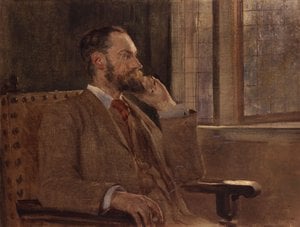
1850 - 1902

 Önizleme yap
 Paylaş
 Paylaş
 Detayları Gör

 İndir
İndir
 Benzerlerini gör
 X-Işını
 Slayt Gösterisi
 Tümünü Gör


