

Bu sayfada sergilenen eser telif hakkı yasasıyla korunmaktadır; bu da yasal olarak eserin birebir kopyasını oluşturamayacağımız veya satamayacağımız anlamına gelir. Bu koruma, aşağıdakiler gibi uluslararası anlaşmalar kapsamında uygulanmaktadır: Bern Sözleşmesi ve aşağıdakiler de dahil olmak üzere ulusal yasalarca belirlenen ABD Telif Hakkı Kanunu - 17. Başlık.
Bu yöntem, koruma altındaki sanat eserinin kopyalanmasını veya çoğaltılmasını içermediği için telif hakkı düzenlemelerine tam uyum sağlar. Bunun yerine, yaratıcı bir yeniden yorumlamadır; orijinalinden etkilenen ancak onunla aynı olmayan yeni bir tablodur.
Hızlı üretim ve esnek bitiş seçenekleriyle müze kalitesinde giclée veya kanvas baskı. ( El Yapımı Tablo Satın Al Dijital Görsele Geç)





























Eserin orijinal oranlarıyla uyumlu, önceden belirlenmiş boyutlarımız arasından seçim yapın.

Çerçevenize veya duvarınıza uygun olması için ihtiyacınız olan genişlik ve yüksekliği yazın. Bir baskı yalnızca kesilebilir, görselden daha büyük hale getirilemez; bu nedenle farklı bir formdaki boyut seçimi, görselin bir kısmının kaybına neden olur. Herhangi bir baskı yapmadan önce onaylamanız için size bir dijital taslak gönderiyoruz. Bu sayfada gösterilen resim gerçek kesimi göstermez — bunu yalnızca taslak gösterir.
Dünya Çapında Teslimat (); standart 4/5 hafta yerine 2 haftada. (22 Kasım)
Self-Portrait
Reproduksiyon Boyutu
Man Ray's "Self-Portrait," painted in 1927, isn’t merely a depiction of an individual; it’s a carefully constructed meditation on identity, the gaze, and the very act of representation. Born Emmanuel Radnitzky in Philadelphia, Man Ray – a name he adopted to signify his artistic liberation – was a pivotal figure in the Dada and Surrealist movements, constantly challenging conventional notions of art and perception. This particular self-portrait, rendered in oil on canvas, embodies this restless spirit, presenting a subtly unsettling image that invites prolonged contemplation.
The painting’s style is rooted in early Modernism, yet it transcends simple categorization. Ray employs a flattened perspective, reminiscent of Cubist influences, but softens the edges with an almost dreamlike quality. The composition is strikingly direct – we confront the artist directly, his gaze meeting ours across the canvas. However, this apparent straightforwardness belies a complex layering of symbolism and technique. Notice the meticulous detail in the rendering of his face: the slight furrow of his brow, the subtle curve of his lips, the almost imperceptible glint in his eyes – each element contributes to an aura of quiet intensity.
Ray’s artistic practice was characterized by a remarkable versatility. While he is celebrated for his groundbreaking work in photography—particularly his photograms (rayographs)—“Self-Portrait” demonstrates his mastery of oil painting. He skillfully blends photographic techniques with traditional brushwork, creating an effect that feels both familiar and utterly unique. The use of muted tones – predominantly browns, grays, and blacks – contributes to the painting’s somber mood, while subtle highlights draw attention to key features of the face. The texture is rich and layered, achieved through multiple thin glazes of paint, a technique that adds depth and luminosity to the canvas.
Interestingly, Ray often referenced his photographic experiments in his paintings. The slightly blurred quality of the image, reminiscent of a photograph captured with a slow shutter speed, subtly echoes the ephemeral nature of memory and perception. This connection between photography and painting highlights Ray’s belief that both mediums could be used to explore similar themes – the subjective experience of reality.
The “Self-Portrait” is more than just a likeness; it's a visual representation of Man Ray’s own evolving identity. Born into a Jewish immigrant family in Philadelphia, he deliberately shed his original name – Emmanuel Radnitzky – to create the persona of Man Ray, a symbol of artistic freedom and experimentation. The painting can be interpreted as a declaration of this transformation, a conscious effort to break free from traditional constraints and forge a new path.
Furthermore, the direct gaze of the subject challenges the viewer’s own role in the act of observation. Ray isn't simply presenting himself; he is inviting us to confront our own perceptions and consider how we see ourselves reflected in his image. The painting subtly suggests that identity is not a fixed entity but rather a fluid and ever-changing construct, shaped by experience and self-awareness.
“Self-Portrait” remains a powerfully resonant work of art, offering insights into the complexities of identity, perception, and artistic innovation. Its understated elegance, combined with its subtle symbolism, makes it a captivating piece for collectors and interior designers alike. Reproductions of this iconic painting capture the depth and nuance of Ray’s original vision, allowing viewers to appreciate its beauty and intellectual richness in their own homes. It's a testament to Man Ray's enduring legacy as one of the most influential artists of the 20th century – an artist who dared to challenge conventions and redefine the boundaries of art itself.
Man Ray imzalı "Self-Portrait" eserine ait Benzer Eserler sayfası, benzer sanat eserlerini sunar.
"Self-Portrait", Man Ray tarafından yaratılmıştır. Bu sayfadaki bilgiler Man Ray imzalı orijinal esere aittir.
Man Ray imzalı "Self-Portrait" hakkındaki istatistiklere eserin İstatistikler sayfasından ulaşabilirsiniz: eserin aylık ziyaret sayıları, sanatçının diğer eserlerinin ziyaret edilme oranları ile son dönem ziyaretçilerin ülke ve dil dağılımları bu sayfada yer almaktadır.


1890 - 1976 , Amerika Birleşik Devletleri

Discover how custom historical portraits transcend decor to become profound expressions of identity. Explore the artistry of bespoke oil reproductions, from Renaissance mastery to modern reimagining, and learn to transform personal legacies into museum-quality fine art masterpieces.
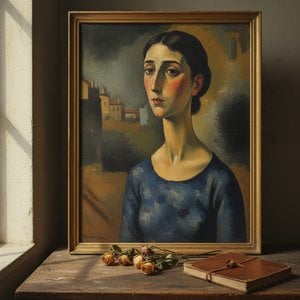
Delve into the haunting beauty of Amedeo Modigliani's portraits. Explore the intersection of Expressionism and Modernism through an expert analysis of his iconic elongated forms, melancholic gazes, and profound influence on art history.

Immerse yourself in the raw emotion of Egon Schiele. Explore 25 iconic Expressionist masterpieces, from haunting self-portraits to profound sketches. Find museum-quality art reproductions and curated decor inspiration. Discover all masterpieces on WahooArt.com.

Discover the profound alchemy of art. Explore how masters transform raw emotion into timeless masterpieces through light, color, and texture. Elevate your collection with expert insights into the soul of fine art and the enduring beauty of Impressionist techniques.

Explore 25 iconic Modigliani masterpieces and their soulful stories. Discover the full collection online at WahooArt.com.
 Gerçek Boyutta Önizle

 Paylaş
 Paylaş
 Detayları Gör
 Rehber


 İndir
 Benzer ürünler
 X-Işını
 Slayt Gösterisi
 Soru & Cevap

 İstatistikler


 Tümünü Gör









 Cam seçeneği yalnızca 110 cm altındaki boyutlar için mevcuttur.


