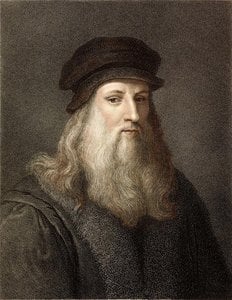
Rönesans’ın Gizemli Dehası: Leonardo da Vinci
Leonardo di ser Piero da Vinci, 1452 yılında Toskana bölgesindeki Vinci köyünün yakınlarında doğmuş bir İtalyan sanatçısı, bilim insanı, mucit ve düşünürüdür. Rönesans döneminin en çok tanınan figürlerinden biri olarak kabul edilir; sanatı, bilimi ve mühendisliği bir araya getiren eşsiz yeteneğiyle insanlık tarihine damgasını vurmuştur. Evlilik dışı doğması nedeniyle o dönemin toplumsal normlarına göre alışılmadık bir hayat sürmüş olsa da, hem pratik dünyanın bilgeliğini hem de doğa sevgisini besleyen bir ortamda büyümüştür. Floransa’daki Andrea del Verrocchio atölyesinde aldığı eğitim, onun yaratıcı kıvılcımını ateşlemiş ve onu sanatın derinliklerine çekmiştir. Atölyede sadece resim veya heykel öğrenmekle kalmamış, aynı zamanda metal işçiliği, marangozluk, çizim gibi çeşitli teknik beceriler edinerek çok yönlü bir yeteneğe sahip olmuştur. Hatta bazı rivayetlere göre Verrocchio, Leonardo’nun üstün yeteneğini gördükten sonra resme ara vermiştir.
Milan’da Yükseliş ve Sanatsal Dönüm Noktaları
1482 yılında Leonardo, Milano Dükü Ludovico Sforza'nın hizmetine girerek yeni bir dönem başlatmıştır. Bu sadece bir sanatçı görevi değildi; Leonardo aynı zamanda askeri mühendis, mimar, heykeltıraş ve tasarımcı olarak da görev yapmıştır. İnovatif kaleler tasarlamış, karmaşık sahne dekorları hazırlamış ve hatta fantastik makinelerin planlarını çizmiştir. Ancak bu dönemde, sanatının zirvesine ulaşacağı
Son Akşam Yemeği’ni de yaratmaya başlamıştır. Santa Maria delle Grazie manastırının yemekhanesine fresk olarak resmedilen bu eser, sadece bir dini sahneyi değil, aynı zamanda insan duygularının ve psikolojik derinliğin etkileyici bir keşfini sunar. Kompozisyonu ve perspektifin ustaca kullanımı, Batı sanatını yüzyıllarca etkilemiştir. Milan döneminde birçok heykel projesi tamamlanmamış olsa da, Leonardo’nun yaratıcı ruhu bilimsel araştırmalar için de zemin hazırlamıştır.
Floransa'ya Dönüş ve Mükemmelliğin Peşinde
Milan’ın Fransızlar tarafından işgaliyle birlikte Leonardo Floransa’ya geri dönmüş ve sanat dünyasının zirvesine ulaştığı bir dönem yaşamıştır. Bu dönemde tamamladığı eserler daha az sayılsalar da, etkileri derin olmuştur. İşte bu dönemde dünyanın en ünlü tablosu olarak kabul edilen
Mona Lisa (La Gioconda) üzerinde çalışmaya başlamıştır. Tablodaki gizemli gülümseme ve büyüleyici bakışlar nesilden nesile sanatseverleri cezbetmeye devam ederken, Leonardo’nun *sfumato* tekniği – ışık ve gölgeyi yumuşak geçişlerle birleştirerek bulanık hatlar ve atmosferik perspektif yaratan teknik – tablonun eterik kalitesine önemli katkı sağlamıştır. Bu dönemde aynı zamanda insan anatomisini anlamaya yönelik çalışmalarını sürdürmüş, cesetleri inceleyerek kasları, kemikleri ve organları detaylı çizimlerle belgelemiştir; bu çalışmaları o zamana kadar olan anlayışın çok ötesindeydi.
Sanatın Ötesinde Bir Miras: Bilim, İcat ve Kalıcı Etki
Leonardo’nun son yılları Floransa, Milano ve Roma arasında seyahat ederek geçti. Her yerde uzmanlığıyla aranmış olsa da, projelerini tamamlamakta zorlanmıştır; bu durum belki de onun durmak bilmeyen zekisinin ve ilgi alanlarının genişliğinin bir yansımasıdır. 1516 yılında Fransa Kralı I. Francis’in daveti üzerine Amboise yakınlarındaki Château du Clos Lucé'de yaşamaya başlamış ve hayatının son yıllarını burada geçirmiştir. 1519 yılında hayata veda etmiş, ardında sanat dünyasının ötesine uzanan geniş bir miras bırakmıştır. Not defterleri, anatomi, optik, hidrolik, jeoloji ve kartografya alanlarındaki öncü çalışmalarını ve o zamana kadar hayal bile edilemeyen icatlarını ortaya koymaktadır; uçan makineler, tanklar ve gelişmiş silah sistemleri tasarlamıştır.
Leonardo da Vinci’nin sanat tarihi üzerindeki etkisi ölçülemez. Sanatçıların sadece yetenekli zanaatkarlar değil, aynı zamanda bilimsel araştırmalarla şekillenen derin bir anlayışa sahip entelektüel figürler olarak konumlanmasına öncülük etmiştir. Resimleri gerçekçiliği, psikolojik derinliği ve yenilikçi teknikleriyle kutlanmaktadır. İnsan merakının, yaratıcılığın ve bilginin amansız peşinden koşulmasının sembolü olmaya devam etmektedir; yüzyıllar sonra bile hayranlık uyandıran ve ilham veren bir Rönesans ruhunun gerçek bir örneğidir.
Başlıca Başarılar & Kalıcı Etki
- Resim: Mona Lisa, Son Akşam Yemeği, Kayaların Bakiresi, Meryem’in Haberi
- Çizim & Eskiz: Kapsamlı anatomi çalışmaları, Mühendislik tasarımları (uçan makineler, silahlar), Botanik çizimleri
- Bilim & Mühendislik: Anatomi, optik, hidrolik, jeoloji ve kartografya alanlarında öncü çalışmalar. O zamana kadar hayal bile edilemeyen icatların konseptlerini tasarlamıştır.



 Önizleme yap
 El yapımı tablo satın al
 Paylaş
 Paylaş
 Detayları Gör

 İndir
İndir
 Benzerlerini gör
 X-Işını
 Slayt Gösterisi
 İstatistikler


 Tümünü Gör






































 Cam seçeneği yalnızca 110 cm altındaki boyutlar için mevcuttur.